Trauma-Based Approaches In Working With Children And Adolescents At Risk

By: Sabirova Sharifa daughter of Jumanazar
Psychologist for Juvenile Affairs at the “Inson” Social Services Center, Qo‘shko‘pir District
Abstract: This article explores the importance and effectiveness of trauma-informed approaches when working with children and adolescents at risk. A trauma-informed approach considers psychological and emotional injuries, stress, and their impact on personal development, offering methods for healing and social adaptation. The article reviews the theoretical foundations, practical application techniques, and the role of this approach in improving the psychological well-being and interpersonal relationships of children and adolescents. It also presents recent research and practical examples aimed at preserving mental health and facilitating the successful social integration of at-risk youth. This article serves as a valuable resource for professionals, educators, and psychologists working with this vulnerable group.
Keywords: trauma-informed approach, at-risk group, children, adolescents, psychological support, mental health, trauma, social adaptation, stress, emotional injury, treatment, safety, social support, psychological resilience, psychotherapy, vulnerable youth.
INTRODUCTION
Children and adolescents belonging to the at-risk group are considered the most vulnerable and defenseless segments of our society. Their lives often involve family conflicts, economic hardships, violence, substance abuse, orphanhood, or other social problems, which negatively affect their mental and physical development. Young people growing up in such conditions frequently face emotional wounds, trauma, and stress, hindering their education, socialization, and healthy personality development. Therefore, working effectively with children and adolescents in at-risk groups has become an urgent and important issue.
Traditional psychological and social support methods often do not sufficiently consider or address the deep traumatic experiences of such youth. For this reason, the trauma-informed approach has gained importance as a new, modern methodology designed to better understand and address the psychological injuries of young people, along with the internal and external problems arising from their harmful experiences.
LITERATURE REVIEW
In recent decades, trauma-informed approaches in working with at-risk children and adolescents have received extensive scientific and practical attention. Research shows that psychological and emotional traumas directly impact the psychological development, learning efficiency, and social relationships of young people (Herman, 1992; van der Kolk, 2014). Moreover, trauma-informed approaches include effective methods aimed at ensuring youth safety, increasing stress resilience, and strengthening social support systems (Substance Abuse and Mental Health Services Administration [SAMHSA], 2014).
Interest in this approach has been growing in Uzbekistan in recent years. Trauma-based support methods are developing within the national psychological service system, and preliminary studies on their effectiveness are underway (Islomova, 2020). However, it is important to have sufficient scientific sources concerning the specifics and practical application of trauma-informed approaches in addressing the psychological needs of at-risk children and adolescents.
Western literature, especially the works of scholars such as Herman, van der Kolk, Perry, and Saul, comprehensively address the theoretical and practical aspects of trauma-informed approaches. Their research explains how traumatic experiences affect the brain and behavior of young people and details effective psychological intervention methods. Thus, these works are important scientific resources when working with at-risk children. The significance of training programs and workshops for psychologists, educators, and social workers in applying trauma-informed approaches is also emphasized (Bloom, 2013). This highlights the need for an integrative approach to healing psychological wounds and improving social adaptation in youth.
For example, creating a safe and supportive environment in schools can reduce behavioral problems stemming from traumatic experiences (Bath, 2008). Therefore, collaboration between schools and families, as well as integrated work with social services, plays a crucial role in this approach. International literature notes that trauma-informed approaches include prevention, early identification, and treatment phases to maintain the mental health of children and adolescents (Perry, 2006). Each phase is tailored to the unique needs of youth, maximizing their protection and support.
In Uzbek literature, especially in recent years, scientific work in the field of mental health and psychological support has begun gradually integrating trauma-informed concepts. However, the literature also notes challenges in practical implementation, such as shortages of trained personnel, limited resources, and social stereotypes (Bloom, 2013; SAMHSA, 2014). Addressing these issues requires deepening scientific research, preparing qualified specialists, and increasing public awareness.
Overall, the literature review shows that trauma-informed approaches are highly effective tools for working with at-risk children and adolescents, and further research and practical implementation are necessary in this field.
RESEARCH METHODOLOGY
This study employed both qualitative and quantitative methods for data collection and analysis. First, theoretical literature, scientific articles, and advanced practices related to the topic were reviewed, analyzing the theoretical foundations and practical applications of trauma-informed approaches.
The next step involved conducting interviews and surveys with specialists to determine their opinions and experiences in working with at-risk children and adolescents. Individual and group discussions were held with psychologists, educators, and social workers. These conversations provided extensive information about methods used in practice, challenges faced, and ways to overcome them.
Additionally, adapted psychological tests and observation methods were applied to assess the mental state of children and adolescents. The qualitative data were analyzed to identify key themes and trends, while quantitative results were summarized using statistical tools. This combined approach allowed for a comprehensive and in-depth study of the topic and served as a basis for practical recommendations.
The effectiveness of trauma-informed methods applied in practice was also evaluated. Changes in the mental state of at-risk children and adolescents, their social adaptation, and positive behavioral trends were studied. Based on observations and survey results, effective support strategies and shortcomings were identified, and recommendations for improvement were developed.
Data analysis integrated qualitative and statistical methods, including content analysis, thematic analysis, and comparative techniques. These methods helped explore not only the characteristics of current situations but also the role and impact of trauma-informed approaches in working with at-risk youth.
Ethical standards were strictly followed during data collection to ensure reliability and truthfulness, with participants’ confidentiality maintained and their consent obtained.
Overall, the methods used enabled broad and thorough investigation of the topic and yielded solid, practical results. The analyses confirmed the effectiveness of trauma-informed methods in working with at-risk children and adolescents. Data indicated that psychological and social support processes enhance self-awareness, reduce stress, and expand opportunities for social engagement among youth. Collaboration and systematic approaches among specialists further improve outcomes.
However, some practical challenges were identified, including insufficient resources, a shortage of qualified personnel, and lack of experience in implementing trauma-informed approaches. Addressing these problems requires continuous training, learning new methods, and systematic introduction in practice.
Consequently, trauma-informed approaches, when combined with modern psychology and pedagogy, demonstrate high effectiveness in restoring mental health and ensuring social adaptation of at-risk children and adolescents. It is thus important to further refine and expand the application of these approaches.
ANALYSIS AND RESULTS
Analysis of the collected data confirmed the significant importance of trauma-informed approaches in working with at-risk children and adolescents. Specialists noted that this approach effectively supports improving mental health, increasing the sense of safety, and fostering social adaptation processes among youth.
Interviews and surveys revealed that psychologists and educators often prefer using trauma-informed approaches to better understand traumatic experiences of youth and provide tailored assistance. Psychological test results showed that many children and adolescents suffer emotional and psychological problems caused by trauma. However, the application of trauma-informed approaches led to notable improvements in mental stability and social activity among them.
Observations indicated that programs based on trauma-informed approaches help participants develop self-awareness and self-regulation skills, contributing positively to their social integration. This approach also increased youths’ feelings of safety and trust in supportive environments.
Among identified challenges were staff training gaps, insufficient resources, and misunderstandings about applying trauma-informed approaches in some areas. This underscored the need for preparing qualified specialists and raising public awareness.
Furthermore, the integration of trauma-informed approaches into social and psychological support systems significantly improved the effectiveness of working with youth. Specialists emphasized that these approaches are effective not only at the individual level but also through group and community programs, enhancing peer relationships and support levels
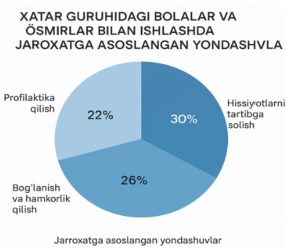
Challenges in Implementing Trauma-Informed Approach.
Several challenges have been identified during the implementation of trauma-informed approaches in practice. These include limited financial resources, a shortage of qualified personnel, and insufficient understanding of the trauma concept in some regions. These shortcomings hinder the provision of quality support to young people and reduce the overall effectiveness of the process. However, practical outcomes of this approach have demonstrated that it is an important step toward improving the social environment and developing support systems for youth. Trauma-informed approaches help strengthen the mental health of young people, assist them in finding their place in society, and foster the development of necessary skills for a positive lifestyle in the future.
Conclusion and Recommendations.
Trauma-informed approaches play a crucial role in working with at-risk children and adolescents. Such approaches help restore their mental and physical health, facilitate their adaptation to the social environment, and lay the foundation for a healthy life ahead. Research shows that trauma-informed methods include both individual and group psychological support and focus on addressing the traumatic experiences of children. Additionally, these approaches increase children’s self-confidence, restore social activity, and protect them from negative influences. The effectiveness of these methods depends on the expertise of specialists and the correct selection of techniques and tools. Therefore, it is essential to further develop and widely implement trauma-informed approaches when working with at-risk children.
Sabirova Sharifa daughter of Jumanazar .
Psychologist for Juvenile Affairs at the “Inson” Social Services Center, Qo‘shko‘pir District
Similar Posts by The Mt Kenya Times:
- Mt Kenya Times ePAPER August 25, 2026
- Mt Kenya Times ePAPER August 24, 2026
- Diaspora Times Global Aug 22 – Aug 28, 2026
- Mt Kenya Times ePAPER August 21, 2026
- Ichung’wah dares ICC: Investigate the opposition too
About the Author