Uhuru Kenyatta and the six-month rule: Is this about democracy, power or fear?
 The Mt Kenya Times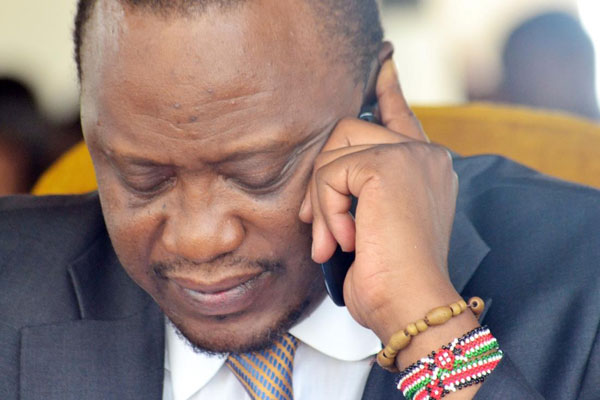
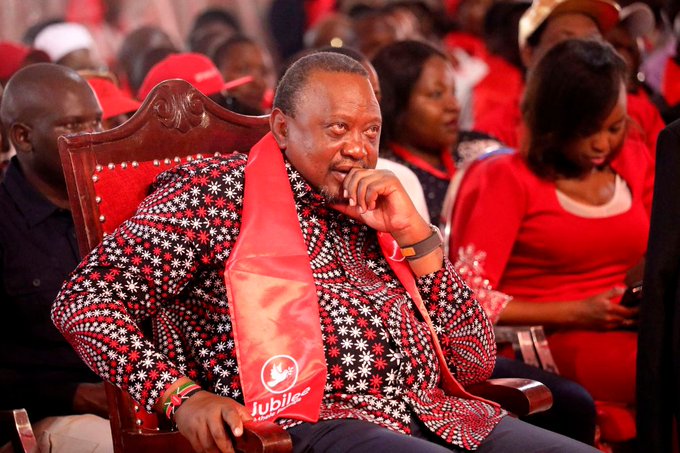
Retired President Uhuru Kenyatta
The former president may be leaving formal Jubilee leadership, but his political influence is unlikely to disappear.
By Hadassah Karangu
The High Court’s decision to uphold the law restricting retired presidents from holding political party office beyond six months after leaving State House has done more than settle a legal question. It has reopened one of Kenya’s most compelling political debates ahead of the 2027 General Election: what happens when a former president leaves office but does not leave politics?
For retired President Uhuru Kenyatta, the answer is becoming clearer. He has indicated willingness to complete the Jubilee Party leadership handover following the ruling, describing the decision as a reaffirmation of democratic maturity and respect for the Judiciary.
But the bigger story may not be Kenyatta’s departure from formal party office.
The bigger story is why his continued political presence has generated so much anxiety.
Is Kenyatta actually a threat to the current administration, or has Kenya simply reached a point where the influence of a former president is too significant to ignore?
That is where the debate becomes complicated.
Kenyatta no longer occupies State House. He controls no instruments of government. He cannot issue executive orders or appoint Cabinet Secretaries. Yet he remains a former president, a former Jubilee leader, and one of the most recognisable political figures in the country. More importantly, his influence extends well beyond any position he formally holds.
This is precisely what makes former presidents different from ordinary politicians.
A former president leaves office, but he does not leave behind the networks built over years at the centre of power. He retains relationships, experience, political knowledge, and the ability to bring different political actors into the same room. In Kenya’s personality-driven politics, that amounts to considerable political capital.
And that may explain why the debate around Kenyatta has become so intense.
The law itself is not targeted at him specifically. It establishes a general restriction on retired presidents holding party office beyond six months after leaving the presidency — a provision the High Court has now upheld. On paper, this is about institutional principle rather than any one individual.
But politics rarely operates only on paper.
Kenyatta left State House in September 2022. Since then, he has remained a significant figure within Jubilee and has continued participating in opposition conversations. His name has repeatedly surfaced in discussions about forming a coalition capable of challenging President William Ruto in 2027.
That makes the timing politically significant.
The 2027 election is approaching, and Ruto’s administration already faces an increasingly competitive opposition environment. In such circumstances, a former president who commands political respect and maintains relationships across different camps can become a consequential player — even without holding an official party position.
That does not automatically mean Kenyatta is sponsoring the opposition.
Government-aligned politicians have made that accusation, while Kenyatta and figures within Jubilee have rejected it. Fred Matiang’i, associated with Jubilee’s presidential ambitions, has also pushed back against claims that Kenyatta is bankrolling opposition activity.
This distinction matters. Kenya must be careful not to allow political suspicion to harden into political fact. If Kenyatta is accused of funding or directing opposition candidates, those claims require evidence. Without it, the country risks creating a culture in which former leaders are treated as threats simply for remaining influential.
There is, however, a legitimate separate concern.
Should a former president be allowed to retain indefinite formal control of a political party? The law now says no — and there is a reasonable democratic argument for that position. A former president should be free to participate in public life, express opinions, and offer counsel. Retirement from State House should not mean retirement from citizenship. But holding formal party office is different. It provides an institutional platform from which to shape political organisation and electoral competition in ways that can create parallel centres of power.
The concern, therefore, is not necessarily that Kenyatta is dangerous. The concern is that a country can find itself with more than one centre of political gravity — a sitting president with constitutional authority alongside a former president with extensive networks and party structures. That arrangement can generate real tensions, particularly during an election cycle.
But there is a question Kenyans must not ignore.
If this law is genuinely about protecting institutions, will the same principle apply equally to every former president, regardless of who is politically inconvenient at the time? That is the real test. A law becomes a weapon when it is perceived to target a specific individual rather than govern everyone equally.
Ruto and Kenyatta have a complicated history. They campaigned together successfully in 2013 and 2017. They became fierce opponents after the 2018 handshake between Kenyatta and Raila Odinga and the political realignments that followed. Today, Kenyatta is increasingly linked to efforts to reorganise the opposition ahead of 2027.
That makes his political role relevant to the current administration. But relevance should not be confused with proof. It is one thing to say Kenyatta’s influence could affect Ruto’s re-election strategy. It is another to claim Ruto is personally behind every legal or political move involving the former president. The first is political analysis. The second requires evidence.
Perhaps the most instructive aspect of this episode is Kenyatta’s own response. He has not been defiant. He welcomed the court’s decision and indicated the path is clear for the Jubilee transition. That is not the posture of someone preparing for confrontation.
Kenyatta may leave the Jubilee leadership, but political irrelevance is unlikely to follow. Leadership is not always found in a title. Influence does not evaporate because a position is surrendered. A former president can hand over a party office and still shape conversations, alliances, and political decisions from outside any formal structure.
The real question for Kenya, therefore, is not whether Kenyatta should disappear from politics. It is whether Kenya can distinguish between legitimate political participation and excessive concentration of power. The former deserves protection. The latter warrants regulation.
The court has drawn a line around formal party office. What happens beyond that line will not be determined by the Judiciary. It will be decided by political parties, political choices, and ultimately, by the Kenyan voter.
Similar Posts by The Mt Kenya Times:
- Millions of Kenyans are going hungry: Where is the government’s food security plan?
- Understanding bipolar: It is more than mood swings
- JJ Gabriel asks to leave Manchester United
- From free transfer to court fight: Mbappé ordered to pay PSG
- Why emotional intelligence matters more than academic scores
About the Author