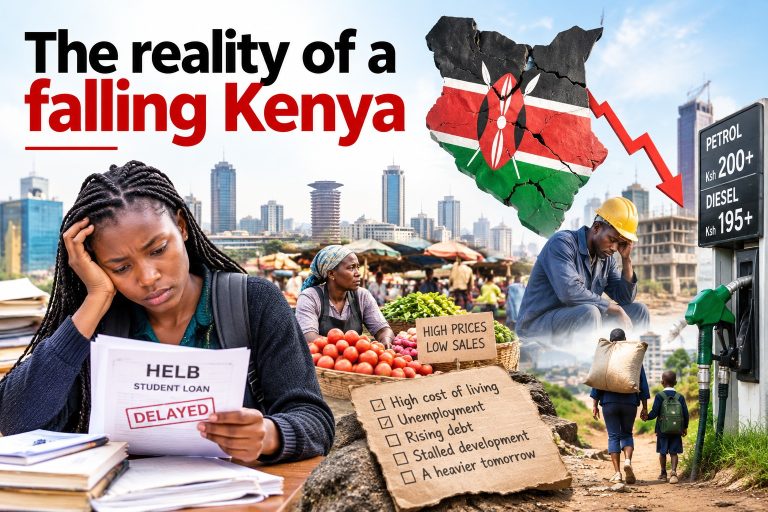
Urgent Call To Initiate An Expeditious Comprehensive Independent Forensic Audit Of Kenya Debt From Financial Year 2011/12 to 2023/24

Ndung’u Wainaina

The Social Unrest Rising Due To Economic Deprivation And Anger Amongst Kenyans Calls For Drastic Economic And Fiscal Response Not State Violence. Without Resolving The Debt Distress Facing The Country, It Will Be Foolhardy To Wish Away The Economic Crisis
Below is a Statement issued by International Center for Policy and Conflict (ICPC) Executive Director Ndung’u Wainaina
1.ICPC notes with deep concern the unjustified and unacceptable Kenya Government brutal and cruel response to public protests against deep-seated economic deprivation grievances. Rising Kenya citizenry anger about economic deprivation problems cannot be resolved by state violence. With history of police impunity in Kenya, we urge United Nations High Commission on Human rights to expeditious open an independent investigations into police brutality and violations with direct recommendations on accountability and redress for victims, and dismantling police systematic criminality
- Kenya is facing significant debt distress which is sinking the economy. Debt is causing unacceptable economic and financial throbbing to Kenyans. The country is possibly heading to default if already it is not there. According to Parliamentary Budget Office the economy is in real danger of liquidity crisis. This is demonstrated by the inability of government to meet its essential development and services obligations. Kenyans are facing the unbearable pain.
- The country’s economic crisis is consequent of fiscal profligacy financed by borrowed and stolen unexplained and illegal debt. The economy has reached its limit due to decades of low productivity growth, significant private sector investments reduction, public investments budgeted for stealing, history of declined exports and terrible government expenditures that are beyond its means. Thus to adopt a tax revenue raising measures only as solution is grossly defeatist. There has to be a comprehensive debt audit combined with radical fiscal policy reforms anchored on revenue increases and radical government expenditure rationalization to reduce fiscal deficits and deep growth enhancing structural reforms.
- The crucial debt sustainability indicators including debt service to revenue ratio and debt to Gross Domestic Product ratio are deeply troubling. The revenue collections are falling in spite of high taxes and the debt repayments surging perilously. The unpredictable fluctuating exchange rates, adverse fiscal conditions and natural disasters are only making the matters riskier by day.
- The escalating high costs of debt repayments of both external and domestic obligations calls for drastic measures. The debt as per cent age of GDP has reached 69.7% i.e. Ksh.11.2 Trillion from 46% in 2010. The debt service payments are equivalent to 63% of ordinary revenue and interest repayment has risen to 30.1% of ordinary revenue. Regrettably, the sovereign people of Kenya cannot see and or attribute direct improvement to their living standards with this humongous debt. Something is terribly wrong with the Kenya public debt,
- Consequently, this is URGENT CALL for the IMF, World Bank and all lenders both domestic and foreign to Kenya government to withdraw any further loans lending and initiate a comprehensive independent forensic audit of the country’s domestic, foreign, concessional and commercial debts including the total amount of state guarantees to all state owned enterprises and governmental agencies in order to track exactly what has happened with all the loans money.
- For purpose of independent forensic audit transparency, it will be important for the process of identifying the audit agency to be made public. Further, the rapid publication of the audit’s terms of reference as a means for external stakeholders to verify the details of the audit agreement.
- The forensic audit agreement expected to investigate and establish not only on how the loans were acquired and authorized, but also how the money was actually spent. The sovereign people of Kenya must get a comprehensive picture of the nature of debt, what it was borrowed for, whether it was utilized for the purpose it was borrowed, was there value for money, and authorization to borrow debt.
- The agreed and appointed independent forensic audit agency must be allowed unlimited and unconditional access to: Obtaining comprehensive debriefs from key stakeholders; Requesting and obtaining relevant information and data from all relevant government’s ministries, departments and agencies; Summoning specific individuals deemed appropriate by the audit agency; and, allowed an initial review and analysis of documentation and other material relating to the government financial, banking and authorizing institutions including but not limited to National Treasury, Central bank of Kenya, Parliamentary, Controller of Budget, Office of Auditor General among others.
- The forensic audit agency must be provided and responded to formal information requests including: original loan agreements and fee letters from the banks; final versions of supply contracts and appendices, and internal correspondence files from the Contractors and suppliers; government guarantee documentation from the National Treasury, and information to support the audited financial statements where relevant, supporting documents for transactions and transfers.
- The independent audit agency must be allowed to work with local and international criminal and civil investigatory agencies for purpose of sanctioning individuals, banks and institutions culpable for any illegal and unconstitutional loans as well as assets and funds recovery.
- The forensic audit agreement must allow independent monitoring of the auditing process and indicates production of two audit reports: the first a public document aimed primarily at tracing all the loans money, what loans did, and authorizing to borrow; and the second a comprehensive forensic audit report that will specific time bound action recommendations and apportion responsibilities.
- In lieu of this, we demand as follows:
- That all lenders both domestic and foreign must stop forthwith lending any loans to the Kenya government until the independent forensic audit is completed. Local banking and financial institutions have been major conduits of illegal and unconstitutional domestic debt. They must be held culpable for lending loans to government contrary to The Constiution and budget laws.
- That while independent debt audit is proceeding Development partners supporting specific essential service sector can continue with support to those sectors.
- That the FY2024/25 budget be completely overhauled. This is to allow the budget to be prepared afresh in accordance with the Constitution and budget laws. The new budget must be prepared based on zero budgeting model with realistic revenue targets and be balanced. In order to realize this budget cutting and drastically reduce government expenditures following measures are critical: first, National government Ministries, departments and agencies must be fundamentally restructured reformed and aligned to accord with and respect devolved system of governance to remove duplication and wasteful allocations. Second, Financial delinquency must end by scrapping all illegal unconstitutional offices, illegal public funds allocations to amorphous illegal offices, and removal or consolidation of scattered sectoral funds including unconstitutional NG-CDF. Finally, government consumption expenditure must be radically cut and rationalized with every budget item allocation justified with evidence.
- That Kenya government seriously consider entering into part of the bonds and loans debt restructuring negotiations for a minimum period of 5 years. It is no longer tenable to rely only on fiscal adjustments with supplementing funding from IMF and World Bank. This part restructuring will significantly address the debt burden and restore path to debt sustainability and economic stability.
- That radical reforms to overhaul and change National Treasury. Treasury is conflicted. It has been graveyard a fiscal and budget discipline including overseeing budget padding. An independent Budget Office must be established from the National Treasury.
- That a new predictable, competitive and certain tax policy be adopted. The tax policy must be of minimum three years.
Similar Posts by The Mt Kenya Times:
- Mt Kenya Times ePAPER October 23, 2026
- Ruto’s parting COMESA call: Remove the barriers, honour the commitments
- Direct hospital access to KEMSA cuts drug delays, says PS
- Africa can’t wait: Continent seeks $1 trillion for climate adaptation
- Ruto passes the baton as Africa’s trade bloc faces a fragmenting world
About the Author