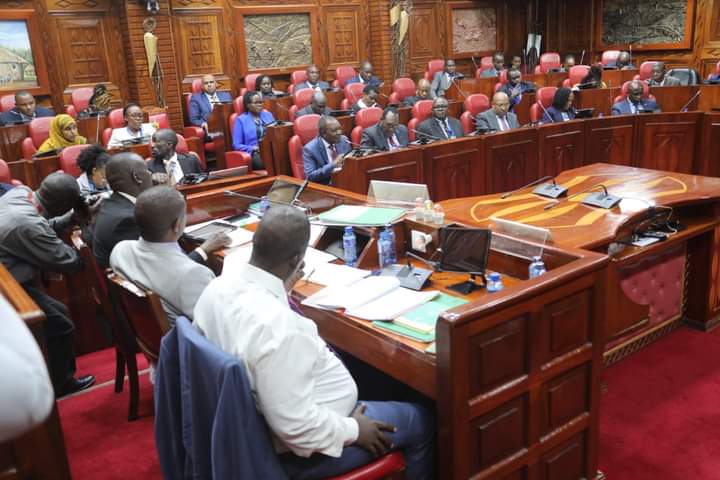
Some of the committee members and Treasury officials during yesterday's session

By PSCU and Our Reporter
Worth Noting:
- “Hon. Chair, what we are facing are external shocks characterized by short-term liquidity constraints and a volatile exchange rate, which are not extraordinary to Kenya. The world is facing a shortage of dollars due to high interest rate structure especially in the United States. We however remain solvent and committed to meeting our debt obligations”, CS Ndung’u submitted.
- Asked by members led by the committee chairman Kuria Kimani to explain the strategies they had put in place to ensure that Kenya does not default on both her internal and external debts, the CS presented a three-pronged approach that the government has adopted.
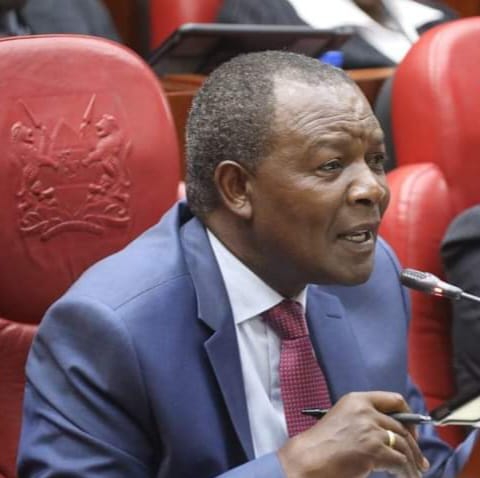
The Cabinet Secretary for National Treasury and Economic Planning has assured a Parliamentary committee that the government will not default on her debt obligations including the repayment of the Eurobond which is due mid next year.
Speaking when he led officials from the Ministry to Parliament for deliberations on the Supplementary 1 Budget Estimates for the 2023/2024 Financial Year,CS Prof. Njuguna Ndung’u told the lawmakers that while Kenya was facing external headwinds, and liquidity constraints, these remain shorterm handicaps, and the country is firmly solvent.
“Hon. Chair, what we are facing are external shocks characterized by short-term liquidity constraints and a volatile exchange rate, which are not extraordinary to Kenya. The world is facing a shortage of dollars due to high interest rate structure especially in the United States. We however remain solvent and committed to meeting our debt obligations”, CS Ndung’u submitted.
Asked by members led by the committee chairman Kuria Kimani to explain the strategies they had put in place to ensure that Kenya does not default on both her internal and external debts, the CS presented a three-pronged approach that the government has adopted.
He told the lawmakers that the Ministry had secured a lifeline from her multilateral partners; the World Bank and the International Monetary Fund; Consessional loans from her Bilateral partners as well as from the regional development finance institutions which had helped Kenya syndicate her loans.
Noting that the globe was facing a financial challenge akin to the 𝐷𝑢𝑡𝑐ℎ 𝐷𝑖𝑠𝑒𝑎𝑠𝑒, the Cabinet Secretary also underscored the need to eliminate market jitters on Kenya’s solvency, which he noted could affect foreign direct investments.
“As part of our liability management strategy, we are substituting expensive debt with concessional debts and we have a solid strategy to ensure that we maintain the confidence of our creditors while we effect a turnaround on the economy”, he told the MPs.
Faced with a volatile exchange rate, Kenya’s budget deficit has grown from 4.3% to 5.5% forcing the government to reduce expenditure by 0.9%; an equivalent of KSh145bn.
But members led by the Vice Chairperson Benjamin Langat sought to know why the Supplementary 1 which normally is presented to Parliament after the second quarter was now being presented after the first quarter just when government spending was commencing.
The CS however explained that given that budget is a result of a long process, the Ministry had envisaged the current currency volatility.
He further informed the lawmakers that the budget had been revised based on current situational constraints in the country, to protect fiscal consolidation and to accommodate additional requests within approved budget ceilings, with reallocation possibilities.
On his part, the Principal Secretary for the State Department of National Treasury Dr Chris Kiptoo told the committee that Treasury is committed to support the Bottom-up Economic Transformation Agenda and has aligned government budget to the same.
Other issues that the committee raised with the Ministry include the need to ensure seemless payouts of pension, the status of one government account and the status of pending bills.
Similar Posts by The Mt Kenya Times:
- The heroes Kenya celebrates but rarely sees
- Beyond mobile phones: The new frontiers of KCSE examination malpractice
- Grief, golf and growing up: The Shujaa tournament that turned loss into legacy
- Yalçın takes charge: Türkiye bets on a familiar face to end the pain
- Mourinho’s warning: No sacred cows at Real Madrid
About the Author