The Mt Kenya Times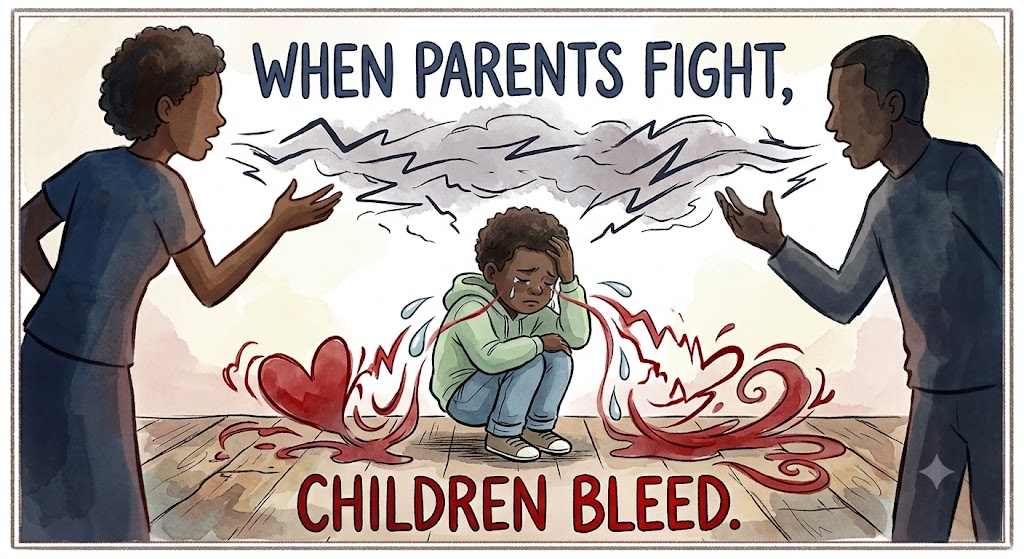
The silent toll of family conflict on Kenya’s children demands urgent attention from every parent
By Hadassah Karangu
When parents fight, separate or divorce without thought for their children’s emotional wellbeing, it is the children — not the adults — who carry the deepest wounds.
There is a Kiswahili proverb that captures this truth with quiet precision: Nyasi ndizo huumia tembo wawili wanapopigana — when two elephants fight, it is the grass that suffers. In countless homes across Kenya, that grass is a child.
Children are innocent. They do not choose the families they are born into, nor do they have any say in the conflicts that erupt around them. Yet they routinely pay the highest price. While adults may eventually rebuild their lives and move forward, children can carry emotional scars for years — sometimes well into adulthood — with little understanding of why the weight feels so heavy.
Every child deserves a home that feels safe, warm and predictable. Home should be a refuge, not a battlefield. Yet many children grow up surrounded by arguments, insults, violence and emotional neglect. They watch the two people they love most turn into strangers — sometimes enemies — and are left confused, frightened and utterly powerless to change anything.
Divorce and separation are sometimes unavoidable and, in cases involving abuse or serious harm, can be the safest and healthiest option for everyone. No one should remain in a dangerous relationship for the sake of appearances. But even when a marriage ends, parenthood does not. The responsibility to love, protect and support a child does not dissolve with the relationship.
One of the most damaging mistakes parents make is drawing their children into adult conflict. Some speak disparagingly about the other parent within earshot of the children. Others use their sons and daughters as messengers, or worse, force them to choose sides. No child should ever have to decide which parent deserves their love. That is an emotional burden no young heart is built to carry.
The effects are rarely loud or obvious. Some children become withdrawn and silent. Others struggle at school, develop anxiety or depression, or grow angry and rebellious without quite knowing why. Many lose trust in relationships entirely, because the very people who were supposed to model love instead modelled conflict.
Parental absence compounds the danger. When children are left without adequate care or supervision, they become vulnerable to abuse, exploitation and neglect — sometimes at the hands of trusted relatives, neighbours or domestic workers. The person who commits any such act bears full responsibility for that crime. But parents and caregivers carry a vital duty: to create safe environments, vet those given access to their children and stay alert to any change in behaviour, however subtle.
Children rarely disclose abuse immediately. Fear, shame or threats from an abuser keep them silent far longer than any parent would wish. That is why open, trusting communication at home is not a luxury — it is a lifeline. A child who knows they will be heard is far more likely to speak before irreversible harm is done.
Parenting is about far more than school fees and meals on the table. It is about being emotionally present — listening, comforting, guiding and consistently reminding a child that they are loved, regardless of whatever storm the family is weathering.
To every parent reading this: your children are watching. Every single day, they are learning how to communicate, how to handle disagreement and how to love by watching you. The words you choose, the respect you show — or withhold — and the decisions you make become lessons they may carry for the rest of their lives.
Before reacting in anger, pause and ask: how will my child remember this moment? Before making a decision that could alter your family forever, consider the small eyes watching and the small hearts depending on you.
Children do not ask for perfect parents. They ask for parents who will love them, protect them and place their wellbeing above pride, revenge and the need to win. Even when relationships fail, parenthood must not.
The greatest gift a parent can give a child is not wealth or possessions. It is the quiet, unshakeable security of knowing they are loved and safe. Families will always face storms. But children should never become casualties of battles they did not start.
When two elephants fight, the grass suffers. In our homes, when parents fight without thought for the consequences, it is the children who bleed — silently, invisibly, and often alone. Their tears may not always be visible, but their hearts remember everything. As a society, we owe it to them to do better, because the children we raise today will shape the nation we become tomorrow.
Similar Posts by The Mt Kenya Times:
- Mt Kenya Times ePAPER September 17, 2026
- Ruto and Uhuru: The rupture at the heart of Kenya’s 2027 election
- Gakoromone traders and rights group demand closure of sewage discharge
- Retirement is not disenfranchisement: Reclaiming the constitutional rights of Kenya’s former presidents
- Kenya’s 2027 election: Can technology strengthen democracy or manipulate voters?
About the Author