When stones replace ideas: Homabay’s descent into the shadow of 2007
 The Mt Kenya Times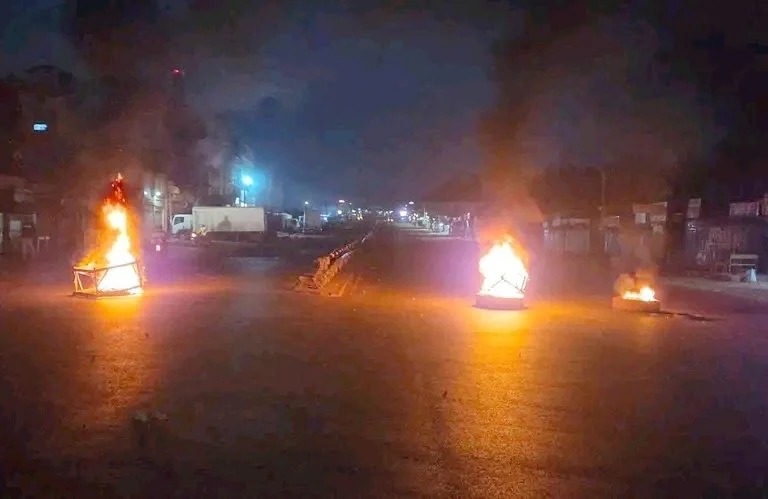
By Jerameel Kevins Owuor Odhiambo
On 16 August 2026, the roads into Homabay County were not arteries of democracy but barricades of fear. Stones, logs, burning tyres, and youths armed with pangas and rungus turned a political rally into a theatre of intimidation. Journalists were beaten and robbed. Hotels were raided and vandalized. Convoys were stoned. Police lobbed teargas not to protect free assembly but to clear paths that should never have been blocked. This is not contested opinion. It is recorded fact, captured on video, reported by multiple independent outlets, and confirmed by arrests of young men carrying crude weapons. The Linda Mwananchi movement’s attempt to hold a peaceful gathering was met with organised violence. That violence did not erupt spontaneously. It followed days of open agitation by local leaders, chief among them Homabay Town MP Opondo Kaluma and, by association and atmosphere, Governor Gladys Wanga.
Kaluma was captured on video days earlier instructing supporters to conduct door-to-door and hotel-to-hotel searches for “infiltrators.” He warned hotel owners. He declared that anyone chanting “one term” would be “crossed with.” He framed political difference as invasion. Words like these are not metaphor. They are matches. When a Member of Parliament, sworn to uphold the Constitution, treats opposition supporters as enemies to be flushed out, the subsequent appearance of goons is not coincidence. It is consequence. Wanga’s earlier claims that outsiders were importing violence, while herself part of a political ecosystem that tolerated or failed to restrain local mobilisation, only thickened the air of hostility. Leaders who claim to protect their people by turning their county into a no-go zone for rival ideas are not guardians. They are arsonists of the public square.
Politics, at its highest, is the contest of visions. It is the disciplined clash of arguments about roads, hospitals, jobs, debt, and dignity. It is the quiet, stubborn belief that a better idea can persuade without a club in its hand. What we witnessed in Homabay was the opposite: the substitution of muscle for mind. Stones do not refute policy. Pangas do not answer questions about the cost of living. Threats do not constitute a manifesto. When leaders reach for goons, they confess, louder than any speech, that their ideas have grown thin. Intimidation is the last refuge of the intellectually bankrupt.
 Kenya has walked this road before, and the scars remain. In the 2007–2008 post-election violence, more than 1,100 people died, hundreds of thousands were displaced, and property worth billions was destroyed. The Waki Commission and subsequent human-rights accounts documented how political rhetoric, ethnic mobilisation, and organised gangs turned neighbourhoods into killing fields. One in three Kenyans was affected in some way injury, loss of home, loss of livelihood, or the death of someone close. That horror produced a national vow: never again. Constitutional reforms, the National Cohesion and Integration Commission, and a generation’s trauma were supposed to inoculate us. Yet here we are, less than a year from another general election, watching the same vocabulary of exclusion return. “They are already here.” “Flush them out.” “We shall cross with them.” These are not the words of a mature democracy. They are echoes from the brink we once stepped away from.
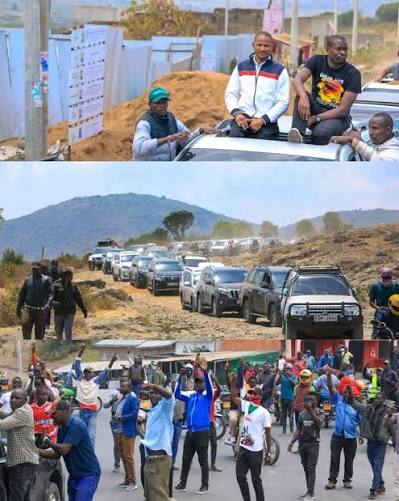
The pattern is not confined to one side or one county. Opposition figures, including former Deputy President Rigathi Gachagua, have repeatedly reported attacks on their convoys and meetings by organised groups of youths. The consistency of the method hired muscle, crude weapons, sudden roadblocks, selective police response suggests a deeper disease: the normalization of violence as political currency. When every camp can point to its own scars from goon attacks, the problem is no longer partisan. It is systemic. Democracy becomes a protection racket. The public square shrinks until only the loudest and most violent claim space.
Consider the correlation. Where political competition is healthy, leaders invest in policy documents, town halls, and patient persuasion. Where it is diseased, they invest in logistics for youth groups, fuel for motorcycles, and coded language that later becomes alibis. Homabay’s tragedy is that a region with a proud democratic heritage home to voices that once expanded Kenya’s political imagination was reduced, for one ugly weekend, to a stage for the lowest form of power. The late Raila Odinga’s long struggle for multiparty democracy and the right of every Kenyan to organise without fear sits in silent judgment over those who now treat their county as private property.
There is a deeper insight here that should unsettle every citizen. Violence in politics is never merely tactical. It is pedagogical. It teaches the young that the way to settle disagreement is to break things and people. It teaches the poor that their bodies are disposable tools for someone else’s ambition. It teaches the ambitious that ideas are optional. Once that lesson is absorbed, the next election cycle inherits not just candidates but a culture of fear. The stones thrown in Homabay did not only bruise journalists and damage vehicles. They instructed a generation that the ballot is secondary to the barricade
Leaders who claim to love their people must be called to account with the same clarity they demand of opponents. Kaluma’s recorded instructions were not private counsel. They were public incitement. Wanga’s responsibility as governor includes ensuring that the county remains open to lawful political activity, not a fortress for one faction. Silence or deflection in the face of such events is complicity. The Constitution does not grant any party a monopoly on any region. Freedom of assembly and association are not privileges to be rationed by local power brokers. They are rights. When those rights are suspended by organised force, the state itself is diminished.
The path forward is not complicated, only difficult. Prosecute those who planned and executed the violence, including any leaders whose words lit the fuse. Insist that political parties discipline their own. Demand that security agencies protect the right to assemble rather than merely manage the chaos after the fact. Most of all, elevate the currency of politics back to ideas. Let candidates compete on the quality of their diagnosis of Kenya’s problems and the coherence of their solutions. Let voters reward persuasion and punish intimidation. History has already shown us the cost of the alternative.
Homabay did not have to become a war zone. No Kenyan county does. The men and women who turned stones into arguments have revealed not strength but poverty of imagination. True power lies in the ability to change minds without breaking bodies. Until that truth is reclaimed, every election will carry the risk of sliding toward the abyss we swore never to revisit. The words spoken and the weapons raised on 16 August 2026 were not merely local excess. They were a national warning. We ignore them at our collective peril.
The author is a social commentator.
Similar Posts by The Mt Kenya Times:
- Mt Kenya Times ePAPER October 7, 2026
- Ruto signs KSh389B electric vehicle deal at State House
- Kenya mobilises KSh70B to fight Ebola as US and World Bank step in
- High Court freezes law school admissions over disputed entry rules
- Grade 11 textbooks head to schools as CBC transition gathers pace
About the Author