When the ballot becomes a blade: Identity politics and the brittle limits of law in Kenya
 The Mt Kenya Times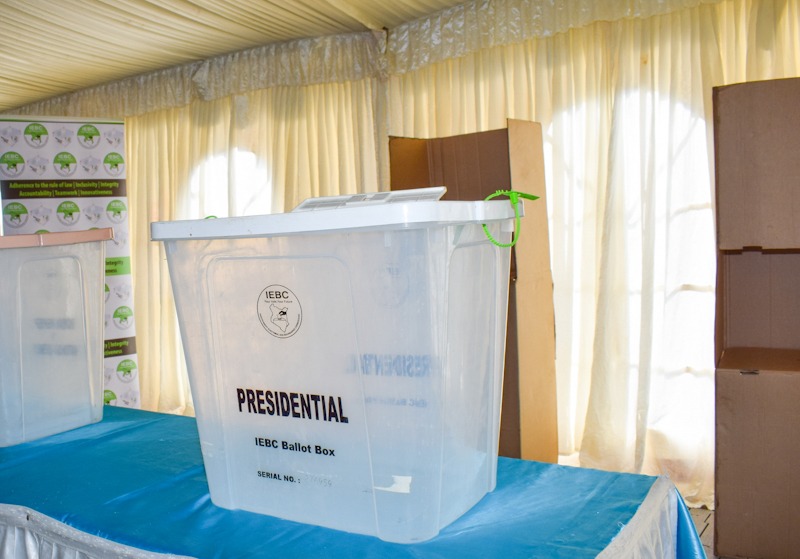
Kenya Ballot box
By Jerameel Kevins Owuor Odhiambo
In the final days of December 2007 and the opening weeks of 2008, Kenya’s contested presidential election ignited ethnic violence that left at least 1,133 people dead, more than 600,000 displaced from their homes, and tens of thousands of properties reduced to ash. Women and girls suffered a documented surge in sexual violence; entire settlements were emptied along ethnic lines; a church in Kiambaa became a furnace for the living. These were not abstract statistics. They were neighbours turned executioners, political loyalty distilled into the flash of a panga, and a nation that had prided itself on relative stability suddenly staring into the mirror of its own fracture.
That fracture remains. Identity politics in Kenya is not a side conversation; it is the operating system of power. Ethnicity functions as both shield and sword. Belonging becomes a currency that politicians mint and spend with ruthless efficiency. The law, for all its solemn declarations, has proven repeatedly that it can describe the crime yet struggle to extinguish the impulse that produces it.
Kenya’s more than forty ethnic communities are not the problem. The problem is the systematic conversion of cultural difference into political weaponry. Since the return of multiparty politics in the early 1990s, electoral cycles have claimed at least 4,433 lives and displaced more than 1.8 million people. The pattern is grimly consistent: elites mobilise co-ethnics with narratives of historical grievance and existential threat; the ballot becomes a census of enemies; the aftermath is measured in body counts and IDP camps. The 2007–2008 crisis was simply the most catastrophic expression of a longer pathology. Land, jobs, and state resources are framed as zero-sum ethnic spoils. A Kikuyu presidency is read by some as Kikuyu dominance; a Kalenjin or Luo ascent is read by others as revenge or restoration. The individual citizen is reduced to a demographic proxy.
The 2010 Constitution was supposed to be the corrective. Its preamble celebrates ethnic, cultural, and religious diversity while demanding unity as one indivisible nation. It outlaws political parties organised purely along ethnic lines. It embeds national values of equality, equity, social justice, inclusiveness, and non-discrimination. Devolution was designed to disperse power and resources, reducing the winner-takes-all stakes of the centre. Article 27 prohibits discrimination on ethnic grounds. The National Cohesion and Integration Commission was created to police hate speech and promote national cohesion. On paper, the architecture is sophisticated.
Even so paper is not steel. County public service audits continue to reveal stark ethnic monopolies: some counties employ more than 95 percent of their staff from the dominant community, leaving dozens of smaller groups with negligible representation. Political rhetoric still traffics in coded and not-so-coded ethnic appeals. By-elections in recent years have featured intimidation and violence that revive the ghosts of 2007. Warnings ahead of 2027 already speak of rising polarization and an elevated risk of election-related conflict. The law has multiplied institutions; the underlying grammar of politics has changed far less.
Here lies the deeper limit. Law can criminalize the speech and punish the overt act, but it cannot by itself rewire the moral imagination that treats “the other” as less fully human when the stakes of power rise. Identity politics thrives on selective memory and manufactured scarcity. Historical injustices colonial land allocations that favoured certain communities, post-independence patronage that entrenched others are real. But they are weaponised. Grievance becomes a renewable resource. Politicians do not invent ethnic sentiment; they industrialize it. They correlate poverty and unemployment among young men with the presence of the “outsider” community. They equate national leadership with ethnic destiny. The correlation is not accidental. It is strategic.
Consider the emotional architecture. Fear of exclusion is more mobilising than the abstract promise of constitutional equality. Belonging feels warmer than citizenship. When a politician tells a crowd that “our people” must take what is theirs, the appeal lands in the gut before it reaches the mind. Law speaks the language of rights and procedures; identity politics speaks the language of blood and soil. One is cool and universal; the other is hot and particular. In moments of stress, heat wins.
This is not an argument against law. Without clear legal prohibitions on ethnic incitement, without independent institutions capable of investigation and prosecution, without devolution that gives counties genuine fiscal and administrative space, the situation would be worse. The 2010 settlement and subsequent reforms prevented a full slide into sustained civil war. Prosecutions at the International Criminal Court, however imperfect and ultimately incomplete, signalled that absolute impunity was no longer guaranteed. Legal frameworks matter. They establish the floor below which society must not sink.
But floors are not ceilings. The ceiling requires something law alone cannot supply: a cultural and ethical shift that treats ethnic identity as one layer of the self rather than the organising principle of political life. Original thought begins here. Kenya’s crisis is not primarily a failure of legal drafting. It is a failure of elite restraint and popular imagination. The same leaders who write constitutions and chair cohesion commissions often return to ethnic arithmetic when elections approach. Citizens, in turn, reward them. Voting patterns still track ethnicity with striking regularity in many regions. Tolerance surveys show most Kenyans claim to value national identity and would accept neighbours of different ethnicities; yet large minorities still report that their group is treated unfairly by government, and electoral mobilisation continues to exploit those perceptions.
The correlation is clarifying: where political elites refuse to demobilize ethnic grievance, legal institutions become reactive rather than preventive. They clean up after the fire rather than remove the fuel. Where development is perceived as ethnically skewed, the formal equality of the Constitution feels like a cruel joke. Where young people see public employment and contracts distributed along ethnic lines, the abstract language of citizenship loses persuasive force.
What would intellectual honesty demand? First, relentless naming of the practice. Call out the politicians who still campaign in the vocabulary of “our community versus theirs.” Call out the quiet ethnic stacking of appointments that turns public institutions into private ethnic clubs. Call out the voters who accept such bargains because short-term patronage feels safer than long-term national reform. Second, strengthen the practical enforcement of existing law hate speech prosecutions that are timely and even-handed, county employment audits that trigger real consequences, electoral reforms that reduce the personalization of presidential power. Third, and most difficult, cultivate a public culture that treats ethnic pride as compatible with, rather than competitive against, Kenyan belonging. Pride without supremacy. Memory without vendetta. Solidarity that is not restricted to the bloodline.
The alternative is cyclical. Another disputed election. Another round of machetes and burned churches. Another generation of children who learn early that the neighbour’s tribe determines whether the door opens in welcome or in threat. The law can restrain the hand that holds the blade. Only a deeper reordering of political incentives and moral vision can persuade the hand to put the blade down.
Kenya has survived its worst moments because enough citizens still refuse the full logic of ethnic warfare. That refusal is the real ground of hope. It is fragile. It requires constant renewal. The Constitution is necessary. It is not sufficient. The ballot must cease to be a blade. Until identity politics is starved of the oxygen of elite calculation and popular acquiescence, the limits of law will continue to be written in blood.
The Writer is a Social Commentator
Similar Posts by The Mt Kenya Times:
- Mt Kenya Times ePAPER October 1, 2026
- Museveni backs Lamu but keeps Uganda’s money at home
- Sifuna’s party wins its name — and Kenya’s opposition race begins in earnest
- Lamu’s $16B gamble: Africa’s biggest refinery divides the region
- Ruto launches KSh2.2 trillion Lamu refinery in East Africa’s biggest energy bet
About the Author