The wholesalers have priced the vote—but the voter has the last word
 The Mt Kenya Times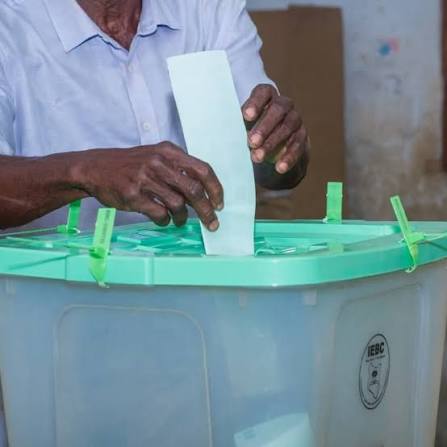
Kenya Ballot box
By Mr. Fredrick Kipchumba Chelimo PWD
Chairperson, Jiamini Disability network Community Based organization
Email: jiamini.network@gmail.com
Every political electoral cycle has its theatrics with each cycle presenting a more drama than the previous one. It is no longer a formal democratic process where aspirants present themselves to the electorate explaining and expressing their vision and strategic plans according to the electoral constituency of choice and leave electorate to make a choice in the ballot box. The entire scenario has been turned into a more dramatic chaotic place worse than a market place.
Kenya’s political marketplace is entering one of its most intriguing seasons. Behind the flags, rallies, slogans, defections and carefully choreographed photographs, another politics is taking place quietly—in boardrooms, private homes, hotels and secluded political meetings where leaders sit across tables calculating the value of constituencies they claim to command.
There, political alliances are negotiated like commercial contracts. Positions in the next government are whispered about. Appointments to parastatals and boards are discussed. Development projects are dangled. Political protection is promised. Money and influence become bargaining chips. And somewhere in the middle of all this, the Kenyan voter is being treated as merchandise.
The political wholesaler arrives at the negotiating table carrying what he describes as a political “block”—thousands, perhaps hundreds of thousands, of votes supposedly under his personal control. He speaks with astonishing certainty: my people are with us; my constituency has decided; my community will vote this way. But there is an inconvenient question that the political marketplace rarely asks: Who gave one politician ownership of the conscience of thousands of citizens?
A leader may have one voter’s card. So does the farmer in the village, the teacher in the classroom, the boda boda rider at the stage, the trader in the market and the young person searching unsuccessfully for employment. Yet somehow, once a politician enters the negotiating room, that single vote magically multiplies into thousand That is the great fiction upon which political wholesale trade is built.
A representative is not the owner of the people. An MP, governor, senator, MCA or party official may possess influence, networks and political experience, but representation is a trust, not a title deed over citizens’ political choices. But the business remains profitable because the political class continues to confuse influence with ownership. The wholesaler promises the votes. The buyer provides the resources. The brokers calculate the numbers. Everyone leaves the room believing that a constituency has been secured. But there is one small problem. The ballot has not yet been marked. And that is where political mathematics can suddenly collapse.
Inside the polling station, the voter becomes wonderfully independent. The broker is absent. The political party is outside. The village kingpin cannot see the ballot. The government official cannot dictate the mark. The candidate cannot whisper into the voter’s ear. For a few precious moments, democracy reduces itself to its most elemental form: one citizen, one ballot and one conscience. That is why the political class should be careful about believing its own spreadsheets.
The Kenyan voter has memory. He remembers the road that was promised and never built. She remembers the water project that appeared in speeches but not on the ground. The young person remembers the promised job. The farmer remembers the campaign-season fertilizer and the post-election silence. The citizen remembers the empowerment programme that somehow found its way into the hands of political friends while the genuinely vulnerable remained spectators. Citizens are keeping their own scorecards.
And political sycophancy has not escaped their attention either. They remember those who defended every failure because they were close to power. They remember leaders whose principles mysteriously changed whenever political alliances changed. They remember the permanent praise singers who discovered courage only after leaving government. They remember those who crossed political floors not because the national interest had changed, but because their personal interests had.
The electorate is writing political biographies in real time. This is why the coming political season may surprise those who imagine that Kenya can still be managed entirely through political brokerage. The political marketplace may see constituencies as blocks, but communities are made up of individuals. A village is not a voting machine. An ethnic community is not a single mind. A constituency is not one enormous ballot paper that its political representative can sign away in a hotel room. People have different hopes, fears, loyalties, disappointments and aspirations. They may cheer one politician today and vote differently tomorrow.
Indeed, there is an emerging sophistication among voters that politicians often underestimate. A citizen may accept the campaign money, eat the food, board the hired vehicle, attend the rally, dance to the music and wave the party flag—and still retain the most valuable possession in a democracy: the freedom to make an independent decision in the polling booth. The handout may purchase attendance, applause, a photograph, temporary loyalty but may not purchase conscience. That distinction is becoming increasingly important.
The political wholesaler may return to headquarters announcing that a constituency has been delivered. The buyer may proudly include those supposed votes in an electoral calculation. The candidate may celebrate an alliance as though the election has already been won. Then the votes are counted. And the mathematics refuses to cooperate.
This is the uncomfortable truth politicians must confront: you can negotiate a political alliance, but you cannot pre-sign another citizen’s ballot. Democracy is ultimately an act of individual sovereignty. The coming contest may therefore be less about which political alliance looks strongest on the stage and more about whether the electorate believes the people negotiating in its name deserve its trust.
The wholesalers will calculate. The brokers will bargain. The politicians will promise. The crowds will cheer. The music will play. But beneath the noise, ordinary citizens will remember.
They will remember who came looking for their votes and who came looking for their interests. They will remember who promised empowerment and who delivered patronage. They will remember who spoke for them and who merely spoke about them. And when voting day comes, the political wholesaler will discover the fundamental weakness of his business model. He never owned the votes, he only claimed to, the ballot belongs to the voter. the conscience belongs to the voter, and the final decision belongs to the voter.
And when the results arrive, those who priced the electorate like merchandise may stare at their carefully prepared spreadsheets in disbelief. The promised numbers may not materialise. The political merchandise may have disappeared. It will not have disappeared. It will simply have returned to its rightful owner. The voter.
The political wholesaler may negotiate the price. The auctioneer may announce the bid. The broker may promise delivery. But ultimately, the voter writes the final answer.
Similar Posts by The Mt Kenya Times:
- Mt Kenya Times ePAPER October 1, 2026
- Museveni backs Lamu but keeps Uganda’s money at home
- Sifuna’s party wins its name — and Kenya’s opposition race begins in earnest
- Lamu’s $16B gamble: Africa’s biggest refinery divides the region
- Ruto launches KSh2.2 trillion Lamu refinery in East Africa’s biggest energy bet
About the Author