When the dust settles, Kenya will still be here: Let the voter, not the political noise, decide
 The Mt Kenya Times
By Mr. Fredrick Kipchumba Chelimo PWD
Email: jiamini.network@gmailfkipchelimo@yahoo.com
Kenya is slowly walking into another political storm. The clouds are gathering, the political winds are changing direction, and across the country, the early tremors of the next electoral contest are beginning to be felt. From the smallest village meeting to the grandest national political declaration, the stage is being prepared. Political boundaries are being redrawn, alliances are being tested, ambitions are being declared and opponents are being measured. The political daggers are out, although some are still hidden beneath the robes of friendship.
Soon, the skies will be crowded with helicopters. Roads will be filled with convoys. Political rallies will compete for attention. Loudspeakers will scream from market centres, football fields and open grounds. Social media will become a battlefield of insults, propaganda and carefully manufactured political excitement. Every politician will have a story to tell, every party will have a promise to make and every political commentator will have an opinion. And the ordinary Kenyan will be invited to watch.
But this time, Kenyans must watch differently. We must watch as citizens, not as blind political fans. We must listen as voters, not as members of cheering squads. We must examine the political boxing ring without forgetting that, after the final bell, it is the citizen who must live with the consequences. The political spectacle will be magnificent. The reality behind it will be painfully ordinary.
The politician will return to a comfortable home after addressing a rally. The struggling farmer will return to a farm whose input costs have risen. The political strategist will return to a hotel room to analyse the day’s performance. The unemployed young person will return home to another day without work. The Cabinet Secretary will fly to another meeting. The ordinary citizen will board a crowded matatu and calculate how to survive until the end of the month. This is the Kenya that must not be forgotten in the political theatre.
Our suffering has been largely silent. The ballot box, too, is silent. Our votes do not shout as they enter the ballot box. They do not carry the noise of helicopters. They do not arrive in motorcades. They do not wear expensive suits. They do not command television studios. Yet those silent votes have the power to determine who governs Kenya.
The vote of the loud political activist will count. The vote of the quiet farmer will count. The vote of the young person who has lost faith in politics will count. The vote of the woman struggling to feed her family will count. The vote of the person with disability who has been systematically ignored by political systems will count. The vote of the elderly citizen who rarely appears on television will count. The ballot box does not know who shouted the loudest. It does not care who owned the largest political convoy. It does not recognise the number of helicopters that filled the skies. It does not distinguish between the politically connected and the politically forgotten. One person. One vote. That is the great equaliser.
This is why Kenyans must resist the confusion that will inevitably accompany the approaching political season. The political class will attempt to make us believe that every disagreement is a national crisis and every alliance is a historic breakthrough. One day, two politicians will be enemies; the next day, they will be strategic partners. A leader who was condemned yesterday may become a political saviour tomorrow. A political friend may suddenly become the greatest enemy. We must not lose our minds in this drama.
Political alliances are often temporary. Political promises are frequently forgotten. Political friendships are sometimes transactional. But the consequences of political choices are permanent enough to shape the lives of ordinary people. Therefore, Kenyans must return to the most powerful political instrument they possess: their conscience. Before cheering for a politician, ask what they have done. Before believing a promise, ask whether it is realistic. Before defending a political party, ask whether the party has defended your interests. Before voting along ethnic or regional lines, ask whether ethnicity has improved your life. Before celebrating a political victory, ask whether the victory will improve the lives of the people who put the politician in office.
The voter must become the investigator. The voter must become the auditor. The voter must become the final judge. Kenya cannot continue choosing leaders based solely on the volume of their rallies. A crowd is not necessarily a measure of competence. A convoy is not necessarily a symbol of good governance. A helicopter is not necessarily a sign of economic success. A political speech is not a development plan.
Indeed, there is something deeply uncomfortable about watching the skies fill with helicopters during political campaigns while citizens are simultaneously being told that the economy is under pressure and that everyone must tighten their belts. The question must therefore be asked: Who is tightening the belt, and who is flying above the belt? This is not an argument against political leaders travelling. It is a question about priorities, accountability and the symbolism of political extravagance in a country where millions of citizens are struggling with the basic cost of living.
The coming election must therefore become a referendum on leadership culture. Do we want leaders who become increasingly arrogant once they occupy public office? Leaders who become so distant from ordinary citizens that their offices appear higher than the people who elected them? Leaders whose Cabinet Secretaries and senior officials behave as though they are taller than nature itself? Or do we want leadership that listens? Leadership that walks into the villages. Leadership that listens to farmers. Leadership that respects young people. Leadership that includes women. Leadership that recognises persons with disabilities not as objects of charity but as equal citizens with rights, talents and economic potential. Leadership that understands that development must begin with the most vulnerable.
The true test of government is not how well it serves those who already have power. The true test is how it treats those who have none. The person with disability who cannot access a government building is part of Kenya. The farmer who cannot secure a profitable market is part of Kenya. The unemployed graduate is part of Kenya. The child studying in an overcrowded classroom is part of Kenya. The elderly person waiting for medical attention is part of Kenya. The small trader struggling under the weight of taxes and regulations is part of Kenya. These are not statistics. They are citizens. And when the political dust settles, they will still be here.
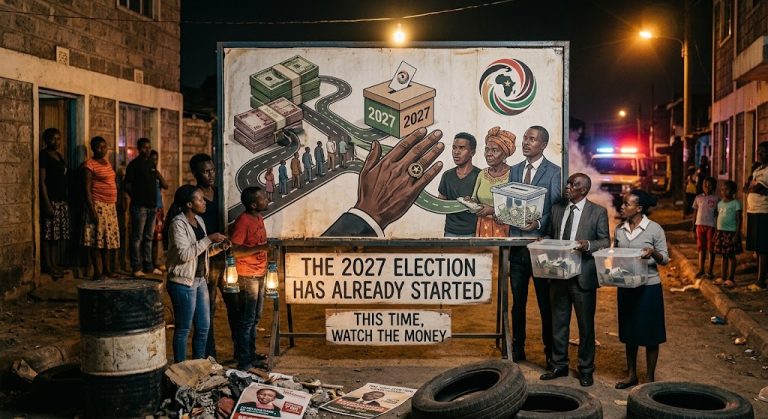
That is why the 2027 political contest must not simply be about who defeats whom. It must be about what kind of country Kenyans want to build. The political class will focus on winning the election. The citizens must focus on winning the future. Let us therefore spectate, but let us spectate intelligently. Let us listen to the noise without becoming part of the noise. Let us watch the political boxing ring without allowing ourselves to be punched by propaganda. Let us watch the football match without forgetting that we are the referees.
The political season will come with its drama. Some leaders will surrender. Some will emerge. Some will merge. Some will disappear. New alliances will be born, old friendships will collapse and political fortunes will rise and fall. But after all the speeches, rallies, helicopters and political theatre, the Kenyan voter will remain with one solemn responsibility. To choose.
And when the dust settles, Kenya will still be here. The politicians will return to their offices. The campaign flags will come down. The helicopters will disappear from our skies. The music will stop. The crowds will go home. But the consequences of our choices will remain with us for another five years. So, before we cheer, let us think. Before we shout, let us listen. Before we promise our vote, let us examine the record.
And when the time comes, let us walk into that polling station guided not by fear, tribe, political excitement or empty promises, but by our conscience. Because the ballot box is silent. But it speaks with consequences. And this time, let our silent votes speak louder than all the political noise.
Similar Posts by The Mt Kenya Times:
- Sengwer youth: When will Kenya stop treating a minority like an afterthought?
- When young lives become disposable
- The day death refused to be scammed
- Statement win at the Gtech: Brentford outclass Chelsea to claim all three points
- When disability funds become a frontier for accountability: Kenya’s PWDs refuse to be invisible
About the Author