1,664 Residents In Kirinyaga Set To Receive Land Ownership Documents
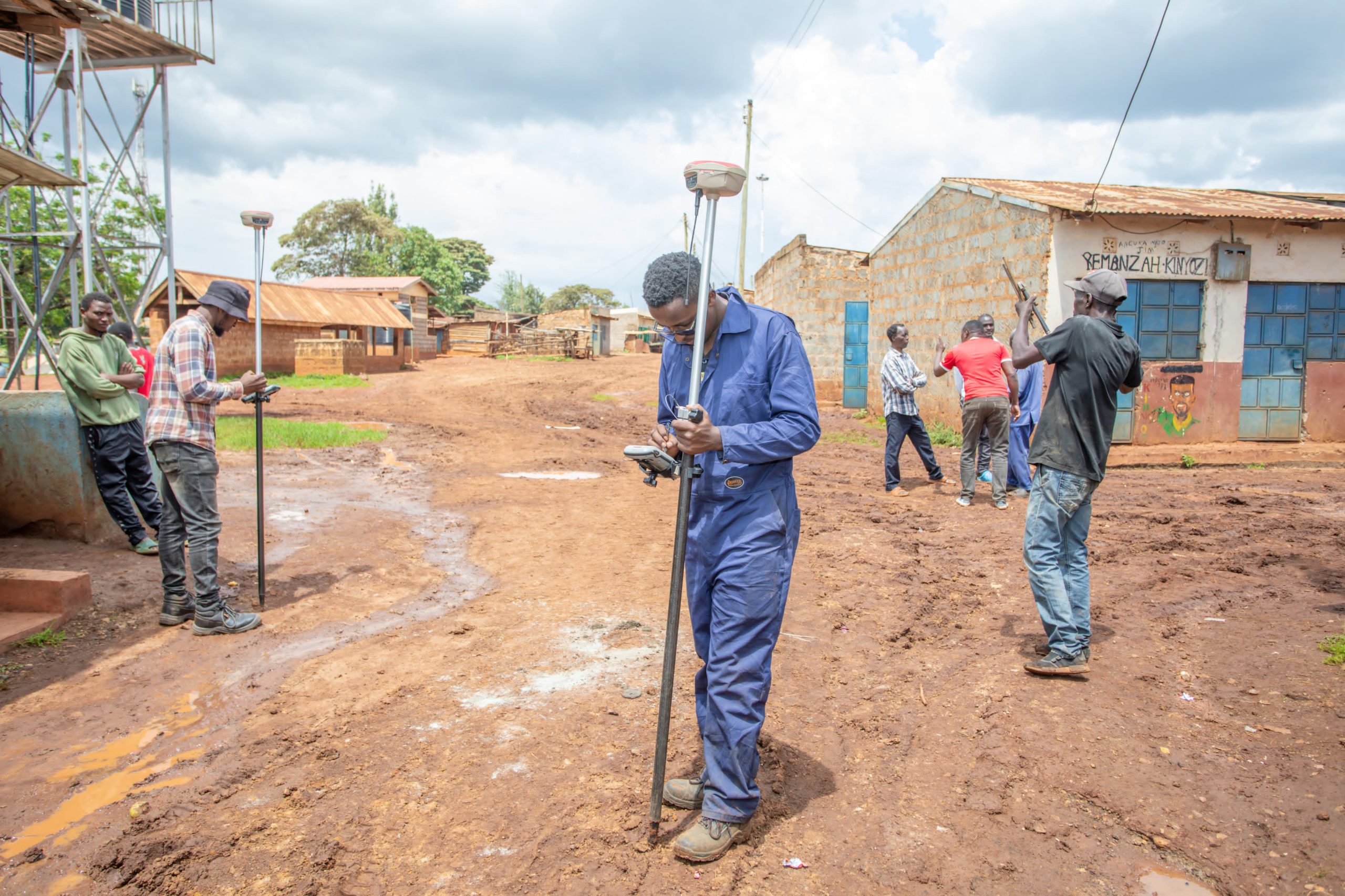
Staff from the County land department surveying the colonial villages in Kirinyaga
By: KNA
A total of 1,664 residents from 11 colonial villages in Kirinyaga County are set to benefit from land ownership documents under the Second Kenya Informal Settlements Improvement Project (KISIP 2). This breakthrough marks a critical step towards resolving long-standing land tenure challenges in the county.
KISIP 2 is a collaborative initiative jointly funded by the World Bank’s International Development Association (IDA), Agence Française de Développement (AFD), the European Union (EU), and the Government of Kenya. The program aims to improve access to basic services, enhance land tenure security in urban informal settlements, and strengthen the institutional capacity for slum upgrading across Kenya. It operates under the vision of “Promoting Dignified Living” by addressing systemic issues such as insecure land tenure, poor infrastructure, and limited socio-economic opportunities.
Samuel Kanjobe, the County Executive Committee Member (CECM) for Lands, Physical Planning, and Urban Development in Kirinyaga, said the county is benefiting from KISIP 2 under Lot 6, which includes 11 out of 148 villages targeted for regularization.
“And in this program in Kirinyaga out of 148, in this first component we are having 11 villages. We still have others that we have proposed upcoming for the second tier involving 7 villages. We have a huge backlog of villages that still require to be regularized in terms of creation of documents of ownership” Kanjobe said
Kanjobe added that Kirinyaga County is unique in that it has the highest number of informal settlements that originated as colonial villages. During the colonial era, people were clustered in villages during repatriation, and while other counties transitioned to individual land allocations, these villages remained intact. This has left the county dealing with land ownership challenges while others focus on infrastructure.
“Whereas some of the counties are benefitting in the second component of this program KISP 2, which is infrastructure development, ours are still there looking towards land regularization. We still request the national government to make a special consideration for our county” the CEC noted
He expressed optimism that the ongoing implementation of KISIP 2 will significantly reduce the number of residents without vital land documents in the county. The county government is also in the process of resettling 35 families in vacant government land, with each family receiving an eighth of an acre paving way for titling and formal issuance of documents.
“We hope that this program will be fast-tracked. There is still a huge backlog of the outstanding colonial villages that will also require preparation, regularization and issuance of the documents of ownership.”
Residents of Mukinduri and Kamuiru villages—two of the targeted colonial settlements—welcomed the initiative as a long-awaited relief. Rosemary Waithira, a resident of Mukinduri, noted that formal titling will help clearly identify and protect public utilities such as roads, which have previously been encroached upon and nearly disappeared.
John Mwangi echoed her sentiments, saying the lack of documentation has historically fueled boundary disputes and tensions within the community.
Muriithi Kagai from Kamuiru village highlighted the economic impact of land ownership:
“Having a title deed means you can access bank loans to expand your business. It also means our roads can be widened, which will improve emergency response services like fire and ambulances.”
The issuance of land titles through KISIP 2 is poised to usher in a new era of security, dignity, and development for thousands of residents.
Similar Posts by The Mt Kenya Times:
- Diaspora Times Global Oct 17 – Oct 23, 2026
- Is social media a blessing or a curse for university students?
- Light at last: How electricity is reshaping Nandi and Uasin Gishu
- The triple squeeze: how EPRA’s fuel price hike is reshaping the survival equation for the common mwananchi
- Zelenskyy accuses Trump of rewarding Putin as Pope pleads for peace from a hospital bed
About the Author