200 years for cult leader Paul Mackenzie: Does this bring religious sanity?
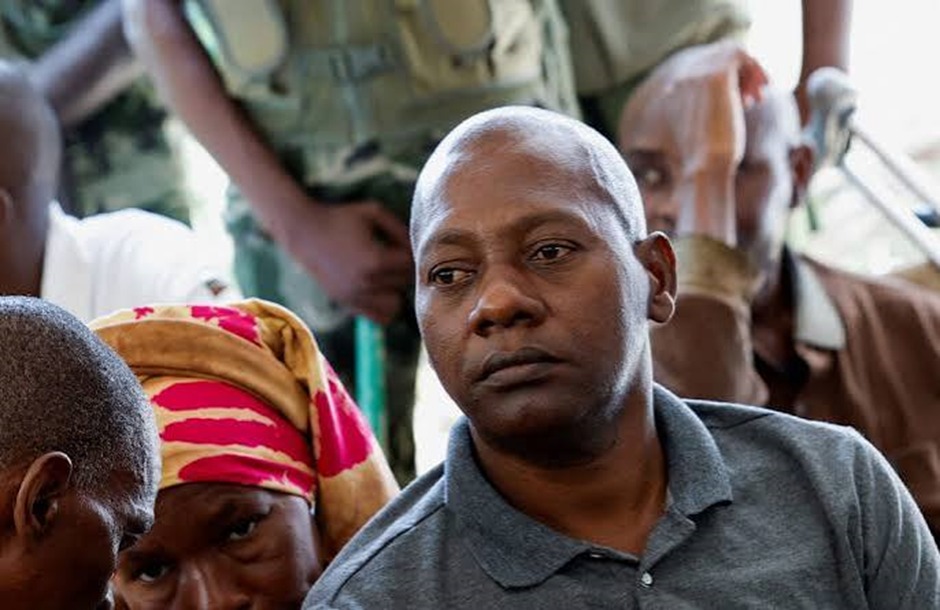
Paul Nthenge Mackenzie
The Shakahola massacre sentence closes one chapter, but the institutional failures that allowed 448 people to die in a forest demand answers that a prison term alone cannot provide
By John Kamau
There was no outburst in the courtroom. No tears. No visible remorse. Paul Nthenge Mackenzie, former taxi driver turned self-styled pastor, stood in a grey polo shirt and black trousers inside a tent erected outside the Mombasa High Court and listened, expressionless, as Justice Diana Kavedza sentenced him to 200 years in prison for the murder of 191 people — 190 of them children. It was, by any measure, one of the most consequential criminal sentences in Kenyan judicial history. Outside, the families of the dead wept. Some had travelled for days. Stephen Mwiti, 48, a father who lost six of his children to the Shakahola forest and whose wife is among the convicted accomplices, spoke quietly to journalists. “I lost friends too,” he said, “and my younger brother. It’s justice to the people we lost over there in Shakahola.”
Justice, yes. But justice of a particular and limited kind. The sentence delivered Friday in Mombasa punishes one man — the principal architect, the manipulator-in-chief, the voice that told parents their children would meet Jesus if they stopped eating. In her sentencing determination, Justice Kavedza described Mackenzie as the principal architect of the criminal enterprise, noting that he had led Good News International Ministries and presided over meetings where he directed followers to fast to death. The two sets of sentences — 100 years for murder by starvation across 183 counts, and 100 years for eight direct homicides — will run consecutively, ensuring a combined term of two centuries. The prosecution had urged the court to impose the death penalty, arguing the scale and circumstances of the killings warranted the ultimate punishment. The court declined. It chose instead a sentence that, in the words of Justice Kavedza herself, ensures that “prolonged imprisonment would provide sustained accountability while preserving the possibility that the convicts could disclose the whereabouts of children whose remains have not yet been recovered.”
That last clause — children whose remains have not yet been recovered — is worth sitting with for a moment. It is a reminder that even now, three years after the first bodies were found in those shallow graves and latrines near Malindi, the full extent of what happened in Shakahola forest is not fully known. The Kenya National Commission on Human Rights has reported 448 bodies recovered. Mackenzie faces a separate case involving a further 52 deaths connected to another location. Further excavations in the forest have pushed the overall death toll beyond 400, and investigators have continued to find evidence of prolonged, systematic suffering carried out over an extended period. The numbers, already staggering, may yet rise. Some of the dead may never be identified. Some of their families may never have closure.
This is what Mackenzie wrought. And this is what the systems of government, policing, intelligence and child protection failed to stop, despite having been given every opportunity to do so.
The youngest victim was a baby who had lived for only 12 days. Twelve days. The child had not yet seen a sunrise beyond the first fortnight of its existence when it was permitted — by adults, by parents, by the absence of any intervening authority — to die. Justice Kavedza, in her sentencing, specifically highlighted the vulnerability of child victims who depended entirely on adults for food, water and protection as a significant aggravating factor, and noted that the Constitution and the Children Act impose a duty on parents to feed, protect and preserve the lives of their children. She further established that the fasting was not a voluntary religious undertaking but was enforced through an organised system of indoctrination, intimidation and violence. Mackenzie’s accomplices threatened and beat victims to ensure they followed his orders.
This was not a congregation that chose death. This was a population under siege, stripped of agency by a man who had spent years constructing the theological architecture of their submission.
Before founding his church, Mackenzie was charged four times for his sermons while working as a taxi driver, but was acquitted due to lack of evidence. In 2019, he was accused of being linked to the deaths of two children who died of hunger and suffocation and were buried in the Shakahola forest. He was released on bail pending trial. The local police had received recurring complaints from religious leaders and the community against his activities from as early as 2017. The county security committee had summoned Mackenzie and warned him against his radical teachings and subjecting followers to inhumane conditions. He was warned. He was charged. He was bailed. He was summoned. And then, between January 2021 and September 2023, while the machinery of the Kenyan state continued its slow, disinterested orbit, 448 people — most of them children — died in a forest.
The Commission on Administrative Justice, Kenya’s ombudsman, described the conduct of officials from the National Government Administration and the National Police Service as a “gross dereliction of duty,” found the deaths preventable, and recommended disciplinary action for six officials. The Independent Policing Oversight Authority’s chief executive, Elema Halake, characterised the entire episode as a multi-agency failure. The Supreme Council of Kenya Muslims said pointedly that “the government, starting with the police, National Intelligence Service, political leaders and the Ministry of Interior, slept on their job with regard to Mackenzie’s activities thus allowing the Shakahola deaths to happen.” President William Ruto acknowledged in 2023 that government agencies should have been able to prevent the deaths and said he took responsibility as president. He subsequently named individuals who would have to answer for the failure, citing intelligence services and the Criminal Investigation Department specifically. It is not publicly established, to date, that any of those individuals has been held accountable in any formal, documented way.
That gap — between the acknowledgment of failure and the accountability for it — is a gap that the Mombasa sentence does not close. It cannot. Courts sentence the convicted. They do not discipline the negligent officials who enabled the conditions in which conviction became necessary.
The legislative response has been equally frustrating. The Religious Organisations Bill, introduced following the recommendations of the Ad Hoc Committee on the Shakahola Massacre, was formally withdrawn by its sponsor, Tana River Senator Danson Mungatana, after widespread clerical opposition. The Pentecostal Voices of Kenya, the Federation of Evangelical and Indigenous Christian Churches of Kenya, Muslim leaders and the Inter-Religious Churches of Kenya all lined up against the bill, warning that it threatened constitutional freedoms and created vague offences capable of being used to harass religious leaders. The government then began work on a new draft Religious Organisations Policy drawing on the presidential task force recommendations, though that too attracted immediate and organised resistance. Senator Mungatana confirmed he had formally written to Senate Speaker Amason Kingi to withdraw the bill.
Bishop Francis Omondi of the Anglican Church offered what may be the most piercing summary of the impasse: “The laws are present, we have enough regulatory policies but they are not followed.” That observation cuts to the heart of the matter. Kenya has approximately 40,000 registered religious organisations, with minimal oversight of their actual operations. The problem is not an absence of statute. It is an absence of enforcement culture, institutional will and coordinated inter-agency response — precisely the same absence that allowed a known extremist to operate in a forest for the better part of three years.
The tension at the centre of this debate is real and must be confronted with clarity rather than evasion. Kenya’s Constitution, under Article 32, guarantees freedom of conscience, religion, thought and belief. That protection is not decorative. It is foundational in a society where faith is woven into the daily fabric of life for the overwhelming majority of citizens. A government empowered to determine which religious beliefs are acceptable and which are not would pose its own serious threat to constitutional freedoms and create dangerous opportunities for political interference in spiritual life. That path has its own body count in the history of authoritarian governance, and it is not a path Kenya should travel.
But the answer to that concern is not to leave religious institutions insulated from meaningful scrutiny in the name of protecting constitutional freedom. The answer is targeted, rights-consistent regulation — focused specifically on unlawful conduct, child protection, financial exploitation, public safety and institutional accountability. The Constitution does not protect the right to starve a twelve-day-old child. It does not protect the right to run an indoctrination camp behind a fence in a coastal forest. It does not protect the right to threaten and beat people into compliance with a theology of self-annihilation. What the Constitution protects is genuine religious practice, freely chosen, by adults capable of choosing. Shakahola was none of those things.
The urgency of that reform is sharpened by developments since the original massacre came to light. In 2025, police exhumed at least 32 more bodies near Shakahola, raising fears that cult activity had continued even after Mackenzie’s arrest, and raided a separate sect’s compound where two bodies were found and 57 people were rescued from a cult leader’s control. The emergence of Kwa Binzaro as a second site of cult-related deaths confirmed what many had feared: that Shakahola was not an aberration. It was a symptom of a regulatory environment so porous that a man could build a death camp from scripture and emerging leaders could observe his methods and replicate them. Police have since admitted that the lessons of Shakahola were not fully applied before Kwa Binzaro.
That admission should not pass without consequence.
Kenya’s intelligence agencies, the National Police Service, local administrators and child protection authorities must urgently strengthen the coordination mechanisms that identify dangerous conduct before it reaches catastrophic scale. Reports of children being denied food, families being isolated from wider society, followers being threatened for questioning leadership — these are not ambiguous signals. They are, as the Shakahola investigation demonstrated beyond doubt, the operational signature of a religious criminal enterprise. They should trigger immediate, documented, multi-agency response. Not deference. Not bureaucratic diffidence. Not the quiet hope that the problem will resolve itself without the inconvenience of intervention.
Religious extremism rarely announces its intentions. It enters through the door of human need — the need for belonging, for healing, for meaning, for hope in conditions of hardship. The willingness to surrender independent judgment to a figure of spiritual authority is not, in itself, a failure of character. It is a human impulse that charlatans throughout history have recognised and weaponised. Mackenzie was not a uniquely sophisticated operator. He was a taxi driver with a Bible and an understanding of desperation. The sophistication was institutional: it lay in the systems that looked at him repeatedly and found, each time, insufficient reason to act.
There are others. Some are already operating. Some may already have disciples who are fasting in undisclosed locations. The 200-year sentence sends a message, and that message is not nothing. “The objectives of sentencing, particularly retribution, denunciation and deterrence, require that punishment be experienced as a tangible loss by the offender,” Justice Kavedza said, in a passage that will be quoted in every future criminal case involving religious extremism in this country. Those words will carry weight in future courtrooms. They should also carry weight in the offices of police commanders, county administrators, intelligence directors and cabinet secretaries who are, at this moment, receiving reports about individuals whose conduct bears the hallmarks of what happened in Shakahola.
The question is not whether those reports exist. They do. The question is what happens to them next.
For 448 people buried in a forest near Malindi, the answer came too late. For the twelve-day-old who never learned to crawl, the system’s failure was not an abstraction. It was everything.
The sentence is necessary. It is not sufficient. And the families who stood outside that courthouse in Mombasa yesterday, some weeping, some silent, some simply staring at the tent where the man who destroyed their families was told he would spend the rest of his natural life in prison — those families deserve more than a verdict. They deserve a Kenya in which the warnings are heard before the graves are dug.
Similar Posts by The Mt Kenya Times:
- KCB Bank Tanzania integrates PayPal into mobile app in East African digital banking first
- Why university students are dying: The crisis no one wants to talk about
- A special place in my heart for the young mothers sitting the 2026 KCSE
- Criteria for the Optimal Placement of Electric Vehicle Charging Infrastructure across Urban Transport Networks
- Exporting Teachers, Importing Standards: Is Namibia ready to strengthen classrooms in The Bahamas, and what does the request reveal about the regulation of teaching at home?
About the Author