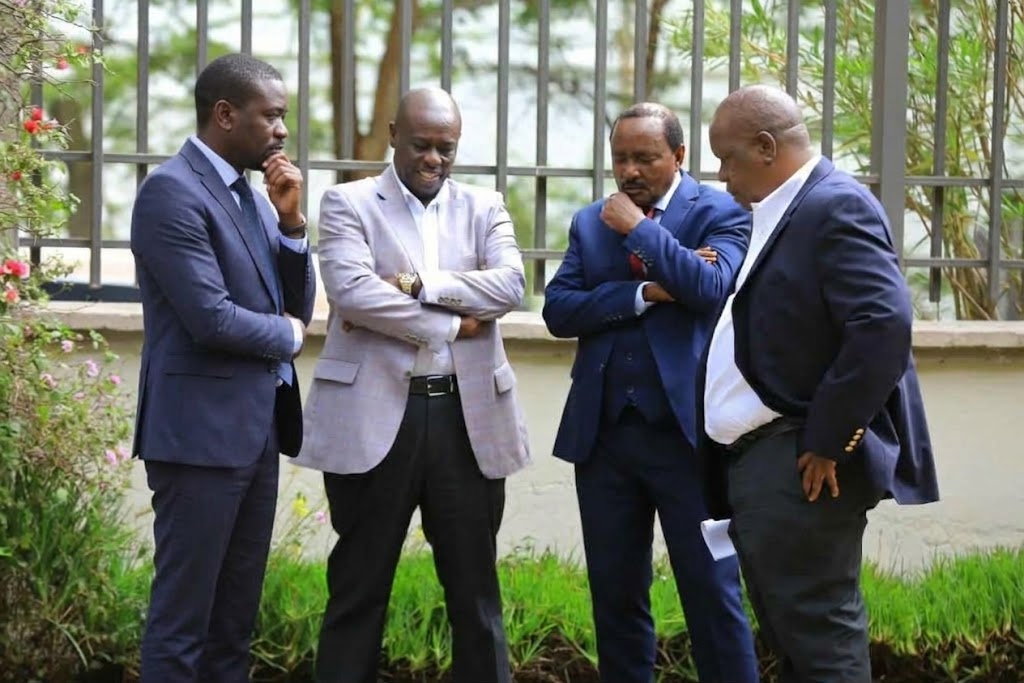
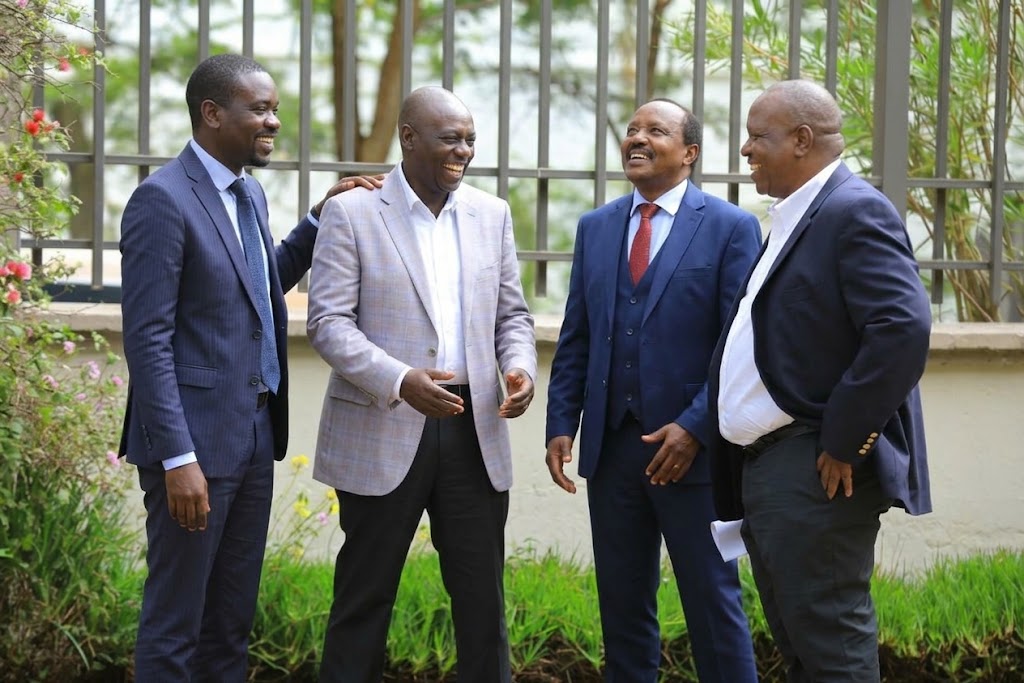
Nairobi Senator Edwin Sifuna, Former Deputy President Rigathi Gachagua, Wiper leader Kalonzo Musyoka, and former Interior Cabinet Secretary Fred Matiang'i
Kenya’s politicians are assembling coalitions and calculating tickets — but nobody is telling the country what they actually intend to do with power
By Levis Wangamati
Kenya has a peculiar political habit. The next election is discussed long before the current political questions have been answered. The ballot may still be months away, but the machinery is already running. Leaders are travelling, alliances are being negotiated and political camps are calculating who should occupy which position when the music stops. The language of 2027 is growing louder than the language of 2026, while ordinary Kenyans continue negotiating the very different realities of today.
The signals are now impossible to ignore. Former Deputy President Rigathi Gachagua, Wiper leader Kalonzo Musyoka, Nairobi Senator Edwin Sifuna and former Interior Cabinet Secretary Fred Matiang’i have all been linked to efforts aimed at producing a single opposition presidential candidate for the 2027 general election. Gatanga MP Edward Muriu has reportedly been tasked with preparing a framework for cooperation. The move confirms that opposition leaders are thinking seriously about how to organise before the next electoral contest arrives.
But that development does not answer the hardest question. Agreeing that there should be one candidate is considerably easier than agreeing on who that candidate should be. The opposition’s dilemma is not simply about unity. It is about ambition, trust, ideology, regional calculations and the difficult mathematics of coalition politics. Several leaders are positioning themselves simultaneously, while different groups attempt to determine how their interests can fit into a single arrangement without something giving way.
Somewhere in this political chessboard, there is a danger that Kenya’s most important player disappears entirely: the ordinary citizen. A young person looking for work does not wake up wondering which politician has secured which coalition position. A parent struggling with school fees is not concerned about who has negotiated the running mate slot. A patient searching for affordable healthcare is not impressed merely because politicians have managed to sit around one table. The Kenyan voter is not a pawn to be repositioned whenever political calculations shift.
The question that should follow every political announcement is therefore a simple one: what exactly is being offered to the country? Political parties have every right to negotiate alliances and build coalitions within the law, and leaders are entitled to pursue the presidency. But political unity becomes meaningful to citizens only when it connects to a clear programme for governing. Without that connection, unity risks becoming a mathematical arrangement designed primarily to win an election rather than a national agreement about how Kenya should actually be run.
Kenya has seen grand alliances before. Politicians who once appeared permanently opposed have shared platforms, photographs and microphones when an election approached, only to rediscover their differences after the votes were counted. Manifestos filled with carefully worded promises have given way to distant memories once campaigns ended. The country should understand by now that political chemistry on a campaign trail is not the same thing as a governing philosophy. A coalition is not a programme.
The emerging 2027 contest must therefore move beyond the question of who can assemble the biggest political crowd. It must ask what each formation intends to do with the country once the campaign music stops. How will Kenya create sustainable employment for millions of young people? What will be done about the cost of living? How will public healthcare become more reliable and more accessible? What is the plan for the country’s debt burden? How will corruption be confronted beyond speeches? These are not questions that should appear only when politicians need votes. They are Kenyan questions — and they are asked every day, in homes, markets, hospitals and classrooms across the country.
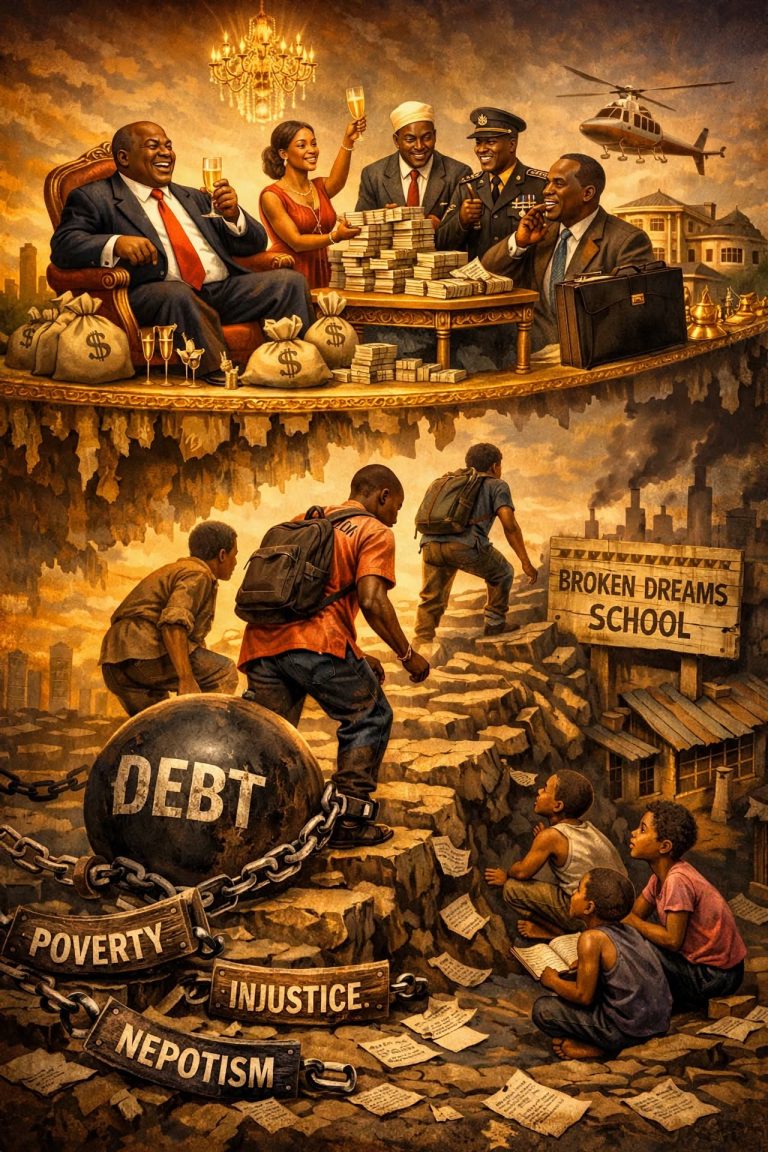
They concern the student in a crowded lecture hall wondering what happens after graduation. The boda boda rider trying to pay school fees from an unpredictable daily income. The small trader whose business survives from one day to the next. The farmer facing rising production costs and uncertain markets. The millions of young Kenyans who have been told repeatedly that they are the country’s future but are still waiting to understand when that future is supposed to begin.
President William Ruto’s administration is already positioning itself for the next contest and has challenged the opposition to present what it describes as a coherent agenda. That challenge deserves a response built on substance rather than another round of political slogans. The opposition has an opportunity to tell Kenyans not merely why it disagrees with the current government, but what it would do differently, how it would finance those commitments and what mechanisms would prevent the same problems from returning under a different name.
That is where political competition becomes genuinely useful. A functioning democracy gives citizens real alternatives. One side explains its record. Another explains its alternative. Citizens examine both and decide. The problem begins when politics becomes so consumed by personalities that policies become secondary. Kenya does not need another election in which the central question is who is standing beside whom on a stage. It needs one in which citizens can understand what each political formation actually intends to do with power.
A coalition can produce an impressive photograph and still leave fundamental questions unanswered. A rally can fill a stadium and say nothing about how a government would create jobs, strengthen institutions or make public services work. Numbers matter in elections, but numbers do not run a country. At some point every political formation must move from arithmetic to administration, from mobilisation to policy and from promises to measurable commitments.
This matters most for young Kenyans. For a generation that has grown up amid economic uncertainty, political promises are increasingly judged against lived experience. Young people want opportunities but they also want dignity — to work, to build businesses, to access education and to participate meaningfully in the country’s future. They do not need politicians to tell them they are the leaders of tomorrow. They need a political system that gives them reason to believe tomorrow will actually be better than today.
That means the 2027 conversation must become bigger than the presidential ticket. Kenya should be discussing the quality of Parliament, county governments, independent institutions, public procurement, the judiciary, electoral integrity and the accountability of public officials at every level. Presidential politics matters enormously, but Kenya’s problems do not begin and end at State House. Government is ultimately experienced through the hospital, the classroom, the police station, the county office, the market, the farm and the workplace. That is where political promises eventually meet reality.
The opposition’s attempt to formulate a single ticket will face a test far greater than choosing one name. The leaders must demonstrate that their unity can survive disagreement, competing ambitions and difficult negotiation. They must explain how decisions will be made, how responsibilities will be shared and how disputes will be resolved. Most importantly, they must show Kenyans that their cooperation rests on something more substantial than the shared desire to defeat another political camp.
The same standard applies to the governing side. Kenya should not be asked to choose between competing personalities without being offered competing visions. Every formation seeking power should face the same questions: what will you change, what will you retain, what will it cost, who will benefit and what will stop your promises from becoming the next government’s excuses?
Those questions may not generate the loudest rally or trend on social media, but they are the ones that matter after election day. Campaigns end, posters come down and political songs leave the streets. What remains is the hospital that either has medicine or does not, the school that either has teachers or does not, the economy that either creates opportunity or does not and the institution that either serves citizens or frustrates them.
The 2027 campaign has already begun. That is now a reality of Kenyan politics, and there is nothing unusual about it. But there is still time to demand something better from it. Let politicians negotiate their coalitions. Let parties calculate their numbers. Let presidential aspirants make their ambitions known. That is part of democracy. But let citizens ask the harder questions — because an election should not simply be a contest over who occupies an office. It should be a national conversation about what that office will be used to accomplish.
Do not just tell Kenyans who is coming together. Tell them what those leaders are coming together to do. Do not just tell us who will carry the flag. Tell us what is written beneath it. Do not just ask for votes. Explain what your promises will cost, which institutions will deliver them and what will hold you accountable when you fall short.
Kenya has enough slogans, political photographs and carefully rehearsed speeches. What the country needs now is an agenda.
Similar Posts by The Mt Kenya Times:
- Mt Kenya Times ePAPER October 3, 2026
- Ruto puts Coast landlords on notice over squatter harassment
- Nairobi lights candles for Raila in Uhuru Park tribute
- Jambojet returns to Entebbe with daily flights and fares from KSh22,950
- From Lamu to the region: What the Dangote Refinery could mean for Kenya’s energy economy
About the Author