
Virat Kohli: The chase master who taught cricket the art of conquest
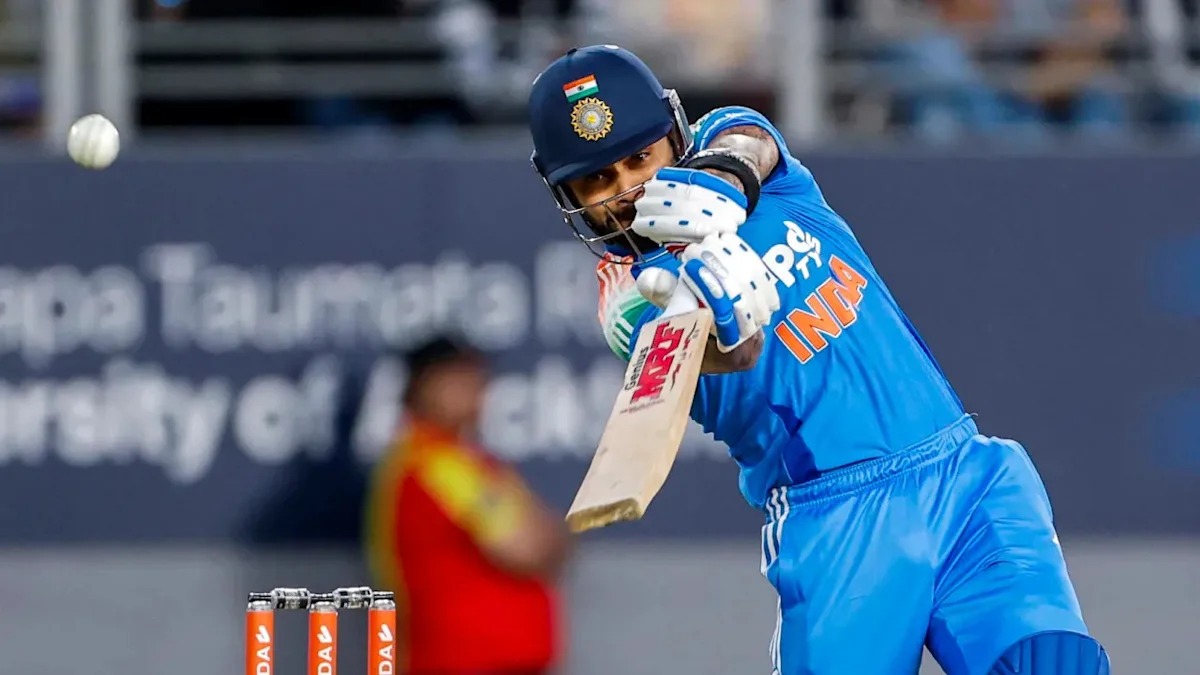
Virat Kohli
From a quiet December heist in Kolkata to a miracle at the MCG, one man rewrote the language of pursuit
By Muzamal Dhothar
There are batsmen who chase totals, and then there is Virat Kohli. When he walks to the crease in a run chase, the scoreboard ceases to be arithmetic. It becomes biography. Every dot ball tightens the pressure, every wicket reshuffles the momentum, and every over rewrites the equation of possibility. Yet the defining truth about Kohli is this: he never chases totals. Totals chase him. That is the essence of the man — a batsman who does not merely absorb pressure but strips it of its power to intimidate. Legends are rarely built overnight. This one was built chase after chase, season after season, each instalment sharper than the last.
It began with a quiet act of larceny in Kolkata on 24 December 2009. A 21-year-old with gelled hair and a Delhi accent walked out to pursue a total of 316. He pulled it off. Nobody called him the chase master that day, but inside that innings was the first blueprint of something extraordinary. The certificate of birth, however, arrived on 28 February 2012 in Hobart, Australia, in an encounter that did not merely announce a talent — it announced a practitioner of an entirely different discipline.
India faced Sri Lanka, chasing 321, with the added condition that they had to seal the target within 40 overs to remain alive in the Commonwealth Bank Series final. Lasith Malinga — the nightmare of batsmen across the globe, arguably the most challenging limited-overs fast bowler of his era — stood between India and the finish line. The responsibility seemed almost impossible. Kohli responded with an unbeaten 133 off 86 deliveries, steering India home in 36.4 overs. He did not simply survive Malinga. He dismantled the great man’s aura entirely, treating the most feared yorker in the world as though it were a problem of geometry, not menace.
What followed between 2013 and 2019 was not dominance — it was tyranny. Some innings are celebrated for their elegance, others for the astonishing velocity with which they dissolve the opposition’s resistance. Jaipur produced a demonstration of the latter against Australia. Kohli converted a pursuit into an exhibition of controlled acceleration, reaching his fastest century off just 52 balls to seal the contest. His most dangerous innings are not those where class surrenders to attitude. They are those where class becomes the instrument of aggression — where the refinement of technique is deployed not to defend, but to devastate.
If the mastery of fast bowling is an art form, then Kohli is its Picasso. What he produced in Mohali in 2016 was something close to miraculous. India faced Australia in a do-or-die knockout, chasing 161 to reach a World Twenty20 semi-final. The required rate escalated, the match entered dangerous territory, and a single quiet over threatened to unravel an entire campaign. Kohli struck 82 off 51 balls. It was not brute force. It was situational intelligence translated into strokes — a masterclass in reading the moment, absorbing the equation and executing with cold precision. He did not win that chase. He killed it.
If Mohali was perfection, the Melbourne Cricket Ground in 2022 was something beyond it. If Kohli’s career were a novel, his 82 from 53 against Pakistan at the MCG would constitute its most cinematic chapter. Before a cauldron of 90,000 screaming supporters, with India reeling at 31 for 4, what transpired next belonged less to sport than to mythology. He did not attack from the outset. He cooked the pressure instead — protecting his wicket, rebuilding the momentum, recalibrating the innings ball by ball, over by over, until the moment arrived for something unforgettable. The shot off Haris Rauf in the 19th over, dispatched for six to shift the equation in India’s favour, has since entered the folklore of the game. The numbers — 18.5 runs required from 6 deliveries at the moment of impact — do not begin to capture the weight of what that moment carried. That evening at the MCG became one of sport’s permanent addresses.
Kohli himself has never attempted to disguise where he lives on the field. His words carry the inner architecture of a competitor who thrives precisely where others fracture:
“I love playing under pressure. In fact, if there is no pressure, I am not in the perfect zone.”
On the peculiar calm that chase mathematics gives him, he has explained: “In T20, I look at the total in numbers of overs to go, not runs and deliveries to go. Overs make it look easier.” The reframing is everything. Where others see a mountain of runs, Kohli sees a sequence of overs — manageable, structured, finite. The mind reorganises the problem before the bat engages it.
On his relationship with aggression, he is characteristically direct: “I do not have to show aggression. I become aggressive when I chase a target. If I do not become aggressive, I am not in the game.” There is a distinction embedded in that formulation — the difference between performed intensity and genuine competitive hunger. Kohli’s aggression is not theatre. It is the metabolic response of a predator who recognises that the chase has begun.
History will remember Kohli for his centuries, his records and his extraordinary victories in pursuit. But numbers, however staggering, cannot fully explain why his greatest innings remain so vivid in the imagination of cricket supporters across the world. Hobart demonstrated audacity. Mohali clarified calculation. Melbourne illuminated resilience under absolute pressure. Each of these knock becomes not merely a statistical entry but a chapter of sporting identity — proof that one man reconceived what a run chase could be, and in doing so, changed the way cricket understands conquest.
The chase master did not arrive. He was built, innings by innings, in the heat of impossible moments that lesser men surrendered and that he, characteristically, refused to.
Similar Posts by The Mt Kenya Times:
- Kenya and Egypt forge nuclear partnership to power Africa’s energy future
- 200 years for cult leader Paul Mackenzie: Does this bring religious sanity?
- KCB Bank Tanzania integrates PayPal into mobile app in East African digital banking first
- Why university students are dying: The crisis no one wants to talk about
- A special place in my heart for the young mothers sitting the 2026 KCSE
About the Author
