5th regime should explore deeper in addressing the plight of immigrant workers
 The Mt Kenya Times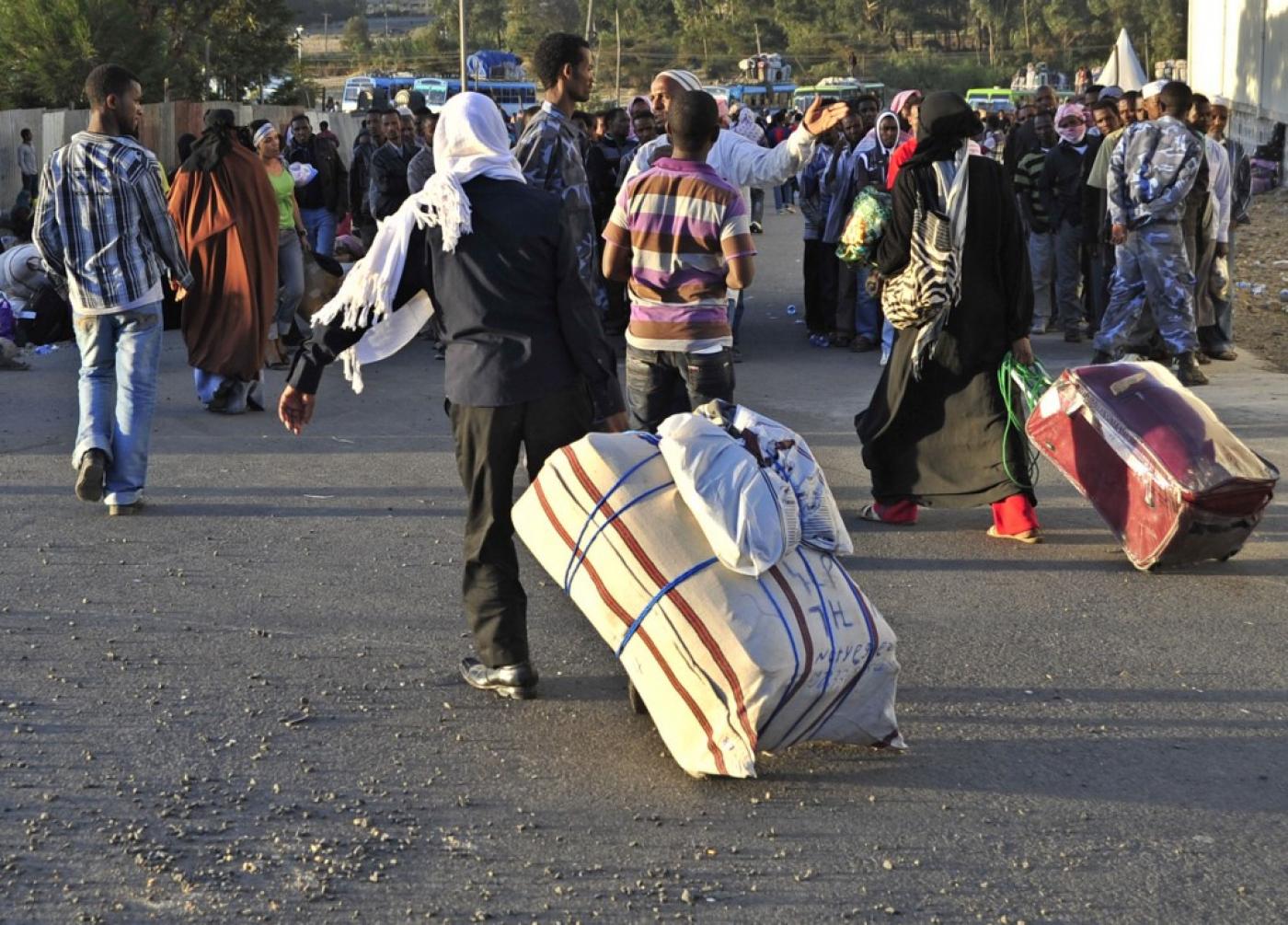
Immigrant workers in Saudi Arabia
By: Dennis Wendo
Worth Noting:
- The new government with a proposal to have a dedicated ministry handling diaspora affairs should out rightly and objectively address the concerns and sufferings of Kenyan workers abroad. Guidelines and policies meant to protect immigrants should be restructured with an accounting authority firmly put in place.
- Majority of job placement companies have taken advantage of policy gaps to exploit Kenyans. A clear cut focus by inter-governments, related ministries and agencies should work towards ending the collection and charging of recruitment fees and related costs from immigrants; let there be a payback scheme in which all employees are reimbursed for the recruitment fees they unfairly incurred.
The trouble of Kenyans working in the Gulf Cooperation Council countries of Bahrain, Kuwait, Oman, Qatar, Saudi Arabia, and the United Arab Emirates, continues to be harrowing with cases of gross human rights violation and reports of deaths under unclear circumstances incessantly soaring.
Prior to venturing overseas, most Kenyans hold on to high hopes of earning money and supporting their families financially. This has turned out not to be the manifestation. Their expectations have been shattered, with many returning home empty-handed and in debt traps.
To secure jobs abroad, migrant workers regularly take out loans with interest in order to afford the exorbitant fees. This accumulated debt increases a migrant worker’s risk of falling into debt bondage while braising their vulnerability to exploitation. Even in less extreme circumstances, it leads to situations in which workers are stuck in unfavorable working and living conditions. In such cases, returning home is not a realistic option as job insecurity could push them further into indebtedness. Migrant workers’ salaries are split between loan repayment, remittances for family, and personal living costs. This inevitably delays their ability to save and meaningfully improve their socioeconomic status.
For instance, in Qatar, the host country for the 2022 World Cup tournament, there is an outcry by majority immigrants on labor abuse, massive job redundancies without proper contract termination notice, complete wages, or end-of-service benefits. Those that protest against the unfair labour practices get detained and deported.
The new government with a proposal to have a dedicated ministry handling diaspora affairs should out rightly and objectively address the concerns and sufferings of Kenyan workers abroad. Guidelines and policies meant to protect immigrants should be restructured with an accounting authority firmly put in place.
Majority of job placement companies have taken advantage of policy gaps to exploit Kenyans. A clear cut focus by inter-governments, related ministries and agencies should work towards ending the collection and charging of recruitment fees and related costs from immigrants; let there be a payback scheme in which all employees are reimbursed for the recruitment fees they unfairly incurred.
Strikingly, many of the recruitment agencies extort huge sums of money from desolate citizens, dodge tax compliance and continue to act as link suppliers of terror recruits in the overseas countries. In the last two years over 97 cases of deaths have been recorded by the ministry of labour and social protection services, affecting Kenyan immigrants working in the gulf regions.
In 2007, the government sought to curb recruitment malpractices by enacting the Labour Institutions Act that regulates cross-border recruitment by private employment agencies, including the registration requirements, agents’ obligations, and penalties for violations.
The law’s subsequent amendments in 2014 regulated recruitment costs, shifting the responsibility for payment to the recruitment agencies, except for a service fee that should not exceed 25 per cent of the workers’ first monthly salary. In 2009, Kenya drafted an overall migration policy, followed by a national labour migration policy in 2010.
These policies have largely remained in draft form, yet circumscribing the deployment of Kenyan workers, their labour rights and protections while abroad, and reintegration. In 2015, Kenya implemented a diaspora policy focused on harnessing the potential of its nationals abroad to contribute to the country’s economic development. The policy sought to facilitate remittance inflows.
Enacting the labour migration 2021 bill into law and enforcing the tenets will ensure challenges of migrants will be fairly addressed. There will be a pre-departure labour and rights-based training programme for Kenyan migrant workers, the existence of functional regulations guiding registration of employment agencies, the existence of structured contracts and remunerations. There will be a functional and updated database of employment opportunities available for Kenyans in the Middle East and other foreign destinations, strengthened bilateral working relationships to ensure embassies play a crucial role in addressing the plight of workers overseas.
The law aims at building the capacity of agencies by wiping out the briefcase and rogue recruitment agencies that violate policies in sending workers abroad. The agencies will have to pay a security bond of Sh500, 000 to Sh1.5 million ($4,852 to $14,556) for the government to repatriate workers in the event of emergencies.
The establishment of safe houses by the Kenyan government to safeguard its migrant workers from abuses in the Middle East countries is timely. The process of tracing Kenyans suffering abroad and enforcing stringent measures to control illegal labour immigrants is a move towards the right direction. Let it be mandatory for all private recruiting agents to register with the National Employment Authority (NEA) to be allowed to export labour.
Dennis Wendo
Founder Integrated Development Network
Email: dambehi@gmail.com
Similar Posts by The Mt Kenya Times:
- Mt Kenya Times ePAPER August 29-30, 2026
- Old Mutual swings to KSh882M profit as insurance arm ends losing run
- US pumps KSh930M into Kenya police modernisation
- Kalonzo comes to the Coast with a simple, devastating message: You have been betrayed
- Tear gas, shuttered shops and a government out of touch: The KRA tax revolt that could define Kenya’s road to 2027
About the Author