Magistrate’s proposal to establish office of pre-trial judge commendable
 The Mt Kenya Times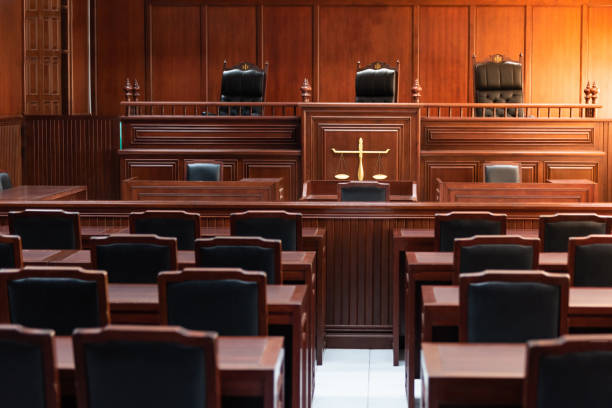
Red wood table and red chair in the justice court
By: Joseph Mutua Ndonga
Worth Noting:
- One would have expected the DPP to discern this after perusing this file. Consequently, he ought to have returned the file to the DCI while pointing out the loose ends they needed to relook in order to tighten their case.
- But listening to DPP, he was equally under pressure to prefer charges against then Mathira MP and a key ally of then Deputy President Dr William Ruto.
- The highest office in the land had a hand in this matter because of political reasons. Therefore, we were being pushed to charge him. Some of us had even received threats. Again, the ODPP would claim that some of the documents forwarded to them had been forged.
When I heard the reasons that prompted the Office of Director of Public Prosecution [ODPP] to withdraw the graft charges against the Deputy President Rigathi Gachagua and nine others including Nyeri Senator Wamatinga, two questions came to my mind. Isn’t this is same DPP who had filed this case? Does it mean he had filed it without being furnished with sufficient evidence?
If yes, then it means he had not fully complied with the requirements of the constitution.
The stipulations of Article of 157 were very clear. Being an independent arm of the government and exclusively granted with prosecutorial power, the office of DPP was required to file cases that had been anchored on water-tight evidence. These are cases that the prosecutor stood a high chance of securing convictions.
In his submissions, the lead investigator from the Directorate of Criminal Investigations [DCI] argued that he was under pressure to prepare the charge sheet and arraign Gachagua before the court. He, therefore, took this action before completing the investigations.
One would have expected the DPP to discern this after perusing this file. Consequently, he ought to have returned the file to the DCI while pointing out the loose ends they needed to relook in order to tighten their case.
But listening to DPP, he was equally under pressure to prefer charges against then Mathira MP and a key ally of then Deputy President Dr William Ruto.
The highest office in the land had a hand in this matter because of political reasons. Therefore, we were being pushed to charge him. Some of us had even received threats. Again, the ODPP would claim that some of the documents forwarded to them had been forged.
These claims were weighty. So, I would not want to imagine the ODPP was also playing politics as alleged in some quarters.
I was happy to note that the magistrate who was hearing the case captured my feelings in the final ruling.
While acquitting Gachagua, he expressed concern that this matter should not have been brought to the court. It was not fair to have judicial officers spend long hours taking notes. This amounted to engaging them in a wild-goose chase as the case had been designed to achieve ulterior motives and fail.
As the adage goes when the two bulls fight, it is the grass that suffers. In Gachagua case, the two bulls cited were the head of ODPP Nordin Haji and former DCI boss George Kinoti.
The duo started rocking their horns during the tenure of former President Uhuru Kenyatta. Their differences revolved around the issue of the prosecution of the high profile cases of corruption, murder and economic ruin. Whereas the DCI held that his office carried out thorough investigations and hence the files contained sufficient evidence, the DPP held different opinions.
For the DPP, the evidence forwarded could not have secured a conviction. So, we cannot file the cases because we do not want to be ashamed and embarrassed. Look at these files again and tighten the loose ends as required by the law.
I fully support the Magistrate’s proposal to establish the office of pre-trial judge and I hope Parliament will amend the relevant provisions of the constitution to make this a reality. If established, this office will help to interrogate the evidence submitted with a view to finding out whether it meets the thresholds of the case going to a full trial.
This will ensure that the judicial process is not abused and the courts deal with matters that further the course of public interest. This will ensure tax-payers money is not wasted and misused.
The Hague based ICC court also follow the same template. The case is first heard by pre-trial chamber and thereafter it decides on whether it goes into a full trial.
As I conclude, allow me to say this. The acquittal of DP Gachugua and nine others did not mean that the ‘freedom has come’. The magistrate ruled that they could be charged at later date. This, however, will depends on whether the new evidence that meets the threshold is gathered.
Joseph Mutua Ndonga is a writer and political commentator based in Nairobi
Similar Posts by The Mt Kenya Times:
- Mt Kenya Times ePAPER October 26, 2026
- Sakaja challenges Kamukunji police over Eastleigh suspect bail
- Muturi demands binding livestreaming rules for 2027 polls to prevent repeat of 2022 chaos
- NTSA calls for road safety to be declared a national disaster after 24 die in Mtito Andei crash
- Ruku turns on Waiguru over deputy president ambitions: ‘That seat is not being contested for’
About the Author