

Kisii County Agriculture CECM, Dr. Margret Obaga during the flagging off of a vaccination drive for anthrax in Subugo village in Nyamache Sub-County, Kisii on January 7, 2023. Image/ Brian Achaka

By: Brian Achaka
Worth Noting:
- The County of Kisii Committee Executive Member CECM in the department of Agriculture, Livestock and Fisheries, Dr. Margret Obaga says food production has reduced due to diminishing land parcels as the population continues to balloon.
- Obaga says research on genetically modified crops is ongoing and urged the public to remain patient and await the findings.
- A recent study by Geopoll of 2022 links conflicting perceptions on GMOS to limited information.
- A press release by the Kenya Agricultural and Livestock Research Organisation (KALRO) in October last year applauds the new administration for lifting the ten year ban on GMO imports and cultivation.
Food prices in Kenya continue to soar in the face of biting drought across parts of the country. The Famine Early Warning System Network FEWS NET in its 31 Jan 2023 report says Kenya is staring at high levels of acute food insecurity.
The situation report shows marginal agricultural areas that include Kitui, Meru, Kilifi and Kwale have reported crop failure due to depressed rains experienced in the short rains season.
The government last year lifted the ban on genetically modified crops to address rising food insecurity. However the initiative has met resistance with a section of farmers in Kisii expressing fear that the crops pose a threat to recycling of seeds.
Julius Ratemo a farmer in Nyamache, Kisii County, says the GMO seeds once sown cannot be replanted. He says this will create dependence on multinationals.
He also expresses fear that the genetically modified crops are not safe for human consumption. He says the indigenous seeds can do well if access to fertilizer is enhanced.
“You know GMO seeds once sawn they cannot be replanted and then the food is not safe for human consumption. I am therefore requesting the government to avail fertilizer to help us grow our indigenous foods”.
Farmers appear divided on the issue. Patrick Ratemo is all praises for genetically modified crops.
Patrick Ratemo a farmer in Keumbu, says the GMOs are disease resistant and therefore there is minimal pesticide use. He says the crops have a a longer shelf life than the indigenous foods.
“GMO tomatoes can stay for long periods without going bad which has reduced wastages and increased returns for farmers”, he said
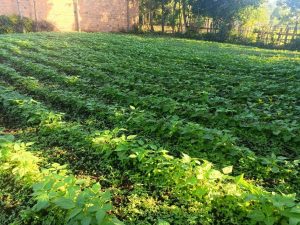
The County of Kisii Committee Executive Member CECM in the department of Agriculture, Livestock and Fisheries, Dr. Margret Obaga says food production has reduced due to diminishing land parcels as the population continues to balloon.
Obaga says research on genetically modified crops is ongoing and urged the public to remain patient and await the findings.
A recent study by Geopoll of 2022 links conflicting perceptions on GMOS to limited information.
A press release by the Kenya Agricultural and Livestock Research Organisation (KALRO) in October last year applauds the new administration for lifting the ten year ban on GMO imports and cultivation.
It says the move will ensure food security and safeguard the environment from climate change, drought, emergence of new pests and diseases.
In the statement, KALRO noted that farmers spend heavily on chemicals to eradicate pests that affect crops and eventually contribute to low yields.
“Farmers spending ksh 12000 on pesticides alone per acre to control insect pests and in turn these pesticides are harmful to humans and a danger to environment,” the statement read.
The use of herbicides and pesticides on non-GMOs greatly reduced yields from maize farming and contributed to environmental pollution.
“Pesticides have contributed to low production that currently stands at 7 to 10 (90kgs) bags per acre against the potential 22 to 35 bags,” KALRO noted.
KALRO confirms that genetically modified crops have been consumed over the last three decades with no reported case of side effects.
“GMOs have been around for the last 30 years with no health problems reported. Scientifically , GMO has been proven to be safe for food, feed and environmental friendly”, the statement continued.
Kenya has now a robust and functional policy, legal and institutional framework for governing the use of GMO, the statement assured.
Similar Posts by The Mt Kenya Times:
- Kenya designates JKIA Gate 16 for Ebola high-risk arrivals in sweeping border health overhaul
- Mbadi warns Kenya’s KSh3.6 trillion revenue target is out of reach
- Modern women are not falling out of love — they are falling into their senses
- The Chinese century: how Beijing is reshaping the world’s technology, industry and influence
- Omtatah petitions JSC to probe judges over Kenya-US health deal ruling
About the Author


