Big Life Foundation Educating Local Community On Economical Land Use In Amboseli After Judiciary Backed Its Support For Amboseli Conservation
 The Mt Kenya Times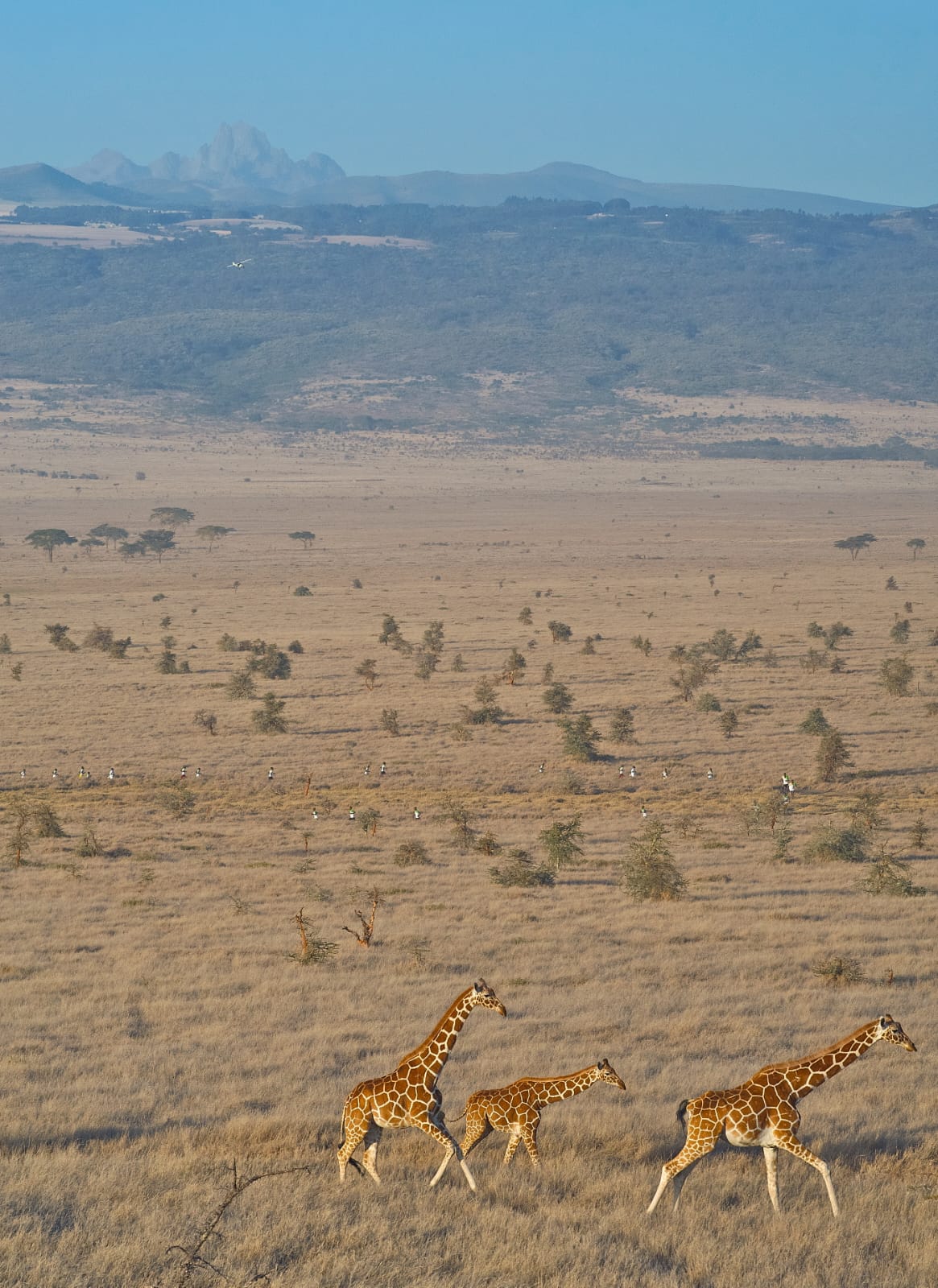
Scenic landscape of giraffes at the Amboseli National Park. Photo James Lewin Photography.
By Sefu Sabila
Worth Noting:
- Open landscapes in the semi-arid areas in the country form a vital ecosystem for co-existence between nature, local pastoralists livelihood and wildlife, thus fencing plots of land and farming along such areas yields competition among humans and wildlife for resources.
- However, with the aid of Big Life Foundation and Amboseli Ecosystem Trust, Kajiado South is undergoing the process of land subdivision from formally communally owned ranches, which have been further sub-divided into thousands of plots and given to households to own them privately, after the Amboseli Ecosystem Trust in designed an overall management plan for the area.
- According to Big Life, the open landscapes can easily lead to adverse effects of climate change if the new owners lack a strategic plan on how to use the land.
Big Life Foundation efforts in educating the Maa community on effective and economical use of land received major boost after the judiciary rallied it’s support towards the Amboseli Conservation and sustainable plans.
In a collaborative two day dialogue held at Kimana in June which brought senior judicial staff in matters related to land use including Justice Joel Ngugi of the Kisumu Court Appeal, to discuss on how plans scope were formed after consultations with the local communities.
Ngugi said the discussion also aimed at filing the gaps on environmental justice needs and possible solutions to the rising challenges. He additionally lauded Kajiado county for championing land management use and to protect both the community and wildlife.
“The idea behind environmental judicial dialogues in line with other multiple sectors together so we can incubate new knowledge, fill gaps and enable judges and magistrate to create responsive jurisprudence and make decisions based on local challenges based on local challenges and environmental justice needs. Kajiado county has been very progressive in trying to manage land use and protect the community, livelihoods and future generations,” Ngugi said
Open landscapes in the semi-arid areas in the country form a vital ecosystem for co-existence between nature, local pastoralists livelihood and wildlife, thus fencing plots of land and farming along such areas yields competition among humans and wildlife for resources.
However, with the aid of Big Life Foundation and Amboseli Ecosystem Trust, Kajiado South is undergoing the process of land subdivision from formally communally owned ranches, which have been further sub-divided into thousands of plots and given to households to own them privately, after the Amboseli Ecosystem Trust in designed an overall management plan for the area.
According to Big Life, the open landscapes can easily lead to adverse effects of climate change if the new owners lack a strategic plan on how to use the land.
To cushion the area, the sub-divided areas open to individuals could raise crops, or opt for leasing to outside investors. Stepping up together with partners, Big Life works with community conservancies and local people to develop land use plans for smaller areas in the landscape.
Benson Leiyan the CEO of Big Life Foundation said they have been able to help local community to design the land plan use in the most suitable way for economic gain.
For locals to benefit from the joint collaborative efforts, Big Life offers an annual per- acre lease payment for land owners whose parcels are under wildlife migration areas, as per the government 2017 report on Wildlife and Migratory Corridors and Dispersal Areas.
“We have supported communities to design the land use plan because in this semi-arid ecosystem the most suitable economic use of land is livestock, conservation and tourism. These activities have the least ecological impact on the land, bringing financial benefits to communities, and are sustainable into the future,” Leiyan stated.
He also cautioned investors intending to lease land at the Amboseli Conservation of breaching the laws and carrying activities out of the zone they have been allocated. He said those contravening the zones and laws will face the law after the judiciary conversation.
“The community land is gazetted. This means the land owner is legally bound to use their land only according to the zone. You cannot buy a grazing plot and then fence it to plant crops. There has been a great struggle on the ground, against people who think they can bypass the law, but this dialogue means the judiciary will work together with other stakeholders to enforce the law,” he cautioned.
Big life holds land leases for more than 100,00 acres in the greater Amboseli Ecosystem with close to 28,000 individual land owners in Nairabala, Eselenkei, Kimana and Kimana Sanctuary eating close to KSh 100 million annually.
Leiyan said the lease payments are intended to limit destructive development of the land, other than one which is compatible with conservation and pastoralism.
In May, Kajiado Environment and Lands Court dismissed an application review by KiliAvo Limited after NEMA revoked its operating license. The company had intended to plant avocado trees and vegetables, which are believed to consume a lot of water, thus posing a great threat to water supply for wildlife at the Amboseli National Park.
The decision was highly welcomed by the residents, who also called for the closure of Ngong Vegetable Limited, which they said was operating without compliance.
Similar Posts by The Mt Kenya Times:
- Instruments required for professional oral hygiene procedures and the requirements for these instruments
- Ruto courts Ukambani with roads and a KSh70B clinker plant as 2027 political contest heats up
- Kalonzo and Gachagua to hold presidential ticket talks today as 2027 opposition race takes shape
- Nyoro’s ‘small wheelbarrow’ moment: How a presidential aide exposed Mount Kenya’s most controversial politician
- Kenya’s political weather: Opposition realignments, public accountability and the test of leadership
About the Author