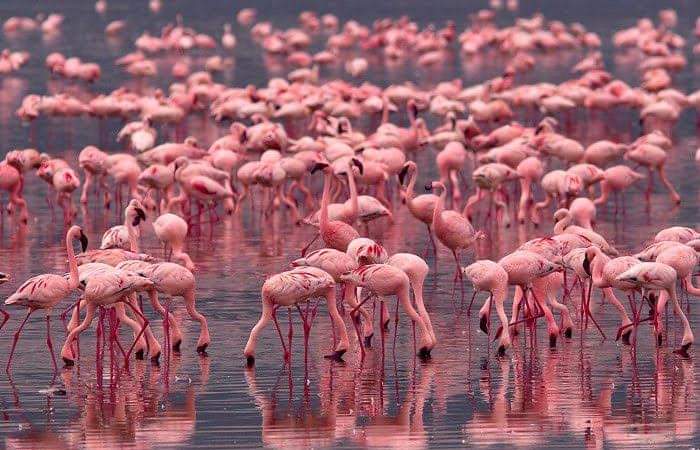
Flamingos at the Lake Nakuru National Park and Bird Sanctuary

Flamingos at the Lake Nakuru National Park and Bird Sanctuary. The second phase of the national wildlife census has kicked off at the park and Bird Sanctuary, whose results will inform retooling of conservation programmes for iconic species grappling with climate change and human-induced threats.
Principal Scientist at WRTI, Mr. Stephen Ndambuki, said the exercise at Lake Nakuru National Park and Bird Sanctuary, which is the fourth after similar ones in Masai Mara National Reserve, Amboseli National Park, and Athi Kapiti Wildlife Conservancies, comes in the wake of the recent drought and flooding which killed and displaced hundreds of wild animals in various parts of the country. “We have been working with other government agencies like Kenya Wildlife Service (KWS), and we successfully conducted the first phase as we seek to establish the current status of wildlife,” Mr. Ndambuki said. Photo/Dennis Rasto/KNA
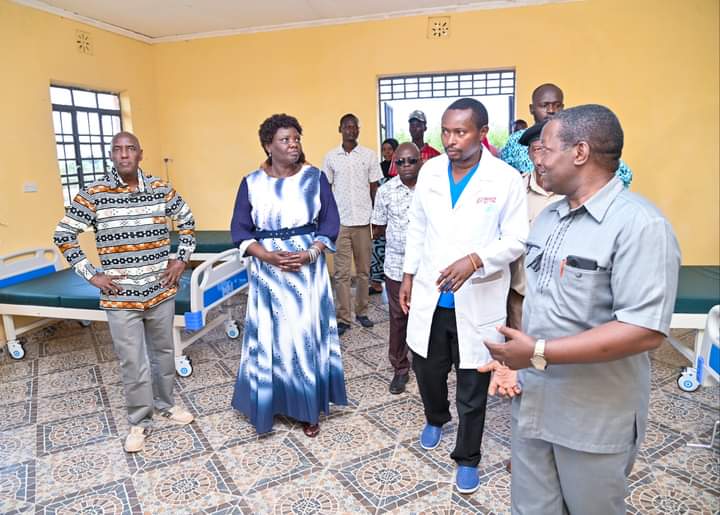
Principal Secretary, State Department for ARID and Semi-Arid Lands and Regional Development, Kello Harsama, says the Kenya Development Response to Displacement Impacts Project (KDRDIP) has been instrumental in promoting sustainable development in ASAL counties such as Turkana, Wajir, and Garissa. These areas, often grappling with harsh climatic conditions and the pressures of nearby refugee settlements, have seen substantial improvements in infrastructure and services. The project’s emphasis on sustainability aligns with Kenya’s broader regional development strategy, which seeks to enhance resilience and self-sufficiency across the regions. PS Harsama promised to advocate for a second phase of the KDRDIP project, which is expected to further expand interventions and build on the successes in these counties.

Kakamega Governor Fernandes Barasa said the own-source revenue and equitable share by the national government are critical in completing projects that the county government started together with projects inherited from the previous administration. “We are not going to start new projects until we complete all the projects that we have started, including the projects which we inherited from the previous administration,” he said, adding, “for example, key projects that are still under construction are the Level Six hospital and the Bukhungu Stadium.” “I want to confirm to the Kakamega people that we are working very closely with the president to ensure completion of our level 6 referral hospital. We are also going to focus on the completion of Bukhungu International Stadium in readiness to host the 2027 African Cup of Nations,” he noted.
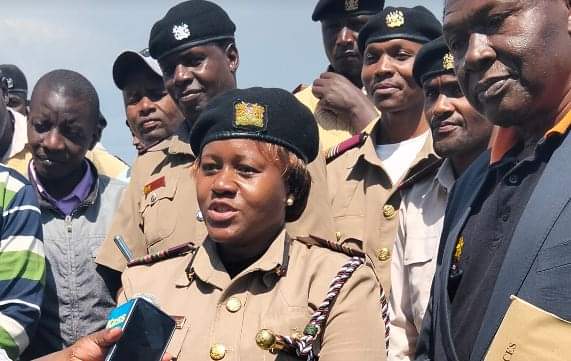
Chuka Sub-County Deputy County Commissioner, Ms. Angela Wanyama, has called on the National Government Administration Officers (NGAOs) and other departmental heads to publicise the importance of the new Maisha card. The DCC said every departmental head and NGAO were better informed about the fourth generation identity card dubbed the Maisha card and hence better placed to inform the public about its importance. “Now that we understand the significance of the new identity card, let’s engage the public and other stakeholders about the uniqueness of the Maisha card and encourage them to apply as soon as possible,” said Ms. Wanyama.
 About 10,000 people in Turkana County are set to receive 2,800 clean cooking stoves from the USAID-sponsored BOMA Project, a partnership between the County Government and the USAID. The program, which will be rolled out in the coming months, will focus on household-level energy consumption. The BOMA Project will supply 2,800 stoves to community clusters, promoting the uptake and utilisation of clean energy at the household level. “Together with the county, we will supply 2,800 clean cooking stoves to the community cluster to promote the uptake and utilisation of clean energy at the household level,” Wangu said. The initiative aligns with the county’s broader goal of transitioning to green and renewable energy across all sectors in Turkana. The BOMA Project’s focus on household-level energy consumption complements the county’s focus on green energy solutions for health and educational institutions. The program will be rolled out after a series of community engagement meetings with the county government.
Similar Posts by The Mt Kenya Times:
- Diaspora Times Global Oct 17 – Oct 23, 2026
- Is social media a blessing or a curse for university students?
- Light at last: How electricity is reshaping Nandi and Uasin Gishu
- The triple squeeze: how EPRA’s fuel price hike is reshaping the survival equation for the common mwananchi
- Zelenskyy accuses Trump of rewarding Putin as Pope pleads for peace from a hospital bed
About the Author