

By: Midmark Onsongo
Worth Noting:
- Paul Biya of Cameroon is another leader who has clung to power for decades. First assuming office in 1982, Biya has ruled for over 42 years, making him one of Africa’s longest-serving leaders. During his tenure, Cameroon has faced numerous challenges, including the ongoing Anglophone crisis, which has led to violent conflicts between the government and separatists in the English-speaking regions of the country. Despite the country’s rich natural resources, including oil and agriculture, poverty rates remain high, and infrastructure development is lagging.
- Biya’s regime has been criticized for corruption and authoritarian practices, with the government clamping down on opposition voices and curtailing freedoms. Cameroon’s developmental trajectory has remained largely stagnant, with minimal progress in addressing key issues such as unemployment, healthcare, and education.
Africa is home to some of the longest-serving heads of state in the world. While leadership stability is often desirable for consistent governance, many African nations have experienced prolonged rule with little corresponding development. From stagnant economies to struggling healthcare and education systems, these leaders have managed to maintain their hold on power while the majority of their populations live in poverty. This article delves into the most notable African leaders who have overstayed their tenure, highlighting the years they’ve ruled and the developmental struggles their nations continue to face.
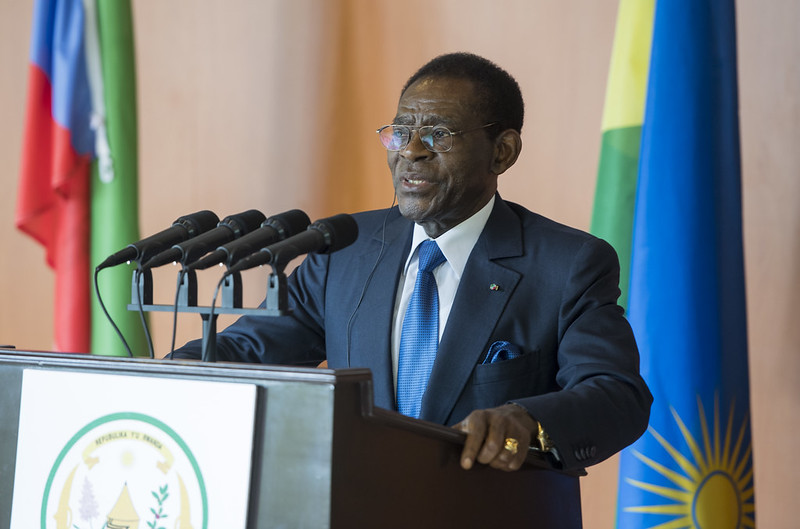
Teodoro Obiang Nguema Mbasogo of Equatorial Guinea stands as the epitome of this issue. Having ruled since 1979, Obiang holds the title of the longest-serving president not only in Africa but in the world. Over four decades in power should have seen Equatorial Guinea become one of Africa’s leading nations. After all, the country is rich in oil resources, which should have transformed the living conditions of its citizens. Instead, Equatorial Guinea remains a case study in missed opportunities. Despite its wealth, the majority of its population continues to live in poverty, plagued by underdeveloped infrastructure, inadequate healthcare, and widespread corruption. While the elite, including the president’s family, have benefited from oil revenues, the rest of the nation suffers, making Obiang’s tenure one marked by inequality and underdevelopment.
Paul Biya of Cameroon is another leader who has clung to power for decades. First assuming office in 1982, Biya has ruled for over 42 years, making him one of Africa’s longest-serving leaders. During his tenure, Cameroon has faced numerous challenges, including the ongoing Anglophone crisis, which has led to violent conflicts between the government and separatists in the English-speaking regions of the country. Despite the country’s rich natural resources, including oil and agriculture, poverty rates remain high, and infrastructure development is lagging. Biya’s regime has been criticized for corruption and authoritarian practices, with the government clamping down on opposition voices and curtailing freedoms. Cameroon’s developmental trajectory has remained largely stagnant, with minimal progress in addressing key issues such as unemployment, healthcare, and education.
Yoweri Museveni of Uganda is another leader who has overstayed his welcome. In power since 1986, Museveni’s 38-year rule has seen a mix of successes and setbacks. Initially hailed as a revolutionary leader who brought stability to Uganda after years of civil war and dictatorship, Museveni’s later years in power have been marked by increasing authoritarianism and a failure to deliver on key developmental goals. Uganda continues to struggle with high levels of poverty, youth unemployment, and inadequate public services. Museveni has repeatedly amended the constitution to remove term limits and extend his stay in power, much to the dismay of the opposition and many Ugandans. His government’s approach to economic development has been criticized for prioritizing military spending over investments in healthcare, education, and infrastructure, leaving Uganda far behind many of its African counterparts.
Isaias Afwerki of Eritrea is another leader who has shown no intention of relinquishing power. In office since Eritrea gained independence from Ethiopia in 1993, Afwerki has ruled for over 31 years without any form of electoral competition. His regime is one of the most repressive in the world, with no freedom of the press, no political opposition, and mandatory national service that has been likened to modern-day slavery. Eritrea remains one of the most underdeveloped countries in Africa, with a weak economy, limited access to healthcare, and widespread poverty. Afwerki’s government has been criticized for human rights abuses, including arbitrary arrests, torture, and enforced disappearances, which have led to a mass exodus of Eritreans seeking refuge in other countries. Under Afwerki’s rule, Eritrea’s development prospects have been severely hampered, and the country remains isolated on the global stage.
Another notable figure is Denis Sassou Nguesso of the Republic of Congo, who has been in power for over 38 years, with two separate terms—first from 1979 to 1992, and then again from 1997 to the present. Nguesso’s rule has been marked by widespread corruption, mismanagement of resources, and a lack of meaningful development. Despite the Republic of Congo’s wealth in oil, the majority of the population lives in poverty, with limited access to basic services such as healthcare, education, and clean water. Nguesso has manipulated the constitution to extend his stay in power and has been accused of using violence and intimidation to suppress opposition. His government has faced numerous allegations of human rights abuses, and the country remains heavily dependent on oil exports, with little diversification of the economy.
In Zimbabwe, the late Robert Mugabe held power for 37 years, from 1980 until his ousting in 2017. Mugabe’s legacy is a complex one. Initially celebrated as a liberation hero who helped bring an end to white minority rule in Zimbabwe, his later years were marked by economic collapse, hyperinflation, and widespread poverty. Mugabe’s land reform policies, which involved the forced seizure of white-owned farms, led to a sharp decline in agricultural production and a corresponding collapse of the economy. By the time he was forced out of office, Zimbabwe’s once-thriving economy was in ruins, with unemployment and poverty at record levels. Mugabe’s refusal to step down and his manipulation of elections to stay in power caused significant harm to Zimbabwe’s development prospects.
In Chad, Idriss Déby ruled for 30 years until his death in 2021. Déby’s government was characterized by a lack of political freedom, widespread corruption, and underdevelopment. Despite Chad’s significant oil reserves, the country remains one of the poorest in the world, with high levels of poverty, illiteracy, and child mortality. Déby’s regime prioritized military spending and personal enrichment over investments in infrastructure, healthcare, and education, leaving the majority of Chadians without access to basic services. His death in 2021 did little to change the political landscape, as his son, Mahamat Idriss Déby Itno, took over in a military-led transition, continuing the family’s hold on power.
These leaders represent just a few examples of African heads of state who have stayed in power for decades while delivering minimal development to their countries. The common thread among them is the use of constitutional amendments, suppression of opposition, and military force to maintain their grip on power. While some of these leaders initially came to power with promises of development and progress, their extended rule has often led to stagnation, corruption, and a lack of accountability. The persistence of such leadership has stifled the potential for democratic governance and sustainable development across the continent, leaving millions of Africans trapped in cycles of poverty and underdevelopment.
As African nations continue to grapple with these challenges, the need for leadership renewal and a focus on inclusive development becomes increasingly urgent. The continent’s youth, who make up the majority of the population, are particularly affected by the lack of opportunities and services under these long-serving leaders. Without meaningful change, Africa risks falling further behind in the global development race, perpetuating cycles of poverty and inequality.
This article was scripted by;
MIDMARK ONSONGO, SGS
(Socio-Geographic Scholar)
Similar Posts by Mt Kenya Times:
- Kwekwe at a Crossroads: Mining, Water and Social Strain in the Midlands
- Extending Terms, Testing Trust: Zimbabwe’s Bill 3 Debate
- Blind, not blinkered: Why the law must never wear a gendered face
- Mt Kenya Times ePAPER May 19, 2026
- Beyond CAB3: the structural failures eroding Zimbabwe’s politics
 Mt Kenya Times
  Xinhua Media