Raila Odinga’s Bid For AUC Chair: A New Dawn For African Leadership
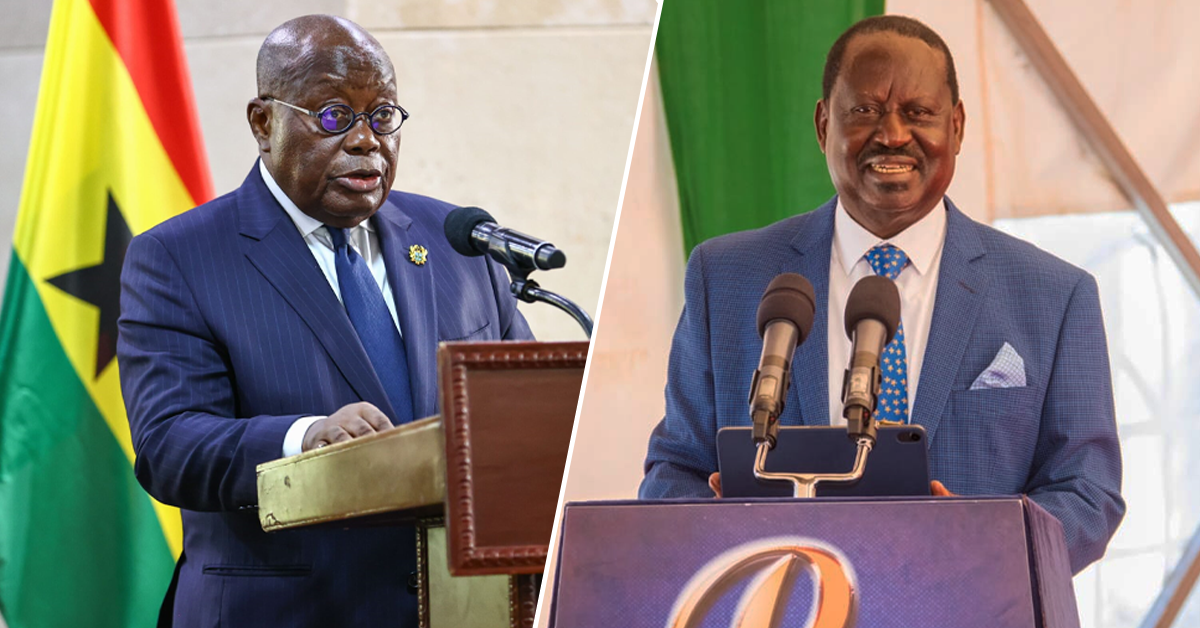
Raila Odinga and Ghanaian President Nana Akufo-Addo in Accra

By: James Kilonzo Bwire
Worth Noting:
- The timing of Odinga’s bid is particularly poignant given the current political landscape in Kenya and across Africa. As President William Ruto navigates his own political challenges, including internal strife within his administration, Odinga’s candidacy offers an alternative vision of leadership that prioritizes inclusivity and accountability. His ability to engage with opposition figures while seeking consensus on national issues positions him as a unifying figure capable of bridging divides.
- However, Odinga’s journey will not be without obstacles. The political dynamics within the African Union itself are complex, with competing interests and varying agendas among member states. To secure the AUC chairmanship, he must not only rally support from East African nations but also engage effectively with leaders from West, Central, and Southern Africa.
The discussions between Raila Odinga and Ghanaian President Nana Akufo-Addo in Accra mark a significant moment in the quest for leadership within the African Union Commission (AUC). Odinga’s candidacy for the AUC Chairperson position is not merely a personal ambition; it symbolizes a broader aspiration for transformative leadership on the continent. With Akufo-Addo’s endorsement, Odinga is poised to leverage his extensive political experience and vision for Africa’s development.
Odinga’s campaign is built upon a foundation of promoting sustainable socio-economic growth, which resonates with the pressing needs of African nations. His commitment to reducing dependency on external funding and advocating for robust intra-African trade aligns with the aspirations of many African leaders who seek to empower their economies. The Organization of African Trade Union Unity (OATUU) has already expressed support for his candidacy, highlighting his historical advocacy for labor rights and social justice. This backing underscores a collective desire among African workers for a leader who prioritizes their welfare in policy-making.
Moreover, Odinga’s approach emphasizes collaboration and unity among African nations. His meetings with various heads of state, including those from Uganda, Tanzania, and South Africa, reflect a strategic effort to build a coalition of support that transcends regional boundaries. This is crucial in an era where political fragmentation often hampers collective progress. By fostering dialogue and cooperation, Odinga aims to create a more cohesive continental strategy that addresses shared challenges such as unemployment, poverty, and climate change.
The timing of Odinga’s bid is particularly poignant given the current political landscape in Kenya and across Africa. As President William Ruto navigates his own political challenges, including internal strife within his administration, Odinga’s candidacy offers an alternative vision of leadership that prioritizes inclusivity and accountability. His ability to engage with opposition figures while seeking consensus on national issues positions him as a unifying figure capable of bridging divides.
However, Odinga’s journey will not be without obstacles. The political dynamics within the African Union itself are complex, with competing interests and varying agendas among member states. To secure the AUC chairmanship, he must not only rally support from East African nations but also engage effectively with leaders from West, Central, and Southern Africa. This requires diplomatic finesse and a deep understanding of the diverse political landscapes across the continent.
Additionally, Odinga must address concerns regarding governance and democratic processes within the AU. Critics have often pointed to the need for reform in how the AU operates, particularly in terms of transparency and accountability. By advocating for these reforms as part of his platform, Odinga can position himself as a candidate committed to not only enhancing the AU’s effectiveness but also restoring public trust in its institutions.
In conclusion, Raila Odinga’s bid for the AUC Chairperson position represents a critical juncture for African leadership. His vision for sustainable development, commitment to labor rights, and emphasis on unity resonate deeply with the aspirations of many across the continent. As he embarks on this journey, it is essential that he remains steadfast in his principles while navigating the intricate political landscape of Africa. If successful, his leadership could herald a new era of collaboration and progress for African nations, ultimately benefiting millions who seek better livelihoods and opportunities.
Odinga’s campaign is not just about securing a position; it embodies a vision for Africa that prioritizes its people over external influences. His engagement with various stakeholders reflects an understanding that true leadership requires inclusivity and representation from all sectors of society. As he continues to build alliances across the continent, it will be crucial for him to articulate a clear agenda that addresses both immediate concerns and long-term goals.
Ultimately, Raila Odinga’s candidacy could serve as a catalyst for change within the AU—an organization that has often been criticized for its slow response to crises and lack of effective governance. By championing reforms that enhance accountability and transparency while fostering economic independence among member states, he could redefine what it means to lead Africa in the 21st century. The eyes of millions will be on him as he seeks to transform not just his own political fortunes but also those of countless Africans striving for dignity and opportunity in their lives.
James Kilonzo Bwire is a Media and Communication Practitioner.
Similar Posts by The Mt Kenya Times:
- Maputo and Pretoria at odds over reports of Mozambican deaths in South Africa’s xenophobic violence
- Belgium sink Croatia 2-0 in Rijeka as Lukaku strikes late
- Mexican police fire tear gas at teachers’ protest 10 days before World Cup opener
- Mt Kenya Times ePAPER June 4, 2026
- Colombian president refuses to accept first-round election results, alleging fraud without evidence
About the Author