Advocating Vision 2030: Year 2025 And The Healing/Reform Of Kenya’s Healthcare System

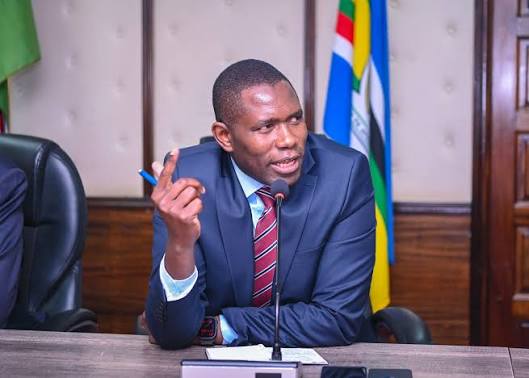
Murang'a governor Dr. Irungu Kang’ata

By: Gitau wa Kung’u
Worth Noting:
- This article (of a series) briefly proposes sustainable policy reforms needed to heal not only the health sector but also much needed socioeconomic development innovations. It will expound on how revising Kenya’s Health Policy 2020-2030 shall heal not only the health but also revitalise growth in the country’s GDP through empowering the education, agribusiness, manufacturing, industrialisation, culture and environment sectors.
- The proposals reinforce the government’s implementation of Vision 2030, Kenya Health Policy 2014-2030, Bottom-Up Economic Transformation Agenda (BETA), Africa Agenda 2063 and the UHC. It should serve as a third eye opener for the ministry of health (MoH) and the devolved county departments of health (CoDoP).
Happy new year 2025! This will be a year of healing. Yesterday, Murang’a governor Dr. Irungu Kang’ata runs a transition of Kang’atacare – a Murang’a County health insurance program, to SHA.
In 2024, the state interventions on Universal Healthcare (UHC) transitions from NHIF to SHIF to SHA was met with widespread disapproval after the systems consistent failure: protecting and providing Kenyans with the UHC and constitutional right of access to quality health services.
Yet, this is only one challenge of many: including expensive and unignorable reported cases of unprofessional health service delivery in both public and private sectors.
Amongst the largest discontented population are stakeholders in the agriculture sector, with small scale farmers getting the greater suffering.
This article (of a series) briefly proposes sustainable policy reforms needed to heal not only the health sector but also much needed socioeconomic development innovations. It will expound on how revising Kenya’s Health Policy 2020-2030 shall heal not only the health but also revitalise growth in the country’s GDP through empowering the education, agribusiness, manufacturing, industrialisation, culture and environment sectors. The proposals reinforce the government’s implementation of Vision 2030, Kenya Health Policy 2014-2030, Bottom-Up Economic Transformation Agenda (BETA), Africa Agenda 2063 and the UHC. It should serve as a third eye opener for the ministry of health (MoH) and the devolved county departments of health (CoDoP).
Need for Formulation of Restorative Health Policy and National Health Strategic Plan From Curative to Preventive Systems.
The Policy Brief No. 47 of June 2025 identifies the 3rd obstacle to the health of Kenya’s workforce as ‘challenges in structural and health systems.’ It amplifies the need to revisit Kenya’s long-term development plan, Vision 2030’s Section 5.2 (ii) that identifies a bias in the national health bill and calls for a shift from curative to preventive care.
The implementation of UHC, alongside the existing national health policy, national health strategic plan 2023-2027 and its predecessors have however, not considered this very integral aspect towards the realisation of V2030. V2030 envisages good health as a central goal: creating a globally competitive and prosperous nation with a high quality of life by 2030.
The Health And Professional Standards Strategic Plan 2023 – 2027 however, notes several weaknesses/threats and identifies amicable opportunities that can be exploited to reinforce the implementation of UHC. It notes weakness health finance due to inflation; climate change; lack of dynamism needed in the legal structures and; flaws in existing laws/regulations such as outdated, inadequate policies, framework and legislation;
It proposes a people centred approach through proactive public and government/public sector participation in policy identification, formulation and implementation; strengthening collaborations between stakeholders to improve efficiency of legal and regulatory frameworks amongst other amicable solutions.
However, neither the legislature nor the MoH have formulated any sustainable models that promote the implementation of Section 5.2(ii) of Vision 2030 and Part X of Health Act, 2017.
The government therefore needs to conduct a sustainable health system transition from the curative to preventive model.
To understand why the above is an integral aspect of achieving vision 2030, several critical questions arise: What is the difference between curative and preventive care? How is the current health system designed for curative and not preventive care, when, who, why was it established and what should be done to ensure a smooth transition from curative to preventive care?
The next episode of a series will first explore answers to the above critical questions; propose an innovative model of sustainable health policy, framework and legislation of UHC in this new year 2025, necessary for the achievement of Vision 2030. Welcome into the column and have a prosperous new year 2025.
Similar Posts by The Mt Kenya Times:
- Diaspora Times Global Oct 24 – Oct 30, 2026
- America’s baby bust: U.S. birth rate hits record low as women choose later motherhood
- Literary Outreach Incubation Program Instills The Culture From Book Adaption To Spoken Words
- Why starting school too early is failing our children
- Who defines Africa’s destiny? The western lens, African compliance and the struggle for intellectual sovereignty
About the Author