The Lingua Franca Of Disadvantage: How Colonial Languages Continue To Colonize African Minds And Futures
 The Mt Kenya Times

By: Silas Mwaudasheni Nande and Tulina Lesheni Ndahambelela Dengeinge
The scene is tragically common across Africa. A bright, aspiring student, perhaps from a rural village where the rhythm of life beats to the drum of an indigenous tongue, finds their dreams of higher education abruptly extinguished. They have diligently mastered complex mathematical equations, eloquently articulated historical narratives, and demonstrated a profound understanding of scientific principles – all in their mother tongue, or through the arduous process of conceptualizing in a second language. Yet, the insurmountable barrier is not their intellectual capacity in these subjects, but their struggle with English, French, or Portuguese. The university admission board, rigidly adhering to post-colonial dictates, deems them unfit to proceed, not because of a lack of intelligence, but a perceived deficiency in a language that was, for centuries, the tongue of their oppressors. This scenario is a stark, painful embodiment of a deeper, more insidious problem: the continued primacy of colonial languages in African education and official life is not merely a practical legacy. It is a systemic perpetuation of a colonial mindset, actively undermining indigenous languages, cultures, and intellectual development, effectively constituting a “soft colonization” that demands urgent deconstruction and robust indigenous language revitalization.
Africa, a continent of unparalleled linguistic diversity, was arbitrarily carved up by European powers in the late 19th century. With the colonial flags came not just new borders and administrative systems, but also new languages. English, French, and Portuguese were imposed as the languages of governance, commerce, and, crucially, education. This imposition was justified under the guise of a “civilizing mission” and the supposed need for a lingua franca to unite disparate ethnic groups. Yet, beneath this veneer of pragmatism lay a deliberate strategy to establish a new hierarchy, positioning European languages as the sole conduits of modernity, knowledge, and progress, while systematically sidelining and devaluing Africa’s rich linguistic heritage. Today, generations after political independence, this linguistic legacy persists, creating an educational quagmire that acts as a profound barrier to genuine learning, leading to significant cultural erosion, and perpetuating a subtle yet powerful form of economic and psychological dependence. This article will dive deeply into the mechanisms of this linguistic dominance, expose its detrimental effects on African minds and societies, and propose actionable solutions to reclaim linguistic sovereignty as a cornerstone of true liberation.
The Imposition: A Historical Inevitability or a Deliberate Strategy?
The European scramble for Africa in the late 19th century was not merely a territorial grab; it was a comprehensive project of reordering African societies along European lines. Central to this reordering was the imposition of language, a tool so potent it reshaped administrative structures, legal systems, and perhaps most profoundly, the very pathways to knowledge and identity. While often presented as a practical necessity, the linguistic imposition was, in fact, a deliberate strategy, laden with ideological underpinnings that sought to entrench European dominance and rationalize the colonial enterprise.
The partitioning of Africa by powers like Britain, France, and Portugal solidified their presence through the establishment of administrative units, judicial systems, and, crucially, educational institutions. Each colonial power brought with it its own linguistic policies. The French, for instance, pursued a policy of “assimilation” where the ultimate goal was to transform Africans into “black Frenchmen” and “black Frenchwomen.” This policy, known as Francophonie, explicitly promoted the French language as the sole medium of instruction from the earliest stages of schooling, often forbidding the use of indigenous languages in classrooms and even on playgrounds. The rationale was to “civilize” the natives, integrating them into the metropolitan culture and thereby legitimizing French rule. This approach created a highly centralized educational system where academic success was inextricably linked to proficiency in French, fostering a cultural and intellectual dependence on the colonial metropole.
The British approach, while seemingly more pragmatic, was no less impactful. Unlike the French, the British often allowed for the use of local languages in the very early years of primary education, particularly by missionary schools. However, this was often a utilitarian decision, aimed at facilitating rudimentary literacy and religious instruction, rather than a genuine commitment to developing indigenous languages. As students progressed to higher primary and secondary education, English invariably became the sole medium of instruction. The underlying assumption remained consistent with the French: English was the language of advanced knowledge, science, commerce, and governance. It was the gateway to modernity, and access to this gateway was strictly controlled by linguistic proficiency. While not explicitly aiming for full assimilation in the same way as the French, the British system effectively created a class of educated Africans who, by virtue of their English language skills, became indispensable intermediaries for colonial administration and commerce, thereby perpetuating British influence long after the formal end of colonial rule.
Portugal, driven by a similar “civilizing mission,” imposed Portuguese with a particularly heavy hand, often suppressing indigenous languages even more aggressively than their British and French counterparts, especially in their longer-held territories like Angola and Mozambique. The Portuguese colonial project often explicitly denied citizenship and higher status to Africans who did not speak Portuguese, thereby creating a profound incentive for linguistic conformity.
This colonial linguistic imposition stood in stark contrast to the pre-colonial linguistic landscape of Africa. Prior to European arrival, Africa was a vibrant tapestry of languages, many of which had complex oral traditions, sophisticated systems of knowledge transmission, and served as the bedrock of diverse cultural expressions. Major lingua francas like Swahili, Hausa, Arabic, and Manding had facilitated trade, diplomacy, and inter-ethnic communication for centuries, demonstrating that Africans were perfectly capable of developing and utilizing languages for large-scale societal functions without external imposition. The colonial powers, however, largely dismissed these existing linguistic frameworks, viewing them as obstacles to their administrative efficiency and ideological agenda.
At the heart of this linguistic imposition was the “civilizing mission,” an ideological construct that posited European culture, religion, and language as inherently superior. Indigenous languages were often denigrated as “primitive,” “underdeveloped,” or simply inadequate to express the complexities of modern thought, science, and governance. This narrative, propagated through colonial education and administrative policies, instilled a deep-seated inferiority complex regarding African languages among segments of the colonized population. Missionaries, often the pioneers of formal education in many parts of Africa, played a significant role in promoting European languages. While some did translate religious texts into local languages, their primary objective was often to use European languages as a means to evangelize and introduce Western values, thereby inadvertently or overtly contributing to the marginalization of indigenous tongues.
Beyond ideology, there was a pragmatic economic and political imperative. Colonial administrations required a uniform language for effective governance, communication, and the extraction of resources. A lingua franca facilitated communication between the colonial masters and their African subjects, as well as among diverse African ethnic groups within artificially created colonial boundaries. The creation of a class of African intermediaries—clerks, interpreters, teachers, and junior administrators – educated and fluent in the colonial language was essential for the smooth functioning of colonial rule. These individuals, often seen as “detribalized” by both Europeans and some of their own communities, became critical conduits of colonial power, their status and opportunities directly tied to their mastery of the foreign tongue. While colonial powers often justified the imposition of their languages as a means to foster “unity” among diverse ethnic groups, this “unity” came at a significant cost: the suppression of indigenous linguistic diversity and the creation of new forms of social stratification based on linguistic access. The stage was set for a linguistic legacy that would continue to shape African futures long after the Union Jack, the Tricolour, and the Portuguese flag were lowered.
The Educational Quagmire: A Barrier to True Learning and Intelligence
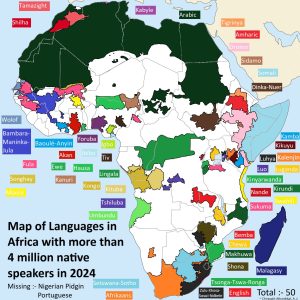 The most devastating consequence of the sustained linguistic imposition is arguably found within Africa’s educational systems. What should be a beacon of enlightenment and intellectual growth has, for millions, become a formidable barrier, largely due to the mandatory reliance on colonial languages as the primary medium of instruction and assessment. This linguistic filter not only hinders academic progress but subtly redefines intelligence itself, creating a system where linguistic proficiency in a foreign tongue often outweighs genuine cognitive ability and understanding.
Consider the immense cognitive burden placed on an African child who, from their earliest days in school, is expected to learn complex subjects like mathematics, science, and history in a language that is not their mother tongue, and often, not even spoken at home. Psycholinguistic research consistently demonstrates that learning in one’s mother tongue significantly enhances comprehension, critical thinking, and problem-solving abilities. When a child learns in their first language, their cognitive resources are primarily directed towards understanding the subject matter. However, when instructed in a foreign language, a substantial portion of their mental energy is diverted to simply decoding the language itself. This “cognitive load” means that the student is often translating concepts in their mind, rather than engaging deeply with the material. They may memorize facts and formulae, but true conceptual understanding – the ability to apply knowledge, analyze information, and think creatively – is severely hampered. This phenomenon is particularly acute in subjects that require abstract reasoning or nuanced discussion, turning what should be a process of discovery into a tedious exercise in linguistic translation.
The ramifications of this linguistic hurdle become starkly evident at critical junctures in a student’s academic life, nowhere more painfully than at the gateway to higher education. The tragic scenario previously outlined – a student excelling in all subjects yet denied university admission due to poor performance in English, French, or Portuguese – is not an isolated incident but a systemic flaw. It is an unconscionable policy that equates linguistic fluency in a colonial language with intellectual capacity, effectively disenfranchising countless bright minds. This yardstick, applied rigorously across much of the continent, means that a student from, say, rural Senegal who deeply understands physics concepts in Wolof or a student from a remote part of Namibia who grasps complex biology in Oshiwambo, can be deemed “unintelligent” or “unfit” for university solely because their command of French or English does not meet an arbitrary standard. This is not a measure of intelligence; it is a measure of linguistic privilege and exposure. It inherently biases the system against those from less privileged backgrounds, who may not have had early exposure to these foreign languages, or whose education did not provide adequate instruction in them. It systematically excludes a significant portion of the national talent pool, reinforcing a cycle of underdevelopment and dependence.
Beyond the cognitive load, there’s a profound pedagogical mismatch. Curricula across Africa are often direct inheritances or adaptations of European educational models, developed in colonial languages and reflecting foreign contexts. Textbooks discuss European history, literature, flora, fauna, and societal norms that are often alien to the lived realities of African students. A biology textbook describing temperate forests or a history lesson focused solely on European monarchies fails to connect with the immediate environment and cultural heritage of an African child. This disconnect alienates students, making learning abstract and irrelevant. Teachers, themselves products of this system, are often trained to deliver content in colonial languages, rather than to effectively bridge the linguistic and cultural gaps. The result is often rote learning, where students regurgitate information without genuine comprehension or the ability to apply it to their own contexts.
The psychological and self-esteem impacts on students are equally detrimental. The constant struggle to express themselves in a foreign language can lead to feelings of inadequacy, shame, and a diminished sense of self-worth. Students may become timid, reluctant to ask questions, or participate in discussions for fear of making linguistic errors, regardless of their actual understanding of the subject matter. This creates an educational elite, those fluent in the colonial languages, who gain access to opportunities, widening the social and economic chasm between them and the majority who struggle. The subtle message conveyed is that one’s own language and culture are somehow inferior, incapable of expressing “modern” knowledge, fostering an internalized inferiority complex that persists well beyond the classroom.
The impact of this quagmire is visible across the continent. In many Francophone African countries, the rigorous academic system, almost entirely conducted in French from early primary school, contributes to high dropout rates. Students who cannot keep up with the linguistic demands simply fall by the wayside, their potential unrealized. In Anglophone nations, while some early primary education might incorporate indigenous languages, the transition to English often happens too abruptly, leaving many behind. Tanzania, for instance, made a notable attempt to use Kiswahili as the medium of instruction throughout primary and secondary school, with English introduced as a subject. While facing its own set of challenges, this policy has fostered a stronger sense of national identity and potentially deeper learning for many, though the pressure to switch to English for higher education remains a contentious issue. Conversely, in countries like South Africa, the debate over language of instruction in higher education is ongoing, with significant calls for greater use of indigenous languages to make university more accessible and relevant to a broader spectrum of the population. The educational quagmire is not merely academic; it is a profound impediment to national development and genuine intellectual flourishing.
The “Soft Colonization”: Erasing Identity and Perpetuating Dependence
Beyond the immediate educational setbacks, the persistent dominance of colonial languages in Africa constitutes a more insidious form of “soft colonization.” It operates not through overt political control, but through the subtle erosion of cultural identity, the perpetuation of economic disadvantage, and the establishment of a “mental infrastructure” that reinforces dependence on former colonial powers. This is a battle for the mind, where the very tools of thought and expression are subtly controlled, hindering true African self-determination.
At the heart of this soft colonization is the alarming phenomenon of cultural erosion and, in its extreme manifestation, linguistic genocide. African indigenous languages are not merely tools of communication; they are the repositories of millennia of history, wisdom, folklore, proverbs, and traditional knowledge. Each language carries within it a unique way of seeing the world, embodying distinct philosophies, social structures, and environmental understandings. The proverb, “Until the lion learns to write, every story will glorify the hunter,” powerfully illustrates how language shapes narrative and perception. When indigenous languages decline, so too do the intricate oral traditions that have preserved communal memories, ethical frameworks, and practical skills, such as traditional medicine, agricultural practices, and artistic expressions. The intergenerational transmission of this invaluable cultural heritage is severely disrupted. Children increasingly communicate with their peers, and sometimes even with their parents, in a colonial language, creating a growing cultural chasm between older generations, who are the custodians of indigenous knowledge, and younger ones who are more fluent in foreign tongues. This linguistic disconnect ultimately threatens the very fabric of identity, leaving many feeling alienated from their roots and struggling to define who they are outside the imposed cultural paradigms.
Economically, the dominance of colonial languages creates an inherent disadvantage and perpetuates a form of intellectual brain drain. Fluency in English, French, or Portuguese is often perceived, and indeed often is, a prerequisite for access to formal employment, higher-paying jobs, and participation in the global economy. This perception subtly pushes young Africans towards mastering these foreign languages at the expense of developing and valuing their own. It can stifle local innovation, as scientific discourse, business negotiations, and even creative industries often operate primarily in the colonial tongue, making it harder for those without such fluency to participate or lead. The result is a continued reliance on external knowledge systems, experts, and paradigms. Instead of fostering self-sufficiency and endogenous development, this linguistic dependency means that Africa continues to look outwards for solutions, rather than nurturing its own intellectual capital and building robust internal knowledge economies grounded in its unique contexts.
Furthermore, the “mental infrastructure” of colonialism remains deeply embedded in the continent’s governance, legal systems, media, and academic discourse. Legal documents, parliamentary debates, official government communications, and even public health campaigns are predominantly conducted in colonial languages, rendering them inaccessible to the vast majority of citizens. This creates a significant democratic deficit, as people cannot fully engage with the laws that govern them or hold their leaders accountable in their own languages. Translating complex legal, scientific, or philosophical concepts into indigenous languages is often dismissed as impossible or impractical, not due to any inherent inadequacy of African languages, but due to a profound lack of investment, research, and development in expanding their technical vocabularies. This systemic neglect reinforces the notion that indigenous languages are somehow incapable of expressing modern thought, further marginalizing them from spheres of power and intellectual advancement. Media, particularly television and digital platforms, often exacerbate this issue by prioritizing content in colonial languages, although some emerging initiatives are attempting to reverse this trend by providing news, entertainment, and educational content in indigenous languages.
Finally, the argument that colonial languages provide a neutral ground for national unity, overcoming ethnic and linguistic divisions, must be critically examined. While it is true that these languages often serve as lingua francas in multi-ethnic states, this “unity” often comes at a profound cost: the suppression of genuine linguistic diversity and the creation of new forms of social stratification. The reality is that unity can be fostered through respect for and celebration of linguistic diversity, rather than forced homogeneity. Nations like India, with its multitude of official languages, demonstrate that linguistic diversity does not necessarily preclude national cohesion; rather, it can be a source of cultural richness. The myth of colonial languages as the sole unifiers subtly justifies their continued dominance and diverts attention from the deep-seated societal costs of linguistic suppression. This “soft colonization” is thus a persistent and pervasive force, subtly shaping identities, opportunities, and ultimately, Africa’s path to true liberation.
Pedagogical Implications of Colonial Languages
The pedagogical landscape for teachers of foreign colonial languages like English, French, and Portuguese in environments where these languages are absent from students’ homes and communities is rife with significant and multifaceted challenges. These challenges often hinder effective language acquisition, contributing to a less engaging and productive learning experience for both educators and students. From fundamental issues of communication to systemic problems of resources and professional development, the difficulties faced by these teachers demand critical examination and targeted solutions.
One of the primary hurdles encountered is the lack of effective communication. Teachers frequently observe that learners exhibit a pervasive lack of confidence in expressing themselves in the target language. This reticence is often a direct consequence of an underdeveloped vocabulary and limited exposure to the language outside the classroom. Without a foundational understanding of words and phrases, students struggle to formulate thoughts and participate actively, leading to a “communication apprehension” that stifles linguistic development and perpetuates a cycle of silence.
Compounding this communicative barrier is a pervasive lack of resources. In many settings, particularly rural areas, teachers are deprived of the essential materials and technological tools that could significantly enhance language instruction. Modern language teaching relies heavily on interactive multimedia, authentic listening materials, and digital platforms that bring the target language to life. Without these resources, teachers are often forced to rely on traditional, less engaging methods, making it difficult to cater to diverse learning styles and provide the rich linguistic input necessary for acquisition.
Furthermore, a significant impediment lies in insufficient professional development. Many teachers find themselves in challenging environments without adequate training tailored to the unique demands of teaching a foreign language to students with no prior exposure. They may lack specialized pedagogical skills for second language acquisition, techniques for fostering confidence in shy learners, or strategies for adapting curriculum to highly diverse student needs. This lack of specialized expertise can leave teachers feeling ill-equipped and overwhelmed, limiting their ability to innovate and effectively support their students’ progress.
Insufficient time allocated to foreign language instruction also presents a critical constraint. Language acquisition is a gradual process that requires consistent and ample exposure. However, curriculum timetables often allot insufficient time for English, French, or Portuguese lessons, making it challenging for teachers to cover the required content in depth, provide sufficient practice opportunities, and engage learners in meaningful communicative activities. This time deficit often leads to a rushed curriculum and superficial learning, rather than deep understanding and fluency.
The challenge of teaching an over-crowded class exacerbates many of these issues. High teacher-to-learner ratios make it exceedingly difficult for educators to provide individualized attention and cater to the diverse learning needs and paces of each student. In such environments, learners with different IQs and learning styles are all negatively impacted, as the teacher’s ability to monitor progress, offer targeted feedback, and encourage participation from every student is severely compromised. This often results in a “teacher-centered” lesson, where the teacher delivers information to a large, often passive, audience.
This leads directly to the problem of lack of learner participation. When students are hesitant to speak due to lack of confidence, vocabulary, or fear of making mistakes, classroom participation plummets. This creates a challenging dynamic for teachers, as a low level of student engagement diminishes the effectiveness of interactive activities and transforms the lesson into a monologue rather than a dynamic exchange. While not entirely the learners’ fault, as their lack of exposure contributes significantly to their reticence, it undeniably hampers the teacher’s ability to facilitate a truly interactive and engaging learning environment.
Finally, a profound challenge lies in learners’ negative attitude towards the language. When students harbor negative beliefs or a lack of perceived relevance regarding the foreign colonial language, their motivation to learn significantly diminishes. Despite the teacher’s best efforts and dedication, this intrinsic resistance can lead to decreased participation, superficial engagement, and ultimately, academic failure. Overcoming these ingrained perceptions and fostering a positive disposition towards the language is a critical, yet often overlooked, aspect of effective foreign language teaching.
In conclusion, teachers tasked with imparting English, French, or Portuguese as foreign colonial languages to students without home or community exposure face a formidable array of challenges. These range from fundamental issues of communication and resource scarcity to systemic problems of professional development and time allocation, compounded by the realities of overcrowded classrooms and the critical impact of learner attitudes. Addressing these challenges requires a comprehensive approach that prioritizes adequate resources, targeted professional development, realistic timeframes, and strategies to foster a positive and participatory learning environment. Only through such concerted efforts can the potential of these languages be unlocked for students in these unique and demanding educational settings.
Challenging the Mindset: Deconstructing and Rebuilding
Deconstructing the entrenched colonial linguistic mindset in Africa requires more than just acknowledging the problem; it demands a strategic, multi-faceted approach that balances practical realities with an unwavering commitment to linguistic sovereignty. The goal is not a wholesale abandonment of colonial languages, which have, admittedly, become deeply woven into the fabric of African nations as current lingua francas for international communication, regional trade, and often, national administration. To discard them entirely would be impractical and counterproductive to global engagement. Rather, the objective is a fundamental rebalancing, elevating indigenous languages to their rightful place as foundational pillars of identity, education, and development, while strategically leveraging international languages as tools for global interaction, not as sole measures of worth or intelligence.
Central to this decolonization process is the bold policy shift towards mother-tongue instruction as a fundamental right and a pedagogical imperative. This means mandating the use of indigenous languages as the primary medium of instruction in early education, ideally up to at least grade 6 or 7. This allows children to grasp foundational concepts in a language they understand intuitively, fostering deeper comprehension, critical thinking, and a love for learning, rather than a struggle with linguistic decoding. Colonial languages should then be introduced gradually as subjects, taught effectively as second or foreign languages, rather than as the immediate medium of all learning. This requires massive investment in developing comprehensive curricula, textbooks, and supplementary educational materials in indigenous languages, a task that demands intellectual rigor and financial commitment.
Complementing this, teacher training and development must be radically reoriented. Educators need to be proficient in indigenous languages and trained in effective pedagogical methods for teaching in these languages, as well as for transitioning students smoothly to learning colonial languages as subjects. Valuing and incentivizing teachers who are experts in indigenous languages is crucial to elevating their status and attracting talent. This might include specific qualifications or salary bonuses for teaching in local languages, or for developing indigenous language materials.
Furthermore, the establishment and robust funding of national language academies and research institutions are paramount. These bodies would be responsible for the standardization, documentation, and systematic development of indigenous languages. This includes creating and updating orthographies, developing comprehensive dictionaries, standardizing grammar, and crucially, expanding the technical vocabularies of indigenous languages to encompass concepts in science, technology, medicine, law, and philosophy. This is not about ‘inventing’ words but drawing from existing linguistic resources and creating new, contextually relevant terms that allow African languages to articulate complex modern thought without resorting to constant borrowing or translation. Support for linguistic research, scholarly publications, and academic conferences in indigenous languages would also be vital.
In the public sphere, media and cultural institutions must actively promote indigenous languages. Governments should incentivize content creation across all platforms – television, radio, film, music, and digital media – in indigenous languages. This includes news, educational programming, entertainment, and public service announcements. Encouraging public discourse, official communication, and parliamentary proceedings to incorporate indigenous languages where feasible can further normalize and elevate their status. Promoting true bilingualism and multilingualism, where proficiency in multiple indigenous languages alongside an international language is seen as a national asset, rather than a deficiency, is key.
Crucially, reforming university entry requirements is non-negotiable. The current system, which disproportionately penalizes students for perceived weakness in a colonial language, must be challenged. Universities should explore alternative assessment methods that do not solely rely on colonial language proficiency. This could include subject-specific assessments in indigenous languages, portfolios of work, or even interviews conducted in the student’s preferred language. The focus should shift to assessing genuine intellectual capacity, critical thinking skills, and subject knowledge, regardless of the linguistic medium through which it was acquired or expressed. Recognizing and rewarding academic excellence demonstrated through indigenous language learning or research would also send a powerful message about the value of these languages.
Finally, a fundamental cultural and psychological reorientation is required. This involves public awareness campaigns that actively elevate the status and intrinsic value of indigenous languages. It means celebrating linguistic diversity as a source of strength, identity, and innovation. It means actively countering the internalized colonial mindset that views indigenous languages as inferior or inadequate. This shift requires sustained effort from governments, educational institutions, civil society organizations, and individual citizens to instill pride in speaking, learning, and developing African languages. African leadership, in particular, must demonstrate consistent political will and provide dedicated financial resources for these language revitalization programs. The active involvement of local communities, educators, linguists, artists, and cultural practitioners is essential to ensure these initiatives are culturally appropriate and sustainable.
Conclusion
The echoes of colonial conquest reverberate most profoundly, and often most insidiously, in the linguistic landscapes of Africa. What began as a strategic imposition of foreign tongues has evolved into a system of “soft colonization,” where colonial languages continue to function not merely as tools of communication, but as gatekeepers to opportunity, architects of identity erosion, and subtle inhibitors of genuine intellectual development. We have seen how this legacy creates a debilitating educational quagmire, where a student’s true intelligence is obscured by their proficiency in a language that was once the tongue of their subjugators. We have explored the insidious ways in which this linguistic dominance perpetuates cultural loss, economic disadvantage, and a persistent mental infrastructure that stifles self-determination.
The undeniable truth is that true decolonization remains incomplete as long as the African mind continues to be confined within linguistic frameworks that are not its own. The “yardstick” of intelligence, calibrated by colonial linguistic standards, is a false measure, designed to perpetuate a system of dependence rather than foster authentic African excellence. The suppression of indigenous languages is not merely a linguistic issue; it is a profound assault on cultural memory, scientific potential, and the very soul of a continent.
However, the future is not pre-ordained. The path forward is one of deliberate and sustained linguistic reclamation. It is a future where African children learn and think critically in languages that resonate with their identity and environment, fostering deep comprehension and genuine creativity. It is a future where African languages are not just museum pieces, but vibrant, dynamic, and fully capable of expressing the full spectrum of modern thought, scientific innovation, and philosophical discourse. It is a future where multilingualism is celebrated as a unique African strength, with indigenous languages forming the robust foundation upon which strategic proficiency in international languages is built.
This requires bold, visionary leadership and sustained effort from every sector of society. It demands fundamental reforms in education, active investment in language development, and a cultural renaissance that re-instills pride in Africa’s rich linguistic tapestry. Linguistic sovereignty is not just an academic ideal; it is a cornerstone of true African liberation, self-determination, and a prerequisite for unlocking the continent’s immense potential. It is time for Africa to speak in its own voices, to think in its own languages, and to write its own future, unburdened by the echoes of a colonial past. The future of African intelligence, culture, and progress depends on it.
Silas Mwaudasheni Nande is a teacher by profession who has been a teacher in the Ministry of Education since 2001, as a teacher, Head of Department and currently a School Principal in the same Ministry. He holds a Basic Education Teacher Diploma (Ongwediva College of Education), Advanced Diploma in Educational Management and Leadership (University of Namibia), Honors Degree in Educational Management, Leadership and Policy Studies (International University of Management) and Masters Degree in Curriculum Studies (Great Zimbabwe University). He is also a graduate of ACCOSCA Academy, Kenya, and earned the privilege to be called an “Africa Development Educator (ADE)” and join the ranks of ADEs across the globe who dedicate themselves to the promotion and practice of Credit Union Ideals, Social Responsibility, Credit Union, and Community Development Inspired by the Credit Union Philosophy of “People Helping People.” Views expressed here are his own but neither for the Ministry, Directorate of Education, Innovation, Youth, Sports, Arts and Culture nor for the school he serves as a principal.
Tulina Lesheni Ndahambelela Dengeinge is a dedicated educator who has been serving in the Ministry of Education since 2022. She holds a Bachelor of Education in Senior Primary (Honors) specializing in Languages from the International University of Management, as well as a Master’s Degree in English from Great Zimbabwe University. The views expressed are solely her own and do not represent those of the Ministry of Education, the Directorate of Education, Innovation, Youth, Sports, Arts, and Culture, or the school where she is employed.
Similar Posts by The Mt Kenya Times:
- Porsche 911 GT3: The driver’s car that defies the spec sheet
- Name, shame, ban: Police put violent political actors on notice ahead of 2027
- Kanja puts recruits through their paces ahead of Kiganjo passing-out
- Humbelani Priscilla Nemanzemba: Building Africa’s entrepreneurial future, one business at a time
- Salary: The sweetest contraceptive ever invented
About the Author