Ramaphosa holds firm as impeachment call tests South Africa’s GNU
 The Mt Kenya Times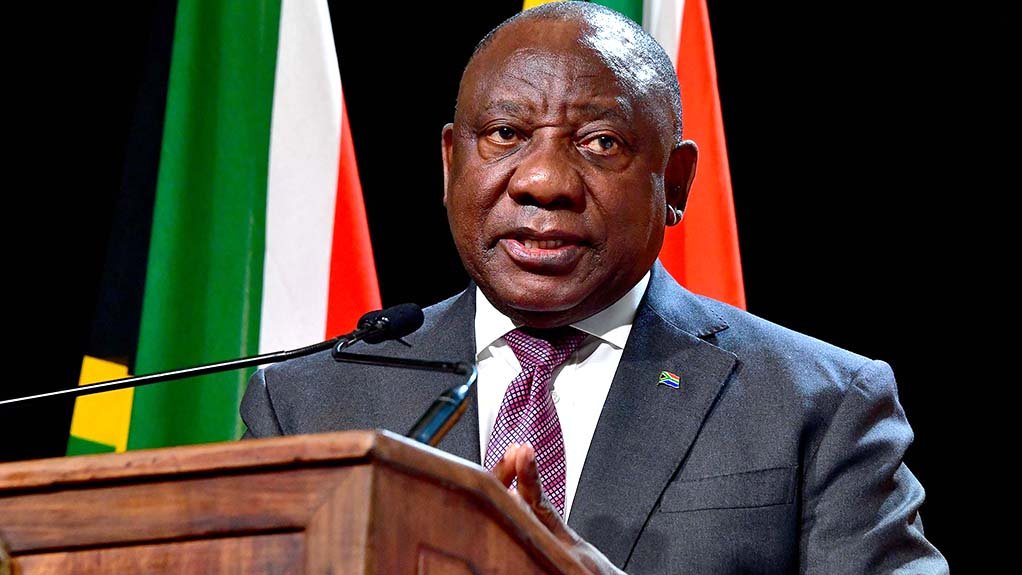
South African President Cyril Ramaphosa
Constitutional Court ruling revives Phala Phala inquiry, splitting opposition and rattling markets
By Norman Mwale | Africa Correspondent
President Cyril Ramaphosa has ruled out resignation after the Constitutional Court revived parliamentary impeachment proceedings against him over the Phala Phala farm scandal, declaring in a nationally televised address that stepping down would betray both his office and the constitution.
Speaking last week, Ramaphosa was unequivocal. “I therefore respectfully want to make it clear that I will not resign,” he told the nation, arguing that the court’s ruling addressed parliamentary procedure rather than personal guilt, and that a voluntary departure would “give credence to a flawed report” while abandoning his constitutional mandate.
The case stems from the 2020 theft of US$580,000 in cash concealed inside furniture at Ramaphosa’s Phala Phala game farm in Limpopo — a disclosure that has trailed his presidency ever since. A Section 89 independent panel found prima facie evidence of possible misconduct, though Ramaphosa maintains the funds derived from a lawful buffalo sale. The Constitutional Court ruled on 8 May that Parliament had acted unconstitutionally in 2022 when it moved to block a formal inquiry, clearing the path for a new and potentially more consequential process.
The African National Congress has responded by closing ranks around its leader. Secretary-General Fikile Mbalula, speaking to journalists in Johannesburg, confirmed that the party’s National Executive Committee had unanimously resolved that Ramaphosa should serve out his full term — both as ANC president and as head of the Government of National Unity. “The exercise of constitutional rights by a citizen of the Republic, including a citizen who holds the Office of President, is not an evasion of accountability,” Mbalula said, pushing back against critics who have framed Ramaphosa’s legal strategy as an attempt to run down the clock. ANC chairperson Gwede Mantashe went further, telling Newzroom Afrika that resignation would be “devastating” for the party at this juncture.
The opposition is less patient. The Economic Freedom Fighters and the Inkatha Freedom Party have called on Parliament to move swiftly, while the South African Communist Party — a long-standing ANC alliance partner — welcomed the judgment but struck a note of urgency. SACP general secretary Solly Mapaila warned that prolonged delay risked further asset disposal and what he characterised as a new iteration of state capture, a phrase that still carries enormous political charge in post-Zuma South Africa.
Public sentiment reflects the wider political fracture. Many South Africans view the reopened inquiry as a meaningful stress test for accountability within the GNU, a coalition already navigating significant policy tensions among its constituent parties. Others fear the process will consume political bandwidth that the country can ill afford. Analysts observe that while Ramaphosa retains solid majority backing inside the ANC, a bruising and public parliamentary hearing could erode his standing ahead of the November 2026 local government elections — a contest the party cannot approach from a position of weakness.
The economic dimension is impossible to ignore. Mbalula has cautioned that removing Ramaphosa would unsettle financial markets and damage investor confidence at a moment when South Africa can least absorb the shock. Critics counter that it is the underlying scandal, not the constitutional response to it, that corrodes credibility. With unemployment stubbornly above 32 per cent and growth anaemic, institutional investors and ratings agencies are monitoring whether the GNU can sustain stability while the process plays out. Ramaphosa’s legal team is reported to be preparing an interdict to pause proceedings pending a formal review of the panel’s report — a manoeuvre that, if granted, could push the matter well past year’s end.
For now, South Africa’s president is staking his political survival on due process and party solidarity. Whether that calculation holds will be decided in Parliament’s programme committee when it reconvenes later this month — and ultimately, in the court of public opinion long before any formal verdict is reached.
Norman Mwale is a political affairs journalist covering southern Africa for The Mt Kenya Times.
Similar Posts by The Mt Kenya Times:
- Mt Kenya Times ePAPER October 1, 2026
- Museveni backs Lamu but keeps Uganda’s money at home
- Sifuna’s party wins its name — and Kenya’s opposition race begins in earnest
- Lamu’s $16B gamble: Africa’s biggest refinery divides the region
- Ruto launches KSh2.2 trillion Lamu refinery in East Africa’s biggest energy bet
About the Author