Kwekwe at a Crossroads: Mining, Water and Social Strain in the Midlands
 The Mt Kenya Times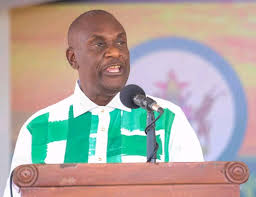
Midlands Provincial Affairs and Devolution Minister Owen Ncube
By Norman Mwale
Kwekwe wakes to the sound of blasting and the frustration of dry taps. It is a city where parents weigh school fees against the immediate need to fetch water or earn a daily wage. This is not a city in collapse — but one balancing precariously between survival and risk.
The clearest sign of that strain lies underground. A 2024 study by the Zimbabwe National Geospatial and Space Agency mapped tunnels extending 1.5 kilometres beneath the central business district and residential suburbs. The removal of support pillars and nightly blasting have left parts of Kwekwe vulnerable to subsidence and structural cracking. For residents in Globe and Phoenix, the threat of sinkholes is no longer abstract — it is a lived anxiety.
Government has acknowledged the problem. Midlands Provincial Affairs and Devolution Minister Owen Ncube has repeatedly urged a shift towards responsible mining.
“Strict adherence to responsible mining must be enforced… I therefore urge all miners in the Midlands province to protect public infrastructure such as schools, clinics, roads, dams, water and sewer reticulation systems. We say no to open pits that endanger livestock and people’s lives.” — Owen Ncube, Midlands Provincial Affairs and Devolution Minister
Ncube has also argued that artisanal miners need support to adopt safer, more sustainable methods. His call reflects a broader policy tension: how to formalise an industry that employs thousands while curbing the damage it leaves behind.
The environmental and health costs are already visible. Mercury, cyanide, and acid mine drainage have contaminated surface water and soil across several high-density suburbs. During municipal water cuts, some households are left with little choice but to rely on polluted streams and waterways contaminated with raw sewage for gardening and domestic use. Residents report respiratory problems, gastrointestinal illness, and skin conditions consistent with prolonged exposure to toxic effluent. Ncube has linked this to wider land degradation along the Great Dyke, noting that “open pits left by miners are a constant threat to people and livestock.” His office has directed district officials to pursue land reclamation, tree planting, and improved health and safety measures.
Water shortages compound these pressures. Intermittent supply in Wards 2, 5, and 11 forces families to turn to unsafe sources. Council officials point to ageing pipes and heavy haulage traffic as culprits, but residents argue that investment has consistently lagged behind demand.
Social vulnerability is felt most acutely by young women and girls. Water scarcity and poverty contribute to school absenteeism — particularly for those without access to menstrual hygiene products. Data from 2024 recorded 351 cases of sexual abuse in the district, with most victims aged between 15 and 24. Many incidents are linked to interactions with artisanal miners in peri-urban areas. Community groups stress that shifting this pattern will require changing attitudes and meaningfully involving traditional leaders.
There are real signs of progress. The Presidential Borehole Drilling Scheme has delivered new boreholes in Zhombe and surrounding wards. Menstrual hygiene programmes have improved school attendance for girls in parts of the district. Men’s Indaba meetings have begun addressing mental health and financial planning, recognising that household stability depends on far more than income alone.
Kwekwe’s situation reflects a national dilemma. Mining sustains livelihoods in a post-industrial town battered by deindustrialisation and climate variability. Yet without regulation, environmental safeguards, and targeted social protection, it risks undermining the very infrastructure and community health it depends on.
A balanced response is within reach: formalise small-scale mining, enforce environmental standards, and protect the most vulnerable households. Without these steps, Kwekwe will continue to live on unstable ground — both literally and socially.
Similar Posts by The Mt Kenya Times:
- Diaspora Times Global Oct 17 – Oct 23, 2026
- Is social media a blessing or a curse for university students?
- Light at last: How electricity is reshaping Nandi and Uasin Gishu
- The triple squeeze: how EPRA’s fuel price hike is reshaping the survival equation for the common mwananchi
- Zelenskyy accuses Trump of rewarding Putin as Pope pleads for peace from a hospital bed
About the Author