Armenia’s ruling party claims victory in June parliamentary election
 The Mt Kenya Times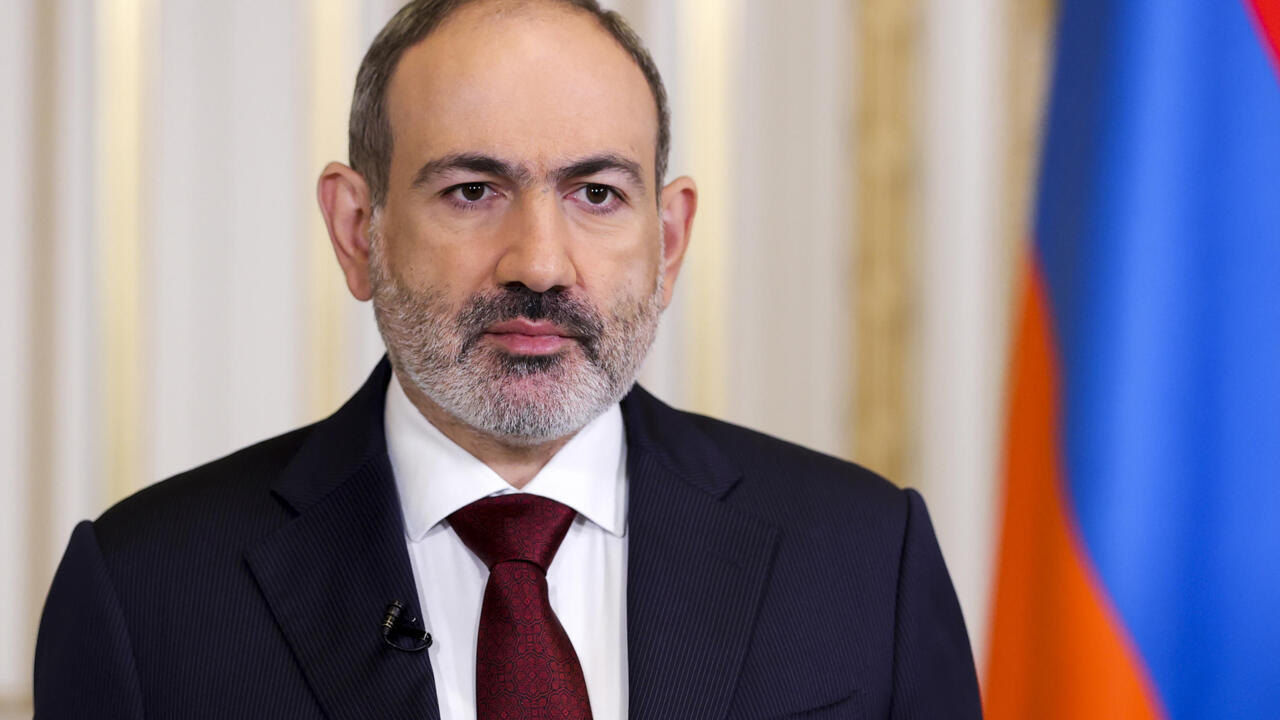
Armenian Prime Minister Nikol Pashinyan
Prime Minister Nikol Pashinyan secures a third term as Civil Contract wins more than half the national vote, cementing Armenia’s westward shift and deepening its break with Moscow
By Norman Mwale
Armenian Prime Minister Nikol Pashinyan has claimed a decisive election victory, extending his hold on power after his Civil Contract party secured a parliamentary majority in Sunday’s poll — a result that firmly endorses Armenia’s accelerating pivot away from Russia and towards Europe.
With more than 94 per cent of ballots counted, Civil Contract had taken just over 50 per cent of the vote, a commanding lead over the pro-Russian Strong Armenia party of Russian-Armenian billionaire Samvel Karapetyan, which received 23.2 per cent. The Armenia Alliance took 9.9 per cent. Exit polls had projected Civil Contract at 56.7 per cent, and preliminary results settled at 49.8 per cent — enough to secure a majority in the 9th convocation of the National Assembly. Voter turnout stood at 58.97 per cent from an eligible electorate of just under 2.5 million.
Pashinyan declared victory shortly before 3am on Monday. The mood at party headquarters was jubilant, and the prime minister did not understate the moment. “Historic,” he called it — a word that, given the weight of what this election represented, was not obviously an exaggeration. For a country that has spent much of its modern existence navigating the competing demands of powerful neighbours, a clear democratic mandate for a westward course is genuinely significant.
The vote was always going to be about more than parliamentary arithmetic. Since leading the Velvet Revolution in 2018, Pashinyan has pulled Armenia steadily westward, pursuing domestic modernisation and democratic reform while deliberately loosening the country’s ties to Moscow. That shift has carried real costs — tension with Russia, a fraught peace process with Azerbaijan, and a fractured relationship with Turkey that has kept the border closed for decades. Sunday’s result suggests Armenians, on balance, are willing to bear those costs. It is a significant statement from a small country that has historically found itself squeezed between competing regional powers with very different ideas about where its loyalties should lie.
The economy has also played its part in shaping the electorate’s verdict. Armenia has recorded steady growth in recent years, supported in part by an influx of Russian professionals and capital following Moscow’s 2022 invasion of Ukraine — an irony that has not been lost on observers. Whether that economic momentum can be sustained as Armenia moves further from Russia’s orbit is an open question, but for now voters appear to have judged that the government’s stewardship of the economy, alongside its broader reform agenda, merits another term.
The peace agreement with Azerbaijan remains the most delicate item on Pashinyan’s agenda. Civil Contract fell short of the two-thirds parliamentary majority that Azerbaijan has demanded as a precondition for a constitutional referendum — a condition also linked to Turkey’s willingness to reopen border trade. That shortfall leaves the prime minister with a strong mandate but a narrow path, and it means the diplomatic work of the coming months will be every bit as consequential as the electoral result itself. Brokering a durable peace with Baku, while managing domestic expectations and resisting pressure from Moscow, will require a level of diplomatic agility that has tested far larger governments than Yerevan’s.
Managing the relationship with Moscow will define much of the third term. Russia has watched Armenia’s westward drift with barely concealed displeasure, and the strong showing of the pro-Russian Strong Armenia party — even in defeat — is a reminder that a significant portion of the electorate remains sceptical of the direction Pashinyan has chosen. That domestic tension will not dissolve with a single election result. It will need to be managed carefully and honestly, with a government willing to make the case for its choices rather than simply assuming that the mandate settles the argument.
On the international stage, the picture is more encouraging. European institutions have welcomed Armenia’s reform trajectory, and there is appetite in Brussels for deeper engagement if Yerevan continues to demonstrate commitment to democratic governance and the rule of law. That opens doors — for trade, for investment, and for the kind of institutional relationships that can provide long-term stability in a volatile region. But doors opened must also be walked through, and that requires sustained effort well beyond the campaign season.
International observers assessed the vote positively. Chief observer for the Continental Democratic Institute, Dr Samuel Oka, described the poll as an orderly exercise that represented a meaningful step forward for Armenia’s democratic consolidation, before adding a note of caution that will resonate in Yerevan. “The challenge now is governance,” he said. “A strong mandate carries strong expectations.”
Pashinyan enters his third term with a clear mandate, a complicated neighbourhood and no shortage of unfinished business. The direction Armenia has chosen is no longer in doubt. Whether the road ahead is navigable — and whether the government has the discipline and the diplomacy to walk it — is the question that will define the next five years.
Similar Posts by The Mt Kenya Times:
- Uhuru owns “sponsor” — and Ruto should be worried
- Sengwer youth: When will Kenya stop treating a minority like an afterthought?
- When young lives become disposable
- The day death refused to be scammed
- Statement win at the Gtech: Brentford outclass Chelsea to claim all three points
About the Author