Kipipiri MP Wanjiku Muhia
Kipipiri MP Muhia reveals how hooded gunmen, state intimidation and a landslide result rewrote Kenya’s political map
By Grace Wanja
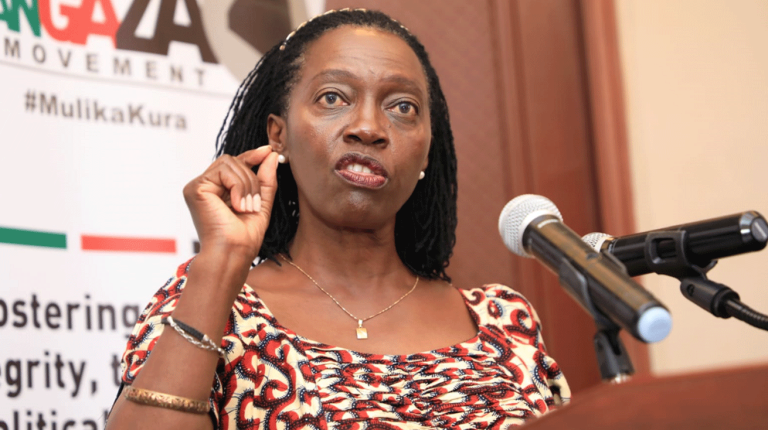
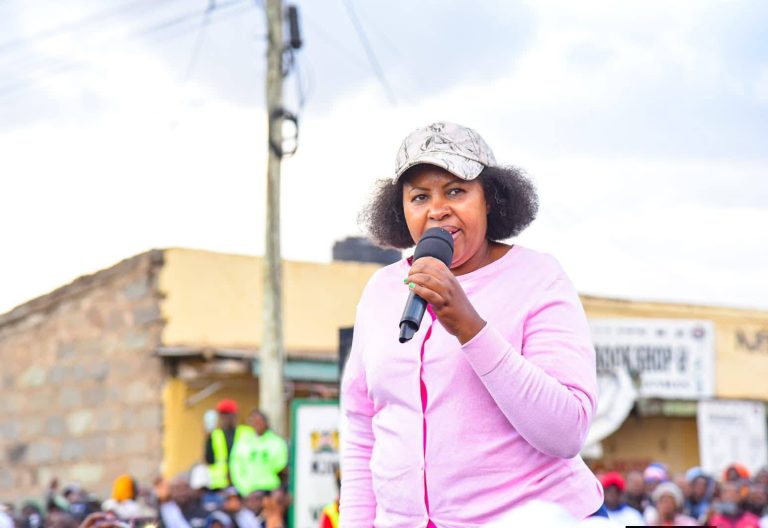
Kipipiri MP Wanjiku Muhia has laid bare the violence, intimidation and electoral manipulation that accompanied the Democracy for the Citizens Party’s landslide victory in the Ol Kalou parliamentary by-election on July 16, describing scenes she called disturbing even by the standards of Kenyan politics.
Speaking in a media interview on Monday, Muhia did not confine herself to celebrating the DCP’s crushing win. She delivered a detailed and at times chilling account of what unfolded on polling day in Nyandarua County — and what it portends for the country’s democracy as the 2027 general election approaches.
The result itself was unambiguous. DCP candidate Sammy Kamau Ngotho garnered approximately 35,440 votes, nearly seven times more than his closest rival, UDA’s Samuel Muchina Nyagah, who received around 5,450 votes. Other candidates, including Jubilee’s Wilson Mwaniki Kigwa, managed only a few hundred votes each. By any measure, it was a rout. But Muhia’s account of how that result was achieved — and what the government allegedly did to prevent it — cast a shadow over the celebration.
What started as a normal voting day quickly spiralled into near anarchy when gun-toting men in masked faces descended on the constituency, causing terror, mayhem and lawlessness. Hooded gunmen carrying assault rifles attacked unarmed voters and journalists, with the violence unfolding in the full view of uniformed police officers. Nation Media Group journalists were attacked at AC Primary School polling station by men wearing balaclavas, who also made away with two cameras.
The Kenya Human Rights Commission, which deployed 12 election monitors and four staff members across the constituency, documented serious human rights violations. James Muigai Mwathi, aged 30, died from injuries sustained during violent attacks involving heavily armed security officers and organised groups. Dozens of others were injured, while many reported assaults and robbery.
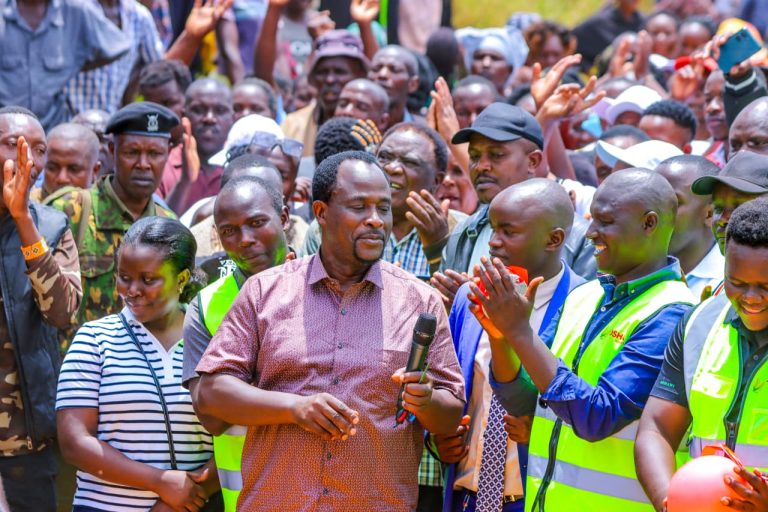
Muhia told her interviewer that the attacks targeted more than 20 polling stations in a coordinated attempt to suppress the DCP vote. “The attacks at more than 20 polling stations were an attempt to scare you, but you stood firm against the goons and the guns. Your resolve was unshakeable,” she said in a congratulatory message to the MP-elect. That resolve, she argued, was the real story of Ol Kalou — a constituency that voted overwhelmingly despite being made to feel afraid.
The violence drew swift condemnation from across the political spectrum. Former Chief Justice David Maraga condemned the attack on journalists and the broader violence. “We condemn the assault on the press by hooded gunmen, whose clear mission is to conceal evidence of electoral malpractice and gross violations of human rights,” Maraga said. “The reports from the Kenya Human Rights Commission, the Electoral Observation Group and independent journalists on the ground are unanimous: the Ol Kalou by-election represents the most serious degradation of our democracy yet.”
The most explosive dimension of the post-election fallout involved a vehicle linked to Kiambaa MP John Njuguna Kawanjiku. A Nation investigation traced a black Toyota Land Cruiser, registration KDL 477Q, seen alongside the attackers to Kawanjiku. An amateur video recorded by a resident shows a man resembling the MP standing beside a vehicle matching the description of the Land Cruiser, speaking to a group of men before one of them — whose face was concealed by a mask, scarf and hat and who was dressed in military-style fatigues — opens the vehicle’s door for him. Kawanjiku confirmed he was the man in the footage and that the vehicle belonged to him, but denied any involvement in the violence, saying he would not have used his personal vehicle if he had intended to engage in any wrongdoing.
Muhia connected the violence to a broader pattern of government overreach throughout the campaign. She claimed the administration flooded the constituency with resources in a last-ditch attempt to sway voters — and that residents rejected the overtures regardless. Rigathi Gachagua, DCP party leader, said the deployment of 2,000 police officers across the 144 polling stations was itself an attempt at intimidation. “The fact that 2,000 police officers were deployed across the 144 polling stations in Ol Kalou in an attempt to intimidate voters, yet failed, speaks for itself,” Gachagua said.
For Muhia, the result was inseparable from the political anger that has been building in Mt Kenya since Gachagua’s impeachment. She argued that leaders allied to the government had repeatedly targeted both Gachagua and retired President Uhuru Kenyatta, a move that angered many residents. “Having elected this government with nearly 47 percent of the vote, they then impeached the deputy president, and as if that is not enough, they wake up every day saying, ‘This man is tribal.’ So the people said, ‘Okay, he’s ours, and if you say we are tribal, then let us show you that we are tribal,'” Muhia said.
She was equally insistent that the anger was not confined to Mt Kenya. Muhia likened the voter frustration witnessed in Ol Kalou to the growing dissatisfaction being felt across the country, arguing that the constituency merely reflected the national mood — sentiments no different from those being experienced by Kenyans in Nairobi, Mombasa, Kitui and Nakuru. She pointed to the economic pressures bearing down on ordinary families, with rural households increasingly dependent on relatives in urban centres who themselves struggle to make ends meet.
The Kenya Human Rights Commission warned that Ol Kalou mirrored concerns documented during the Malava and Mbeere North by-elections, where violence, intimidation, misuse of public resources and declining confidence in electoral institutions were also recorded. “The recurrence of these violations across successive by-elections suggests that they are becoming entrenched in Kenya’s electoral environment. Unless decisive action is taken, these conditions are likely to re-emerge during the 2027 general election, with serious implications for electoral credibility, public confidence and constitutional governance,” the commission said.
Interior Cabinet Secretary Kipchumba Murkomen condemned the violence and directed security agencies to investigate those responsible, while the Directorate of Criminal Investigations launched formal inquiries into the incidents. Murkomen also announced what he described as a second phase of intelligence-led operations against organised criminal gangs. “We are now going to do round two with full force, targeting those involved in robberies and political violence,” he said. For many observers, however, the pledge rang hollow against the backdrop of similar assurances issued after previous incidents that produced no meaningful accountability.
Muhia’s own campaign had not been without controversy. The Independent Electoral and Boundaries Commission fined her KSh1.5 million over remarks during the campaign that drew accusations of inciting exclusion, with the IEBC Electoral Code of Conduct Enforcement Committee warning that any subsequent violation could result in a bar from future elections. She dismissed the sanction as selective enforcement, and the landslide that followed suggested that whatever controversy her words generated, they did not cost DCP the votes that mattered.
What Ol Kalou has produced, ultimately, is not merely a by-election result. It is a documented case study in the fragility of Kenya’s electoral institutions under pressure — and a warning, delivered in numbers too large to ignore, that the political ground beneath the Kenya Kwanza administration is shifting faster than anyone in government appears willing to acknowledge.
The guns failed. The ballot spoke. And the questions left behind will not be silenced before 2027.
Similar Posts by The Mt Kenya Times:
- Diaspora Times Global Sep 5 – Sep 11, 2026
- Mt Kenya Times ePAPER September 5-6, 2026
- Kenya secures AGOA extension to 2028, unlocking continued duty-free access to US market
- Kenya’s public wage bill set to hit KSh1.287T as county spending strains fiscal limits
- KRA waives all tax penalties in year-end amnesty
About the Author