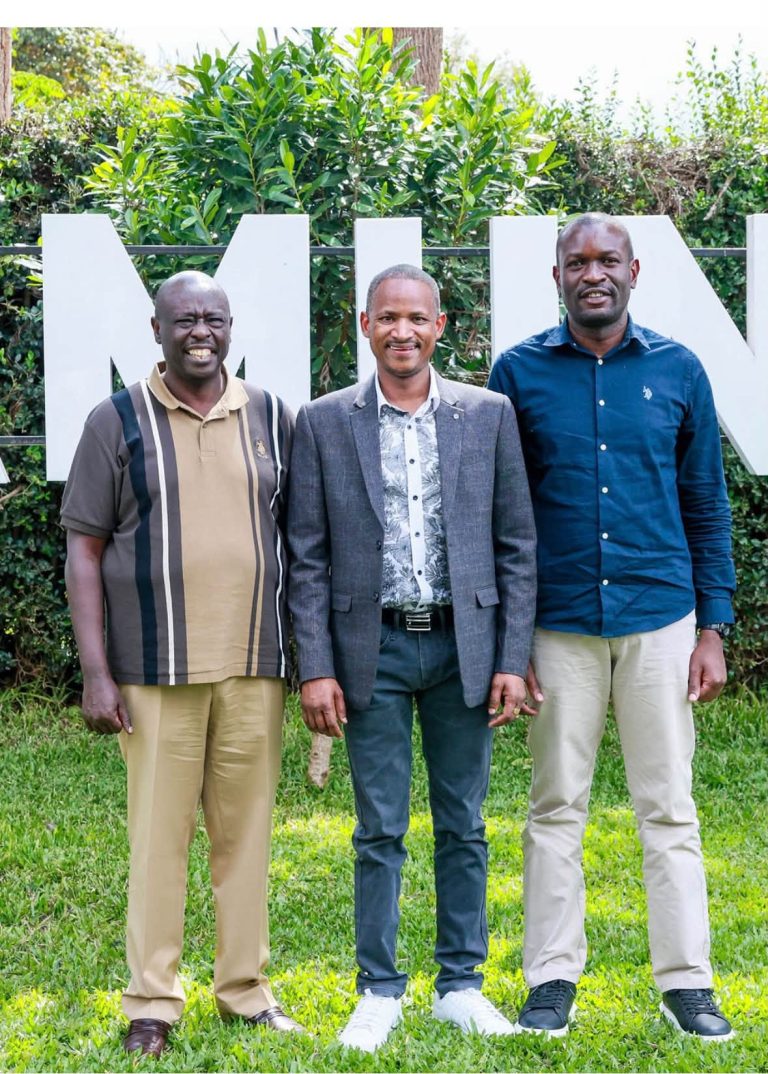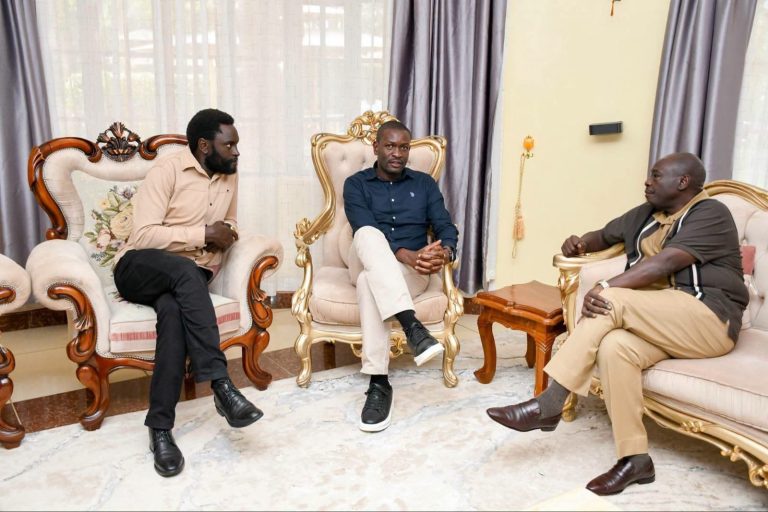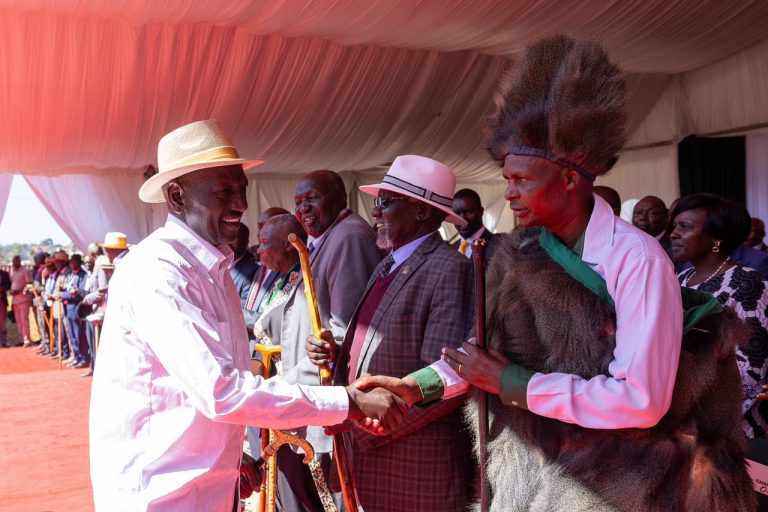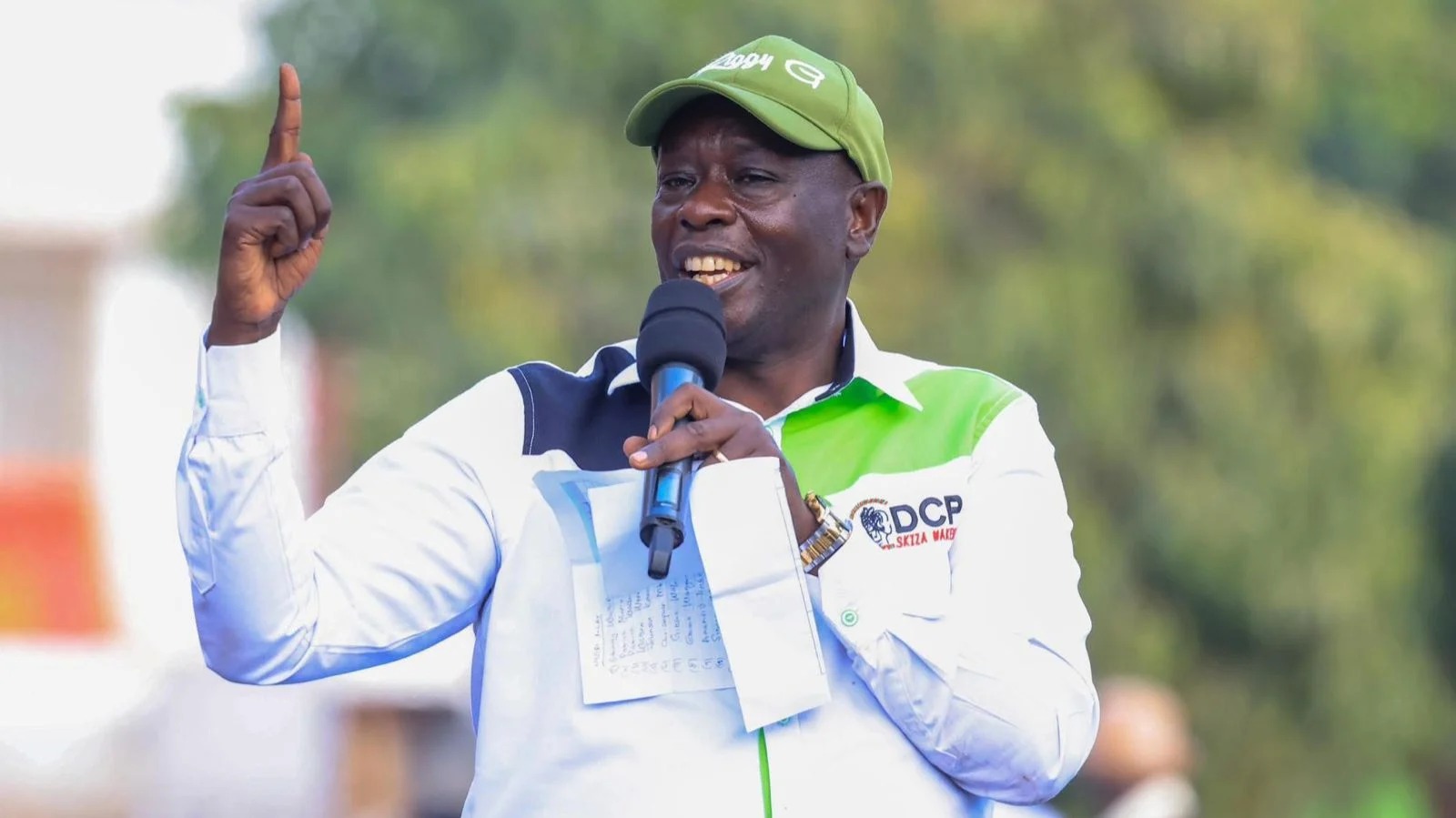
Former Deputy President Rigathi Gachagua
Former deputy president signals succession plan as DCP rides Ol Kalou wave toward 2027
By David Kimani
Former Deputy President Rigathi Gachagua has declared that if courts block his political ambitions ahead of the 2027 general election, he will hand over leadership to a younger figure — a striking public acknowledgement from the impeached former deputy president that his path back to power faces serious legal obstacles.
Speaking in a wide-ranging interview on KTN News, Gachagua was characteristically combative, using the Democracy for the Citizens Party’s performance in the Ol Kalou parliamentary by-election as a launching pad for a broader political argument: that Mt Kenya has permanently broken from President William Ruto’s UDA, and that the 2027 election will be fought on entirely different terms from the last.
“Our marriage is over — irreversibly broken,” Gachagua said, deploying the analogy he has returned to repeatedly when describing the relationship between the Mt Kenya vote bloc and the ruling party. He left no ambiguity about his reading of the Ol Kalou result. As far as he was concerned, the question was never whether DCP would win, but by how much. The margin, he argued, was proof that UDA’s grip on the region had not merely loosened — it had collapsed entirely, and that no amount of government spending or last-minute intervention could reverse the tide.
The by-election result carries weight well beyond the constituency itself. Mt Kenya has historically functioned as a decisive bloc in Kenyan presidential politics, and the speed with which Gachagua has moved to reframe its loyalties since his dramatic impeachment last year has unnerved the establishment. For Ruto, who built his 2022 coalition on the assumption of continued Mt Kenya support, the trajectory is deeply uncomfortable reading. Losing Ol Kalou was not merely a by-election defeat — it was a signal, and both sides of the political divide understood it as such.
Gachagua was contemptuous of what he described as the government’s attempts to purchase the Ol Kalou vote. He claimed the administration deployed billions of shillings in project announcements and cash handouts in the constituency in the days before polling — and that residents rejected the overtures regardless. “They threw everything at Ol Kalou,” he said, “and the people still chose us.” Whether that characterisation withstands independent scrutiny is another matter, but politically the narrative served its purpose: positioning DCP as the authentic voice of a community that has grown weary of transactional politics and can no longer be moved by last-minute state largesse.
The interview also served as a platform for Gachagua to address the broader national political picture with unusual candour. He spoke of the erosion of public trust in state institutions, the rising cost of living, and what he characterised as a systematic failure of leadership at the centre. These were not the talking points of a man content to play a regional role. They were the arguments of someone positioning himself — or his movement — for a national conversation.
Beyond the by-election, Gachagua used the interview to lay out what amounts to a grassroots defence architecture for 2027. He unveiled a detailed vote-protection blueprint built around a tiered volunteer deployment model: 500 volunteers at large polling stations, 300 at medium-sized stations and 200 at smaller ones. His instruction to supporters was unambiguous — remain at polling stations until counting is complete and results are formally confirmed, regardless of how long the process takes. He also proposed a phased voting sequence, with youth between 18 and 35 voting first, followed by women and then older voters, as a mechanism for ensuring maximum turnout from the demographics he considers most energised by DCP’s message.
The plan drew immediate scrutiny. Critics questioned both its legal basis and its practical implications, raising concerns about whether large-scale volunteer deployments at polling stations would be sanctioned by the Independent Electoral and Boundaries Commission, or whether they risked creating friction and potential confrontation in what is already a charged political environment. Gachagua gave no indication that he was deterred by such concerns, framing the initiative as a necessary and proportionate response to what he described as systematic vote manipulation in previous electoral cycles. For his supporters, the blueprint reads as vigilance. For his critics, it raises questions that deserve direct answers before 2027 arrives.
His commentary on security and investment carried perhaps the sharpest edge of the entire interview. Gachagua issued a direct and public warning to tourists and foreign investors, urging them to stay away from Kenya until the government could demonstrate a credible and sustained improvement in public safety. He accused the Ruto administration of a fundamental failure to guarantee the security of ordinary citizens and suggested that the consequences for Kenya’s international reputation and economic standing were already materialising in ways the government was reluctant to acknowledge.
The remarks provoked swift condemnation from government quarters, with officials accusing Gachagua of deliberately undermining Kenya’s investment climate for narrow political gain. The tension between his role as an opposition figure with a formidable public platform and his responsibilities as a former senior state official — one who retains access to audiences both domestically and internationally — is one that will only intensify as the election approaches and the stakes rise on both sides.
On the question of national expansion, Gachagua was explicit and confident. DCP’s ambitions are not confined to Mt Kenya. He described active outreach into Nairobi, the South Rift, the Maa region and the Coast, and spoke of delegations from across the country arriving to explore political alignment with his movement. The picture he painted was of a man constructing a national political vehicle rather than simply consolidating a regional base — though whether those delegations translate into durable alliances or merely reflect the curiosity that naturally surrounds any prominent opposition figure with momentum remains to be tested against the realities of coalition-building.
Within Mt Kenya itself, Gachagua made clear he intends DCP to be the dominant and ultimately the sole credible political vehicle in the region. The implicit target was rivals such as Murang’a Governor Irungu Kang’ata, whose own positioning within the opposition space Gachagua appears determined to neutralise. Consolidating the Mt Kenya bloc under a single umbrella, the argument goes, maximises its negotiating power in any future coalition arrangement — and, crucially, maximises Gachagua’s personal leverage within it.
It was against that backdrop that his remarks about succession carried their full weight. Asked about the legal challenges that continue to shadow his political future, Gachagua did not dismiss them or reach for the usual deflections. Instead, he offered a contingency: if the courts ultimately barred him from the 2027 race, he would pass the baton to a younger leader. It was a carefully calibrated statement — one that acknowledged real vulnerability while simultaneously projecting a movement designed to outlast any single individual, including its founder.
Whether that movement is as broad and as deep as Gachagua insists, or whether it remains heavily dependent on his personal brand and the grievance energy generated by his impeachment, is the central question the next eighteen months will answer.
For now, he is making noise, winning by-elections, and daring anyone to suggest that Mt Kenya has moved on.
It has not. And he intends to make sure everyone knows it.
Similar Posts by The Mt Kenya Times:
- Mt Kenya Times ePAPER October 21, 2026
- Kenya confirms ninth Ebola case as outbreak remains contained within single cluster
- Musk pledges SpaceX share for every American child in 2027
- Abiy calls for deeper Kenya-Ethiopia trade partnership at Eldoret ceremony
- Kenya’s oil moment: Promise, responsibility and the long road from Turkana to market
About the Author