Beneath the promise of gold: The deadly reality of Kenya’s mining pits
 The Mt Kenya Times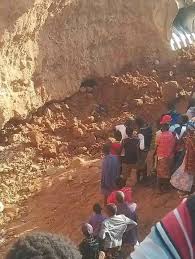
Kenya’s mining pits keep claiming lives — and the questions they leave behind demand answers
By Hadassah Karangu
Five miners died when a gold mine collapsed in Kenya, reigniting urgent questions about safety standards in a sector that sustains thousands of families but continues to bury them with alarming regularity.
The promise of gold has captivated humanity for centuries. People have crossed deserts, climbed mountains and dug deep into the earth in pursuit of the precious metal, and in Kenya — from Migori to Kakamega and beyond — that hunger endures. Every morning, thousands of men and women descend into the earth with one ambition: to find enough gold to change their lives. It is a dream as old as the hills they burrow into, and as dangerous as the shafts they disappear down each dawn.
For the five who died, the mine was never just a workplace. It was school fees, groceries, rent — the possibility of a better tomorrow. That hope was buried beneath tonnes of soil and rock in an instant. As rescue efforts unfolded, communities gathered and prayed. Relatives waited helplessly, hoping against reason that those trapped would somehow emerge alive. For five families, those prayers ended in devastating loss.
The tragedy is not an isolated event. It is a chapter in a long and painful story that Kenya’s mining communities know by heart — a collapse, a rescue attempt, a period of national mourning, and then a quiet return to business as usual until the next disaster demands attention. Deep underground tunnels are routinely dug with limited engineering support, inadequate equipment and minimal safety measures. Workers descend into narrow shafts every day aware of the risks: walls that can weaken without warning, heavy rains that destabilise already fragile ground, poor ventilation that creates invisible hazards in the darkness below. They descend anyway, because for many there is simply no alternative.
Poverty has a way of making dangerous choices feel rational. Agriculture has grown increasingly unpredictable as weather patterns shift and seasons that once arrived reliably now disappoint with drought or arrive with destructive floods. Formal employment remains scarce across many rural counties, particularly for young men without qualifications or connections to urban job markets. Faced with limited options, residents of mining communities view the gold pits as their most accessible path to a livelihood. That dependence sometimes comes at a terrible cost, and the country has been slow to reckon honestly with why.
Every collapse is a reminder that behind every statistic is a human story. The five who died were not merely miners. They were fathers, brothers, sons, friends — anchors of their families and fixtures of their communities. Each had a name, a history, a reason to come home. Their absence will echo at dinner tables, school gates and places of worship for years to come. Children will grow up without parents. Parents will grieve children they expected to outlive them. The emotional weight of one afternoon’s collapse will be carried for generations, invisible to policymakers but present every single day for those left behind.
The incident demands serious answers from those entrusted with oversight. Are inspections being conducted with sufficient rigour, or are they perfunctory exercises in paperwork? Are mining operators genuinely adhering to safety guidelines, or merely signing forms and ignoring their obligations the moment the inspector leaves? Are local authorities equipped — financially and technically — to monitor sites that can kill without notice? Are penalties for non-compliance meaningful enough to change behaviour, or so negligible that violations are treated as an acceptable cost of doing business? These are not rhetorical questions. They are obligations that have gone unmet for too long.
Experts have warned for years that artisanal and small-scale mining operations require far stronger regulatory oversight. Legislation without enforcement is little more than decoration. The economic contribution of mining to communities like those in Migori is real and significant, underpinning local economies and funding services that government transfers alone cannot sustain. But that contribution cannot justify conditions in which workers gamble with their lives every day. No family should lose a loved one because basic safety precautions were ignored, cut short for cost reasons, or simply never implemented.
Honest solutions must reckon with ground realities. Shutting down mines without creating alternative livelihoods would simply transfer one form of suffering into another — removing the danger without removing the desperation that drives people into it. The harder and more necessary task for policymakers is building a framework that protects lives while preserving the economic oxygen that mining communities depend on. That means investment in safer technologies scaled to artisanal operations, structured training programmes delivered in accessible formats, proper equipment made available rather than merely prescribed, and consistent unannounced inspections carried out by personnel who cannot be pressured to look the other way.
The five deaths must be more than a moment of national sadness. Kenya has had those moments before and allowed them to pass without lasting consequence. Government agencies must resource mine safety inspectorates properly and hold them accountable for outcomes. Mining operators must accept genuine responsibility for conditions at their sites. Community leaders must create space for safety conversations that do not require a collapse to happen first.
Gold can enrich economies and generate revenues. It has done both for Kenya, and it will continue to do so. But no amount of it can replace a father who does not come home, a son whose future is cut short, or a worker whose last day on earth was spent searching for something better in the dark.
Five lives have been lost. Five families are in mourning. Five futures have been erased. As the dust settles over the collapsed mine, one question demands an answer Kenya’s leaders can no longer defer: how many more must be buried before meaningful change finally reaches those who dig for the nation’s gold?
Similar Posts by The Mt Kenya Times:
- Mt Kenya Times ePAPER October 21, 2026
- Kenya confirms ninth Ebola case as outbreak remains contained within single cluster
- Musk pledges SpaceX share for every American child in 2027
- Abiy calls for deeper Kenya-Ethiopia trade partnership at Eldoret ceremony
- Kenya’s oil moment: Promise, responsibility and the long road from Turkana to market
About the Author