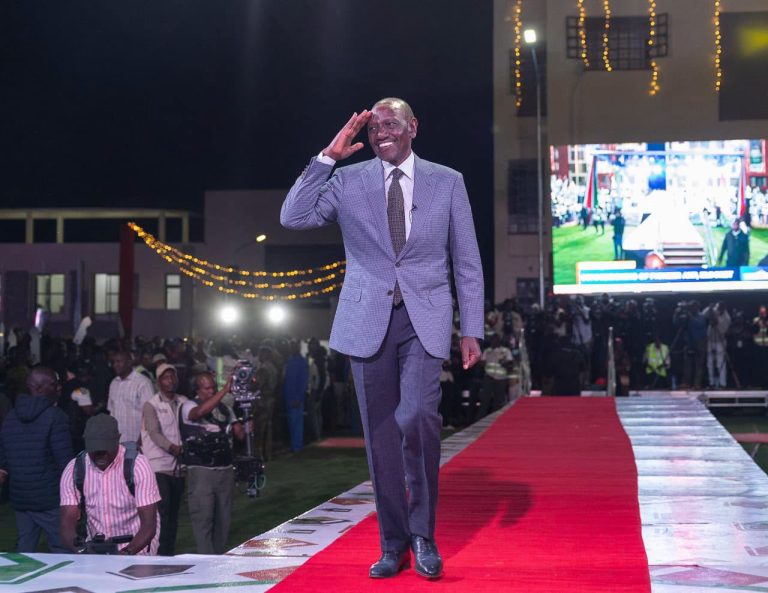
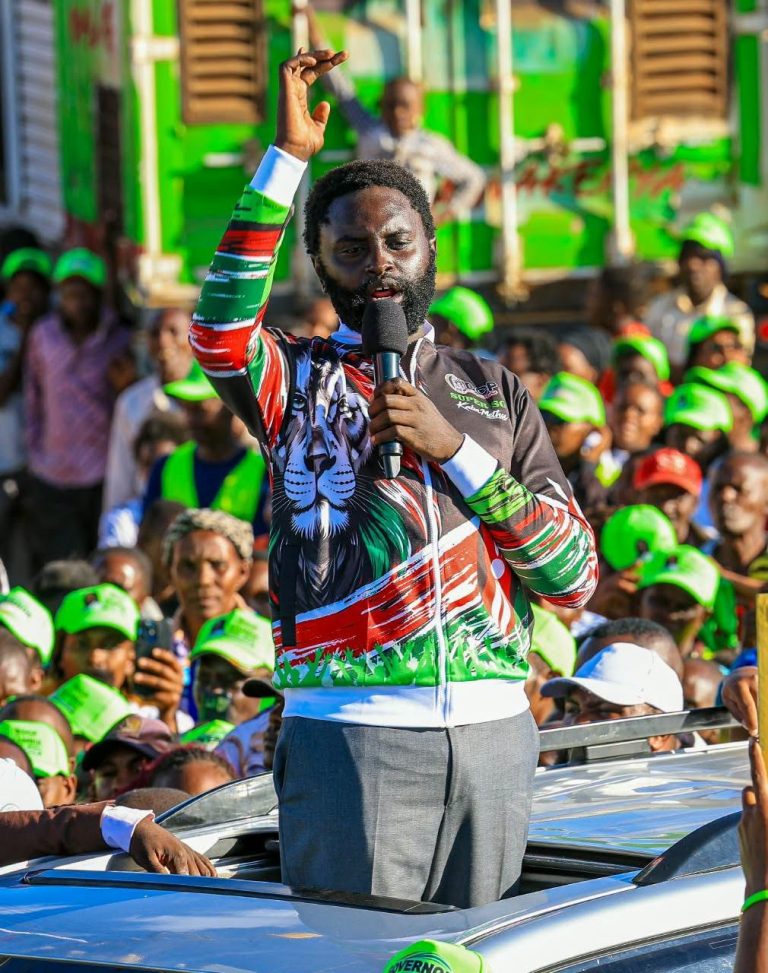
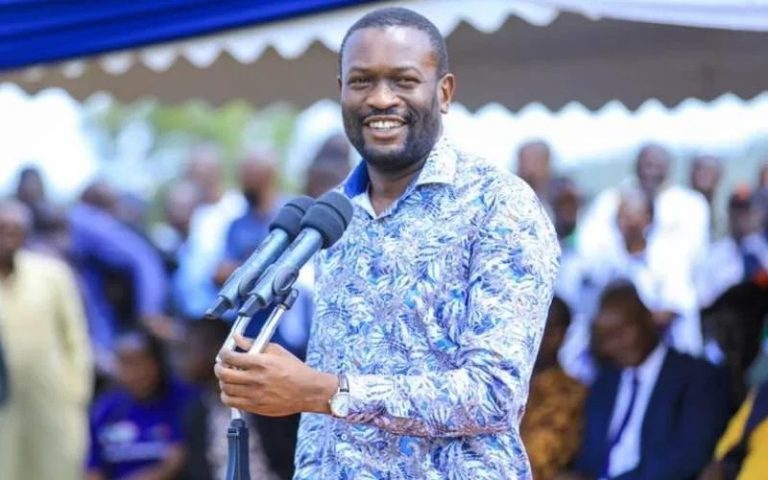
Sifuna climbing the mountain: Kenya’s political map is being redrawn
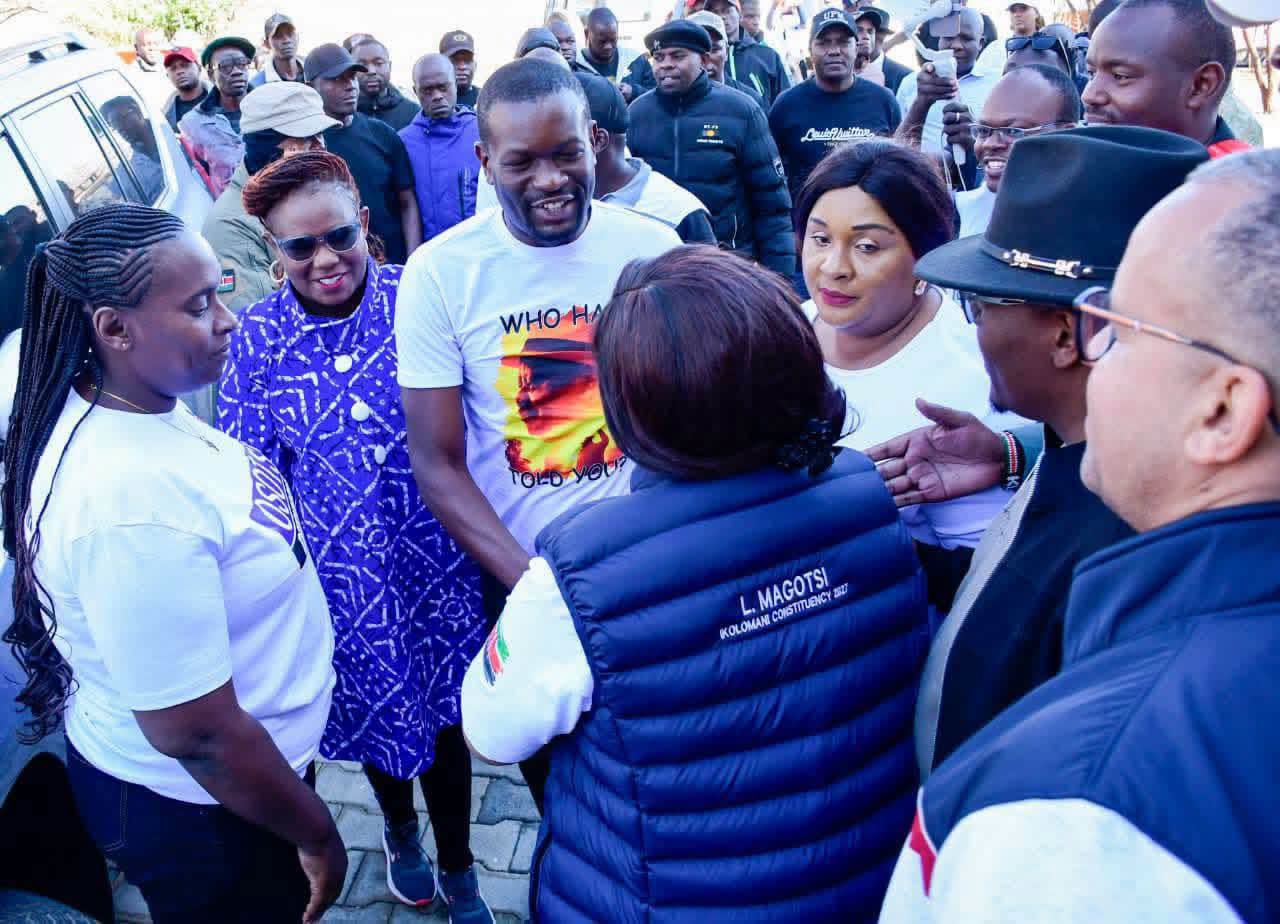
Edwin Sifuna and other leaders led by former Governor Kawira Mwangaza in Meru
With twelve months to the August 2027 general election, Edwin Sifuna’s rally in the heart of Mount Kenya country yesterday crystallised a political reckoning that President William Ruto can no longer ignore
By James Mwangi
Police lobbed teargas at a Linda Mwananchi rally in Makutano, Meru County yesterday, briefly disrupting a gathering attended by Nairobi Senator Edwin Sifuna and other opposition leaders — but the canisters did not silence what the rally represented. By the time the smoke cleared and the crowd settled back into place, something had already been established: the opposition had arrived, uninvited and unafraid, in territory the government had considered its own.
The symbolism was not accidental. Meru and the broader Mount Kenya East region are quickly emerging as a political powder keg that could determine the outcome of the next presidential race, and Sifuna’s presence there — welcomed by former Meru Governor Kawira Mwangaza, who backed him for the 2027 presidential race — was a direct challenge to the calculations of every major political actor in the country.
To understand why yesterday’s rally matters, you have to understand what Kenya’s political map looked like eighteen months ago — and how dramatically it has shifted since.
When Ruto orchestrated the impeachment of his deputy, Rigathi Gachagua, in October 2024, the calculation was straightforward: neutralise the Mt Kenya bloc’s most combative voice and replace the loss by folding ODM, with its deep Nyanza and western Kenya roots, into the broad-based government. It was a transaction — Gachagua’s departure for ODM’s loyalty. For a moment, it appeared to work.
It no longer does.
The confrontation traces back to the death of ODM founder Raila Odinga in October last year, which left the party without the figure who had held its competing wings together. Two camps have since emerged: one led by Siaya Senator Oburu Oginga, who now heads the mainstream ODM structure and has anchored the party firmly within President Ruto’s orbit, and another led by Sifuna, Siaya Governor James Orengo and Embakasi East MP Babu Owino through the Linda Mwananchi movement.
The consequence for Ruto is severe. The political dividend he was promised when ODM entered the broad-based arrangement — Nyanza’s votes, Western Kenya’s weight, a western buffer against Gachagua — is fracturing in real time. ODM is facing a test of strength after two factions emerged: one led by Oburu Oginga and another led by Sifuna and Owino under Linda Mwananchi. Oburu’s ODM may be administratively dominant, but it is Sifuna’s caravan that is filling the streets.
In Nyanza specifically, the contest is bruising. At the centre of Ruto’s sustained Nyanza engagement has been Homa Bay, where Governor Gladys Wanga — also ODM national chairperson — has emerged as the President’s most consistent host, helping transform the county into the primary gateway for his Nyanza strategy. But that gateway is now contested. Orengo’s engagements across Siaya and the wider Luo belt have drawn thousands, and his decision to declare himself a presidential candidate has upended the neat hierarchy the Oburu-Wanga axis was meant to provide. “Oburu is going for the Siaya senatorial seat, Wanga is going to Homa Bay, yet the Luo community does not have a representative at the national table. It is only me who is left,” Orengo said.
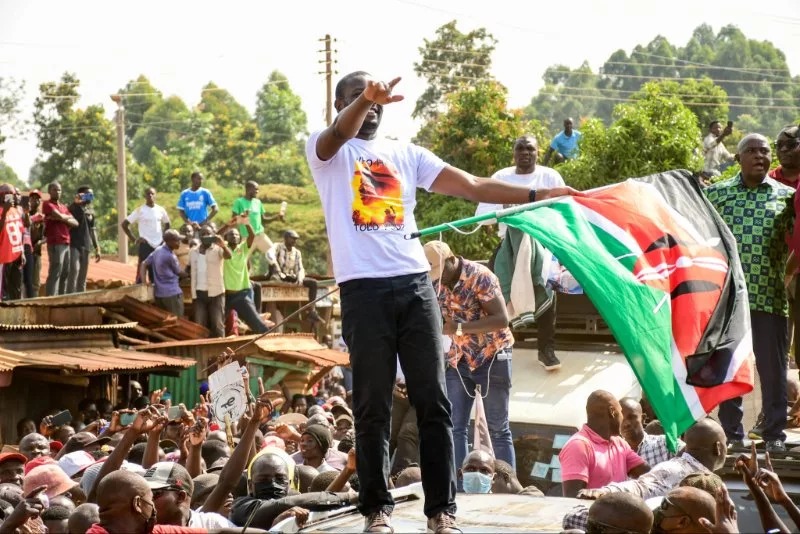
In Western Kenya, the terrain is even more unfavourable for the government. Sifuna, a Kakamega senator with deep grassroots reach, has effectively swept the region under the Linda Mwananchi banner. “We are going to every corner of this country. We want to listen to Kenyans, understand their problems and build this movement from the ground up,” he has said, adding that Linda Mwananchi’s strength would come from ordinary citizens rather than political elites. That message has landed. Rallies in Kakamega, Vihiga and Trans Nzoia have drawn crowds that tell a story Nairobi’s political strategists cannot explain away with talking points.
Then there is Mount Kenya — the region whose arithmetic has decided every presidential election in the democratic era, and which is currently in a state of three-way fracture.
The renewed push to politically distinguish Mt Kenya East from Mt Kenya West has evolved from a regional identity debate into one of the most significant political battles ahead of the 2027 general election, with implications for Ruto’s re-election strategy and DCP leader Gachagua’s efforts to consolidate the mountain vote. Deputy President Kindiki has hosted more than 20,000 grassroots leaders from Meru, Tharaka Nithi, Embu and Isiolo counties, vowing to wipe out the opposition’s influence in the year ahead. “The opposition should not dare mess with me,” he said. “When we start the campaigns, votes will be pouring into the President’s ballot.”
The bravado is understandable — and also revealing. A deputy president who did not need to say that would not have said it. Kindiki is fighting for a region he nominally controls but does not yet own.
Mwangaza’s alignment with Linda Mwananchi yesterday complicated that picture further. Though elected as an independent and less tethered to national party machinery, her voice carries weight among Meru’s grassroots. She has now chosen her side. Her declaration yesterday — “That government, we are sending it home in the morning. Kasongo, Kindiki — shall they go or shall they stay?” — was the clearest signal yet that Kindiki’s Mt Kenya East project faces resistance from within.
Meanwhile, Gachagua continues to prosecute his own campaign with the relentlessness of someone with nothing left to lose. After handing Ruto one of his biggest political blows in Mt Kenya West, Gachagua has announced an ambitious six-day political tour of Meru and Embu counties, in what analysts describe as the next phase of a carefully calculated strategy to wrest control of the entire Mt Kenya voting bloc. His candidate Kamau Ngotho garnered 35,440 votes against Ruto’s UDA candidate who received just 5,450 in Ol Kalou — a result that demonstrated the scale of the government’s Mt Kenya problem with numbers too stark to dismiss.
The Coast, meanwhile, is being assembled into an opposition asset by Wiper Patriotic Front leader Kalonzo Musyoka with methodical precision. His team — comprising Nyali MP Mohammed Ali, Wundanyi MP Danson Mwashako and former Gender Cabinet Secretary Aisha Jumwa — brings together politicians with influence in Mombasa, Taita-Taveta and Kilifi, in what Musyoka described as the beginning of a broader effort to reclaim the Coast for the opposition. Jumwa, once a prominent figure in Ruto’s administration who served as Cabinet Secretary for Gender, has announced a massive deregistration exercise of UDA members who will join Wiper, saying: “We are the ones who registered UDA members in Kilifi, and we are embarking on a grassroots campaign to deregister them.”
Musyoka has been unambiguous about his ambition: “We want to unite this country and oust the current administration. Even residents of Baringo and Bomet want Dr Ruto to serve only one term,” he said in Kakuyuni.
Taken together, what these regional movements describe is an opposition that has ceased to be a headquarters conversation and become a street-level phenomenon. Linda Mwananchi is in Meru despite teargas. Orengo is in Homa Bay despite resistance. Kalonzo is in Kilifi dismantling UDA’s membership registers. And Sifuna, the most improbable frontman in Kenya’s recent political history — a senator from Nairobi who grew up in the shadow of Raila, built his career inside ODM, and was eventually expelled from it — is now the movement’s most recognisable face.
“The Constitution says that the office of the President is a symbol of national unity, but William Ruto as an individual is a symbol of our collective embarrassment and shame as a people in this Republic of Kenya,” Sifuna told the Meru crowd yesterday. The words were sharp and deliberately provocative. But the more important fact was where they were spoken: in Meru, in Deputy President Kindiki’s political backyard, to a crowd that cheered.
Twelve months remain. The election is scheduled for August 2027. The government retains the institutional advantages of incumbency — state resources, administrative reach, the ability to announce projects and commission infrastructure. Those are not small things. But they are not sufficient things either, not in a country where the political map is being redrawn county by county, rally by rally, and the teargas — as Sifuna reminded the crowd yesterday — has never yet managed to end a Linda Mwananchi meeting.
“They dared us to come to Meru, but nothing can stop us,” he said. “We appreciate the people of Meru for upholding peace and showing how democracy should work.”
The mountain has heard him. Whether it agrees is the question that will define 2027.
Similar Posts by The Mt Kenya Times:
- Araujo sidesteps Liverpool permanency question as Anfield stint gathers momentum
- CAS to rule on Senegal’s AFCON title fight by end of November
- Let students reward their teachers with excellence, not expensive gifts
- The emperor’s new markets: How cartels in fertilizer, cement and steel still rule the regional kingdoms of SADC, COMESA and the EAC
- Kenya’s missing link in the war against corruption: Why government must invest in grassroots social audits
About the Author