From the classroom to State House: The teachers who became presidents
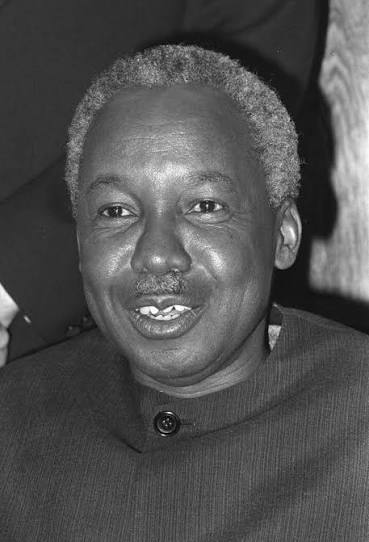
Julius Nyerere, the founding president of Tanzania
History’s most unlikely path to power turns out to run straight through the chalkboard — and it has shaped nations across three continents.
By Ashford Kimani
Leadership is most commonly associated with lawyers, economists, military commanders and career politicians. Yet history offers another remarkable pathway to the highest offices of government: the classroom. Across Africa, Asia and beyond, men and women who once stood before learners, prepared lessons, marked books and patiently explained difficult concepts eventually rose to become presidents and prime ministers. Their journeys demonstrate that teaching is not merely a profession concerned with examinations and academic grades. It is a discipline that builds communication, patience, critical thinking, mentorship and the quiet but powerful ability to shape society.
One of the most remarkable examples is Julius Nyerere, the founding president of Tanzania. Before entering politics, Nyerere trained and worked as a teacher, instructing students in mathematics and biology. His classroom experience deeply influenced his belief that education was the foundation upon which any meaningful national development must be built. After independence, he placed education at the centre of Tanzania’s nation-building programme, making it both a political priority and a personal conviction. His story is significant not merely as biography but as evidence that the analytical discipline of teaching — the need to break down complexity, to communicate clearly, to assess honestly — can translate powerfully into the demands of governance.
Tanzania provides a second compelling example in John Pombe Magufuli, who taught mathematics and chemistry before entering politics. His classroom background became a visible part of his public identity throughout his career. He rose through parliament and government to the presidency, carrying with him the habits of a man trained to demand precision, impose discipline and solve problems methodically. His trajectory from teacher to head of state remains one of the most striking illustrations of the classroom as a leadership training ground.
Zimbabwe’s Robert Mugabe taught English and history before becoming the country’s long-serving president. His teaching career took him across different parts of Africa and exposed him to the lived realities of colonial education — an experience that informed his political consciousness and anti-colonial convictions. His story also carries an important caution: an educational background does not guarantee enlightened political leadership. Mugabe’s controversial and ultimately damaging legacy is a reminder that the classroom produces skills, not character. Integrity, humility and respect for democratic institutions must be carried into power alongside everything else.
Ghana’s Kwame Nkrumah followed a similar arc. He worked as a teacher before becoming one of the central figures of the African independence movement and his country’s first prime minister and president. His educational experience gave him an appreciation for the transformative power of knowledge and political consciousness — qualities that proved essential in mobilising a generation toward liberation. Zambia’s Kenneth Kaunda, too, began his professional life as a teacher before becoming one of Africa’s most prominent independence leaders. Across the continent, educators were often at the forefront of the struggle against colonial rule, precisely because they understood that knowledge and power were inseparable.
Nigeria’s Goodluck Jonathan taught biology before entering public administration and eventually becoming president. His journey reflects how teaching builds the very skills that political life demands: public speaking, confidence, strong interpersonal relationships and a grounded understanding of communities and the people within them. In a political landscape often dominated by wealth and connections, his rise offered a reminder that the credibility earned in a classroom can be a form of political capital in its own right.
Beyond Africa, India’s Manmohan Singh — who served as prime minister and had a distinguished career as an economist and university professor — demonstrates another dimension of the teacher-to-leader pathway: the route of expertise. His academic life, which involved teaching, research and rigorous intellectual engagement, equipped him with the capacity to understand evidence, analyse competing arguments and make decisions guided by long-term consequences. In complex modern states, that capacity is not merely useful — it is indispensable.
Kenya’s own Mwai Kibaki, the country’s third president, worked as an economics lecturer before entering politics. His transition from university teaching to government reflected a broader movement of intellectuals into public service that shaped Kenya’s early post-independence decades. The classroom, in his case as in many others, served as a training ground for national policy-making — a place where the habits of planning, assessment, research and clear communication were first developed and tested.
The pattern across all these lives raises a straightforward question: why do teachers so often possess qualities that prove useful in political leadership? The answer lies in the nature of the work itself. A teacher must communicate ideas to people of different abilities and backgrounds. A teacher must manage time, resolve conflicts, motivate individuals, evaluate performance and adapt constantly to unexpected challenges. Every school day requires hundreds of small leadership decisions. In many communities, particularly in rural areas, the teacher is among the most educated and most trusted figures in public life.
Teaching also develops patience of a particular kind. A politician may deliver one speech and leave the platform. A teacher may explain the same concept repeatedly, in different ways, until every learner in the room understands it. That persistence — the refusal to give up on a slow outcome — can be enormously valuable in public leadership, where the most important national problems rarely have quick solutions.
The lesson for today’s teachers is not that every educator should seek political office. It is something more fundamental: teaching is itself a form of leadership. Every time a teacher inspires a learner to think critically, speak confidently, respect others or pursue excellence, that teacher is contributing to the future of society. Presidents and prime ministers may occupy State Houses, but many of their earliest lessons about discipline, responsibility, communication and perseverance were almost certainly learned from someone who stood at the front of a classroom.
The road from the chalkboard to the highest office in the land may be uncommon. History shows, however, that it is very real — and that it sometimes begins with something as unremarkable as a mathematics lesson on a Tuesday morning.
Ashford Kimani is a teacher of English and Literature who writes on education and social affairs.
Similar Posts by The Mt Kenya Times:
- Mt Kenya Times ePAPER October 21, 2026
- Kenya confirms ninth Ebola case as outbreak remains contained within single cluster
- Musk pledges SpaceX share for every American child in 2027
- Abiy calls for deeper Kenya-Ethiopia trade partnership at Eldoret ceremony
- Kenya’s oil moment: Promise, responsibility and the long road from Turkana to market
About the Author