Archdiocese of Mbarara Development Association — known simply as AMDA
How AMDA’s 12th caravan turned a quiet hillside parish into a place of healing, holy matrimony, and hope
By Mukama Phillip Kahigiriza
There are events, and then there are moments that a community carries in its chest for the rest of its life. What happened at St. Claret Catholic Parish Nyabwina in Sheema District this week was firmly the latter.
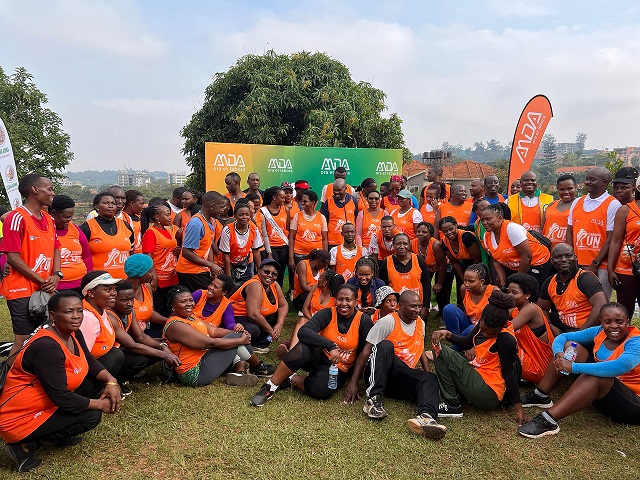
For three days, this quiet, deeply faithful parish perched on the green hills of Greater Bushenyi became the centre of something extraordinary. The Archdiocese of Mbarara Development Association — known simply as AMDA — arrived in Nyabwina for its 12th Annual Caravan, and what unfolded over those three days was, by any measure, remarkable: thousands of patients treated, 32 couples finally wed before God, trees planted, children given books, and a community reminded that it has not been forgotten.
To understand why any of it matters, you first have to understand where AMDA came from.
In the early 1990s, a small group of Banyankole Catholics who had left home for Kampala began meeting quietly — in Entebbe, Mukono, Wakiso, and Jinja — missing the 66 parishes that had raised them. They called themselves the Mbarara Diocese Development Association. Their dream was modest but sincere: to stay united, to worship together in Runyankole, and to find a way to give something back. From that small flame, a movement grew. Today, AMDA has over 3,000 members and serves as the official umbrella body for all Catholics from the Mbarara Archdiocese living in Uganda’s Central region.
In 2013, under the guidance of its chaplain, AMDA launched what would become its most enduring idea — the Annual Caravan. Every year, members travel back to a different parish in the archdiocese, not as donors making a grand gesture, but as children returning home. Since 2013, the caravan has touched 27 parishes. This year, it was Nyabwina’s turn.
The caravan is built on seven pillars — unity, spiritual development, economic empowerment, education, leadership, health, and environmental sustainability — and it was on all seven that Nyabwina was served this week.
When the AMDA convoy arrived on Thursday morning, the parish was already waiting. Children lined the road waving branches. Women ululated. Drums carried the news across the hills. More than 280 AMDA members — lawyers, doctors, business people, clergy, and young professionals — had driven over 300 kilometres from Kampala, not for politics or profit, but for this.
The medical camp that followed was, by any honest account, staggering in scale. The compound of St. Claret was transformed into what amounted to a referral hospital, staffed by over 150 health workers in partnership with Mulago National Referral Hospital, Mbarara Regional Referral Hospital, and the Sheema District Health Office. People began queuing from 4:00am. By the end of two days, more than 3,800 had received free treatment, screening, and counselling.
An elderly woman who had lost both her sight and hearing over 22 years — due to cataracts — received surgical intervention and was referred for a full operation. Mothers brought malnourished children. Men who had never once checked their blood pressure discovered they were hypertensive. The dental clinic extracted teeth that had caused years of pain. Counselling tents were packed — with families, with trauma, with young people carrying things they had never told anyone.
“We came here thinking we were just going to give out paracetamol,” said Dr Rosemary Byanyima, a senior AMDA member and Executive Director of Mulago Hospital, her voice faltering. “But what we found is deep pain. People walking 20 kilometres to see a doctor for the first time in a decade. This is why AMDA exists.”
All medicines, lab tests, and reading glasses were provided free of charge.
Then came Friday — and the moment that made an entire church weep.
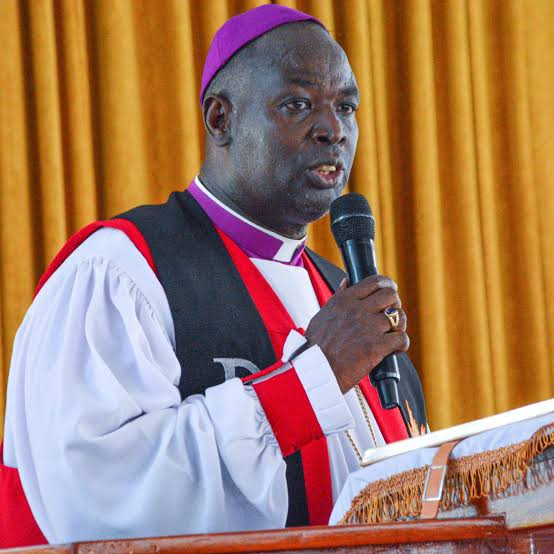
In a solemn, deeply moving Holy Mass presided over by Bishop Callist Rubaramiira of Kabale Diocese, assisted by parish priest and AMDA chaplain Fr Darius Magunda, 32 couples who had been living together — some for over 20 years — were finally married in the Sacrament of Holy Matrimony. AMDA’s Spiritual Development Council had spent months preparing them: catechising, counselling, sourcing wedding rings, veils and suits, and covering all church dues.
Mothers in their fifties stood at the altar in borrowed white gowns, holding the hands of the fathers of their children, trembling as they said “I do.” Their children, many of whom had never seen their parents in a church wedding, wept openly. The entire congregation wept with them.
“You can give a man seedlings and medicine,” AMDA chairman Gumisiriza Chris said, his own eyes red, “but if his family is not blessed in the church, he is not complete. Today, we have not just given Nyabwina a hospital. We have given it 32 new holy families.”
The mass also saw hundreds receive their First Holy Communion, Baptism, and Confession. A night vigil of adoration followed, the whole parish praying together into the early hours.
The caravan’s other pillars left their mark too. Over 6,000 seedlings — 3,000 high-yielding clonal coffee seedlings and 3,000 Hass avocado seedlings — were distributed to boost household incomes, alongside indigenous trees for environmental protection. Scholastic materials and new curriculum textbooks were donated to St. Claret Nyabwina Primary School. More than 500 students attended career guidance sessions on leadership and entrepreneurship. The Leadership Development Council ran workshops on family legacy, will writing, inheritance planning, and the quiet crisis of domestic violence in Ankole homes.
As the AMDA convoy prepared to leave, the women of Nyabwina gathered and sang: “Mureebe, ab’AMDA, mugaruke” — Come back again, people of AMDA, come back.
The caravan torch has been passed to the next parish for 2027. But AMDA’s heart, as Chairman Gumisiriza put it, will remain beating in Nyabwina — in 32 marriages, in thousands of bodies healed, and in the trees now taking root in Sheema’s soil.
“We are not donors,” he said at the closing ceremony. “We are children who came back home. Giving back is our way of honouring that legacy.”
Similar Posts by The Mt Kenya Times:
- Mt Kenya Times ePAPER October 24-25, 2026
- Muturi calls on IEBC to keep election technology tender clean and on schedule
- Ruto meets UAE minister in push to deepen trade ties
- Gideon Moi breaks silence on Ruto fallout, cites broken promises
- The doctor who refused to abandon a sick Uganda
About the Author