Kindiki defends Kenya Kwanza record: Can projects alone define a government?
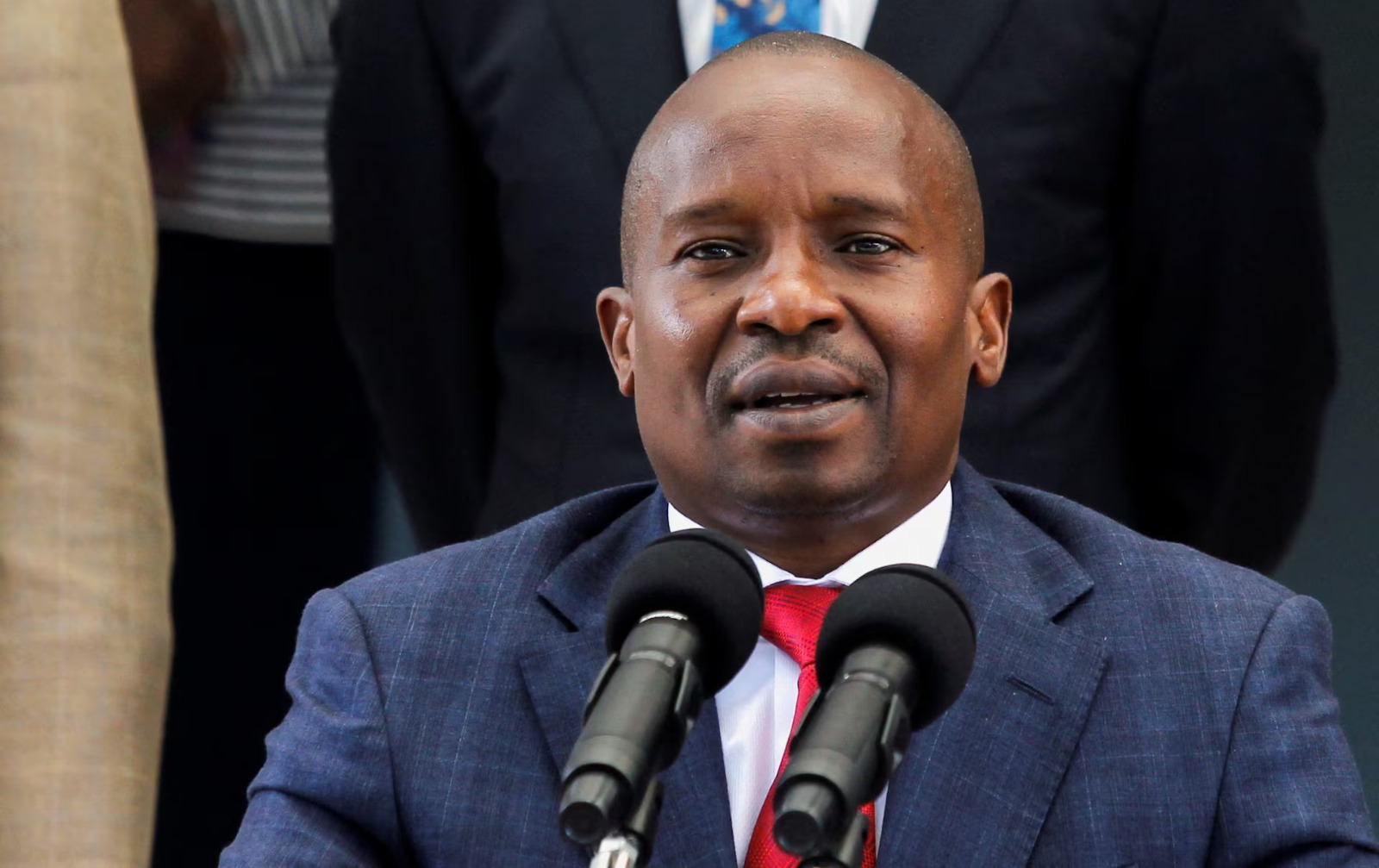
Deputy President Kithure Kindiki
The Deputy President is touring construction sites and counting kilometres of tarmac — but the real measure of development is whether ordinary lives are improving
By Collins Kibet
Deputy President Kithure Kindiki has stepped up his defence of the Kenya Kwanza administration’s development record, arguing that the government is implementing its manifesto project by project despite sustained criticism from political opponents.
Speaking in Maragua, Murang’a County, Wednesday, Kindiki inspected ongoing development projects and urged Kenyans to focus on what he described as tangible government work rather than political divisions. His message comes at a politically charged moment. With the 2027 General Election drawing closer, the record of President William Ruto’s administration is increasingly becoming the centrepiece of the political conversation.
Kindiki’s latest defence was anchored largely on projects in Murang’a. During his tour, he inspected the ongoing construction of Gakoigo Stadium and the Mbombo–Gwa Thamaki road. Government officials have put the cost of Gakoigo Stadium at approximately KSh900 million. The facility is planned to accommodate around 10,000 people and will include a football pitch, athletics track, terraces, and changing rooms. The stadium is presented by the government as part of a broader national sports infrastructure expansion — one it describes as among the largest such programmes in the country’s history.
Road infrastructure has also featured prominently in Kindiki’s message. He highlighted the proposed Mbombo–Gwa Thamaki road, describing it as a project costing billions of shillings, and called for it to begin and be completed within one year. He also said the government has been clearing outstanding payments to contractors, putting funds paid to road construction firms at KSh179B — money he said was released to facilitate completion of ongoing works.
The issue of stalled projects is particularly important, because announcing a project and completing it are two very different things. A road that exists only in a budget document does not improve transportation. A stadium that remains incomplete does not provide opportunities to young athletes. The real test of any development agenda is implementation, completion, maintenance, and public benefit.
At the national level, the Kenya Kwanza administration’s development strategy is officially anchored in the Bottom-Up Economic Transformation Agenda, known as BETA. The government’s 2026 Budget Policy Statement identifies agriculture, micro, small and medium enterprises, housing, healthcare, and digital infrastructure as priority areas, alongside broader economic enablers such as energy and transport.
Agriculture is particularly significant, given that millions of Kenyans depend directly or indirectly on farming. Kindiki has highlighted government interventions including reduced fertiliser prices and measures aimed at improving returns for farmers in dairy, coffee, and tea. Yet the effectiveness of such interventions ultimately depends on accessibility and consistency. A farmer may welcome cheaper fertiliser but still face challenges around market access, transport costs, unpredictable weather, and commodity prices.
This is where the government’s development narrative meets the lived experience of ordinary Kenyans.
Infrastructure can create genuine economic opportunity — connecting farmers to markets, reducing travel times, supporting businesses, and improving access to essential services. But citizens also judge their government through the cost of food, employment prospects, household expenses, access to healthcare, and the ability to earn a sustainable income. A new road may be welcome to a young graduate, but it does not by itself solve the challenge of finding work. A new stadium may matter less to a struggling household than food prices or school fees.
Kindiki’s argument is therefore not simply about the number of projects being undertaken. It is also about how Kenyans interpret government performance. He has urged residents to separate development from political competition and warned against divisive politics, saying leaders should work for the people and allow political disagreements to take a secondary position.
That argument will grow increasingly important as the country approaches its next election. Development projects often become political symbols during campaign seasons — evidence of government activity for some, and subjects of contestation over costs, priorities, and timelines for others. The important issue is that public debate should be grounded in verifiable evidence rather than political rhetoric alone.
Kindiki’s assertion that the administration is implementing its manifesto project by project raises a broader question: how should citizens measure development?
Should it be measured by kilometres of road constructed? By the number of schools, markets, and hospitals completed? By youth employment figures? Or by the combined effect of infrastructure, economic opportunity, public services, and household incomes? There is no single measure that captures every dimension. Each project carries a different intended outcome, and citizens experience development differently depending on their circumstances.
Political accountability requires more than highlighting successful projects. It also requires acknowledging delays, unfinished works, financial constraints, and initiatives that may not deliver their intended benefits. Citizens have a legitimate interest in knowing how much projects cost, who benefits, when they will be completed, and whether they represent value for public money.
The same standard applies to the opposition. Criticism of government projects is an essential part of democratic debate, but it becomes more meaningful when accompanied by evidence and credible alternative proposals. Kenyans deserve a political conversation that moves beyond slogans and personalities to address practical questions about employment, infrastructure, healthcare, agriculture, and the cost of living.
As 2027 approaches, the Kenya Kwanza administration will have to explain not only what it promised but what it has delivered. Kindiki has indicated he is comfortable being judged on development rather than political point-scoring. Whether the projects currently under way eventually translate into broad and lasting improvements will depend on their completion, quality, accessibility, and economic impact.
Kenya needs infrastructure — but it also needs jobs. It needs roads, but also affordable transport. It needs markets, but traders need customers and purchasing power. It needs stadiums, but young people also need pathways to turn talent into sustainable livelihoods.
Development cannot be reduced to concrete, asphalt, and buildings alone. Its ultimate purpose is to improve people’s lives.
The central question facing the Kenya Kwanza administration is therefore not simply whether it is building projects. It is whether those projects are delivering the opportunities, services, and improvements that ordinary Kenyans were promised. That is the standard against which every development agenda should ultimately be judged.
Similar Posts by The Mt Kenya Times:
- Kenya leads Africa’s clean cooking push with $600M investment drive
- Kenya takes its case to the world: Ruto at the UN
- IPOA urges policing rethink after wave of officer killings
- When the brew becomes a death sentence: How many more Kenyans must die?
- Young Kenyans and the digital economy: Opportunity, access, and the road ahead
About the Author