The Mt Kenya Times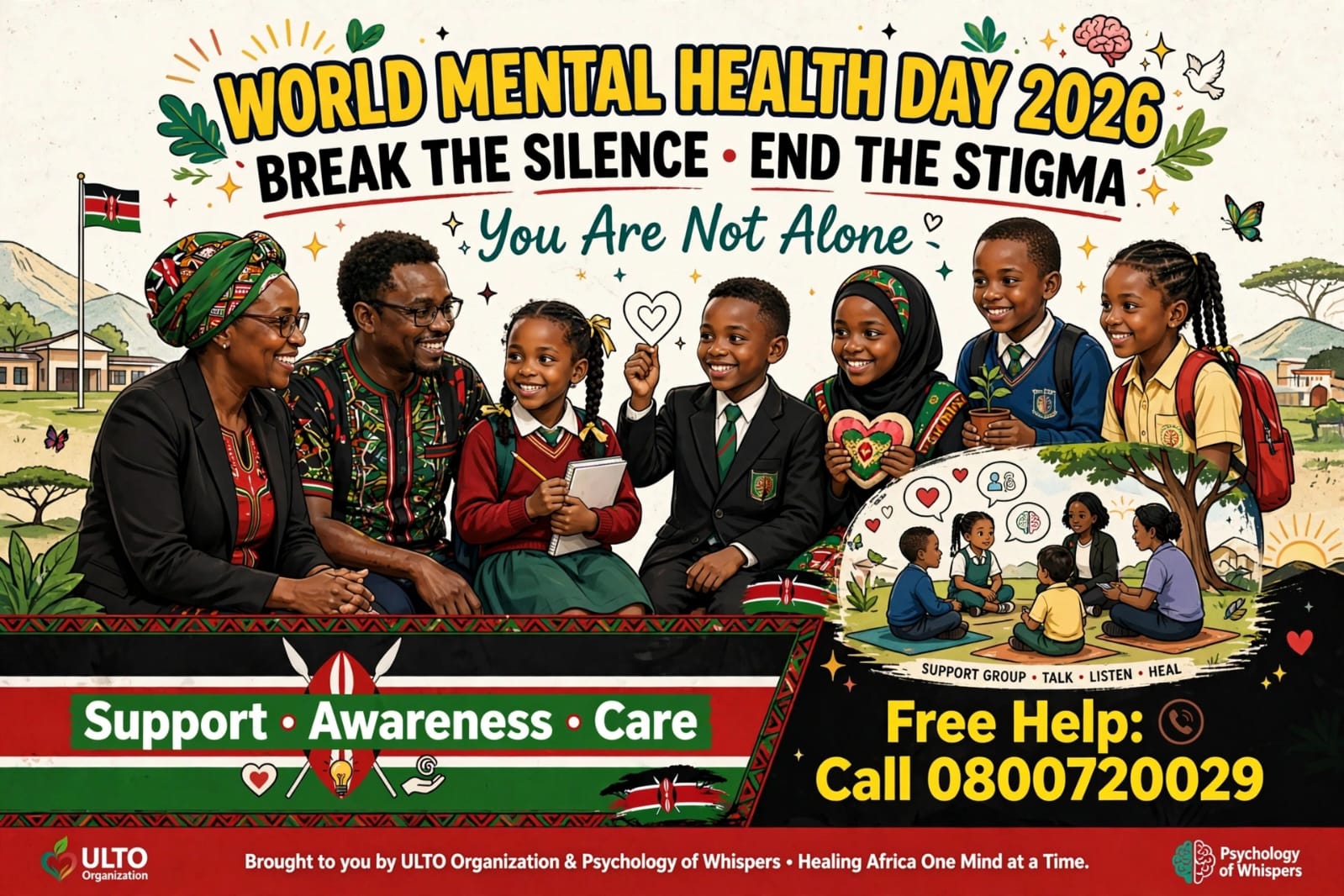
Trauma among Kenya’s young people is real, widespread and largely unnamed — and the healing is already happening, if we know where to look
By Amb Wanjohi P Mugambi
Post-traumatic stress disorder is often described as a condition that belongs to soldiers returning from war, to survivors of major disasters, to people who have experienced extreme violence. In Kenya, we have confined this definition to the spectacular, and in doing so we have missed the ordinary trauma that lives quietly in our villages, our schools and our homes. I encounter PTSD every day — not in a hospital ward, but in classrooms, youth groups and the quiet corners of churches and market places. It wears a school uniform. It carries firewood. It sits in matatus trying to get to college. It is carried by young people who have experienced loss, rejection, domestic violence, economic collapse, sexual abuse and the slow, grinding trauma of growing up in environments where they are told to be strong before they have ever been allowed to feel safe.
For a long time we have misunderstood PTSD among youth because we have treated it as a memory problem. We believe that if a young person can forget what happened, they will heal. But trauma does not live in memory alone. It lives in the body, in the nervous system, in the whispers that linger long after the event has passed. In my work and in my book, Psychology of Whispers, I describe these as persistent internal voices that tell a young person they are no longer safe, that they are not enough, that they are a burden, that they will never succeed. When a young person loses a parent, fails an examination the whole village was waiting for, watches a family fracture through separation or domestic violence, or is publicly humiliated by a teacher or a parent, the event ends but the whisper remains. If that whisper is carried alone — unheard and unheld — it grows. It becomes what clinicians call PTSD.
In our context it shows up as constant anxiety, sleeplessness, irritability, withdrawal from friends, sudden anger, frequent unexplained headaches and stomach pains, poor concentration and a creeping sense of hopelessness about the future. Many young people in Nyeri, Gilgil and across the country are living with these symptoms but have no name for what they carry. They think they are lazy. They think they are possessed. They think they are weak. Society tells them to be resilient, to pray more, to stop being dramatic. This only deepens the wound.
Youth have their own ways of healing, and we have not paid nearly enough attention to them. The formal mental health system in Kenya matters, but it remains out of reach for most young people. There are too few psychologists and psychiatrists, and even where they exist, the cost is prohibitive and the stigma is steep. A young person in Othaya or Turkana will not walk into a counselling clinic. They will not tell their parents they are depressed for fear of being told to man up or dismissed altogether. We must therefore look honestly at how youth already heal themselves when given a safe space — and strengthen those indigenous approaches rather than replace them.
The first way youth heal is through being heard without being fixed. In our organisation, ULTO, we run listening circles in schools and youth groups. These circles have no expert, no podium and no advice. We sit together — as our grandmothers once did when shelling peas — and one person speaks while the others simply listen. The one rule is that we do not interrupt, correct or offer solutions. We witness. I have watched a 17-year-old boy who had not spoken for two weeks after his father lost his job speak for four minutes — not because he was asked to explain himself, but because he was invited to share. I have watched a young mother who dropped out of school due to early pregnancy cry for the first time without being told to stop. The healing is not in the talking alone. It is in the experience of no longer carrying the story in isolation. Trauma thrives in isolation. Healing begins the moment that isolation is broken.
The second way youth heal is through naming what they carry. In our circles we ask a simple question: what whisper did you carry today? That question gives language to an internal experience that otherwise feels formless and overwhelming. When a young person says aloud that today their whisper told them they were a failure because they did not get a university place, we can work with that whisper. We can ask where they learned that their worth lives only in their grades, and who benefits when they believe they are a failure. Naming externalises the problem. It separates the person from the pain. A young person learns that they are not the whisper — they are the one who hears it — and that they can choose which whisper to feed. This is emotional intelligence that requires no textbook.
The third way youth heal is through the body and through meaningful work. Young people are not healed by sitting and talking alone. They heal through movement, through purposeful activity, through ritual. When an old mugumo tree fell near our school, the elders grieved it as one would grieve a library, a court, a church. We planted ten more trees with young people — not as a branded project, but as an act of mourning and of hope. What we do not mourn, we do not protect. Many young people carry ecological and familial grief that has never been named because our culture demands they remain strong. Planting a tree, cleaning a river, sweeping a compound together, playing football without a scoreboard, dancing, drumming — these are not leisure activities. They are ways the body releases what the mouth cannot speak. PTSD lives in the body as tension, as shallow breathing, as clenched fists. It must be released through the body.
The fourth way youth heal is through purpose and service. A young person who has been made to feel worthless by unemployment or poor results recovers a sense of worth when they are trusted to serve others. In ULTO, we give young people responsibility — to hold listening circles for younger children, to mentor primary school learners, to lead environmental activities. When a 19-year-old who was told he is a failure helps a ten-year-old who has stopped speaking to find their voice again, something shifts in him. He learns that his pain has given him eyes to see pain in others. This is post-traumatic growth — the understanding that trauma does not only wound but, when held in community, also teaches compassion.
Finally, youth heal when adults create the conditions for rooting, not only blooming. Our society praises blooming — good grades, visible success, performance. But some seasons a young person is not meant to bloom. They are meant to root, to go deep, to gather strength in the quiet. We must allow young people seasons of rooting without shaming them as lazy or lost. Some years we bloom; some years we root. Both are growth and both are necessary.
PTSD among Kenya’s youth is real, widespread and largely unnamed. It is caused not only by war and disaster but by the everyday experiences of loss, rejection, poverty and humiliation that too many young people carry entirely alone. The healing is already happening — in circles, in soil, in service — and our role as teachers, parents, policymakers, and institutions such as the Teachers Service Commission and the Ministry of Health is not to import expensive models that never reach the village, but to strengthen what young people are already doing. Train peer listeners. Create safe circles in schools. Include mental health in medical cover and school programmes. Speak openly and reduce stigma.
If we care for the young person who is holding pain, that young person will one day hold the nation with compassion.
Similar Posts by The Mt Kenya Times:
- Mt Kenya Times ePAPER October 7, 2026
- Ruto signs KSh389B electric vehicle deal at State House
- Kenya mobilises KSh70B to fight Ebola as US and World Bank step in
- High Court freezes law school admissions over disputed entry rules
- Grade 11 textbooks head to schools as CBC transition gathers pace
About the Author