The Mt Kenya Times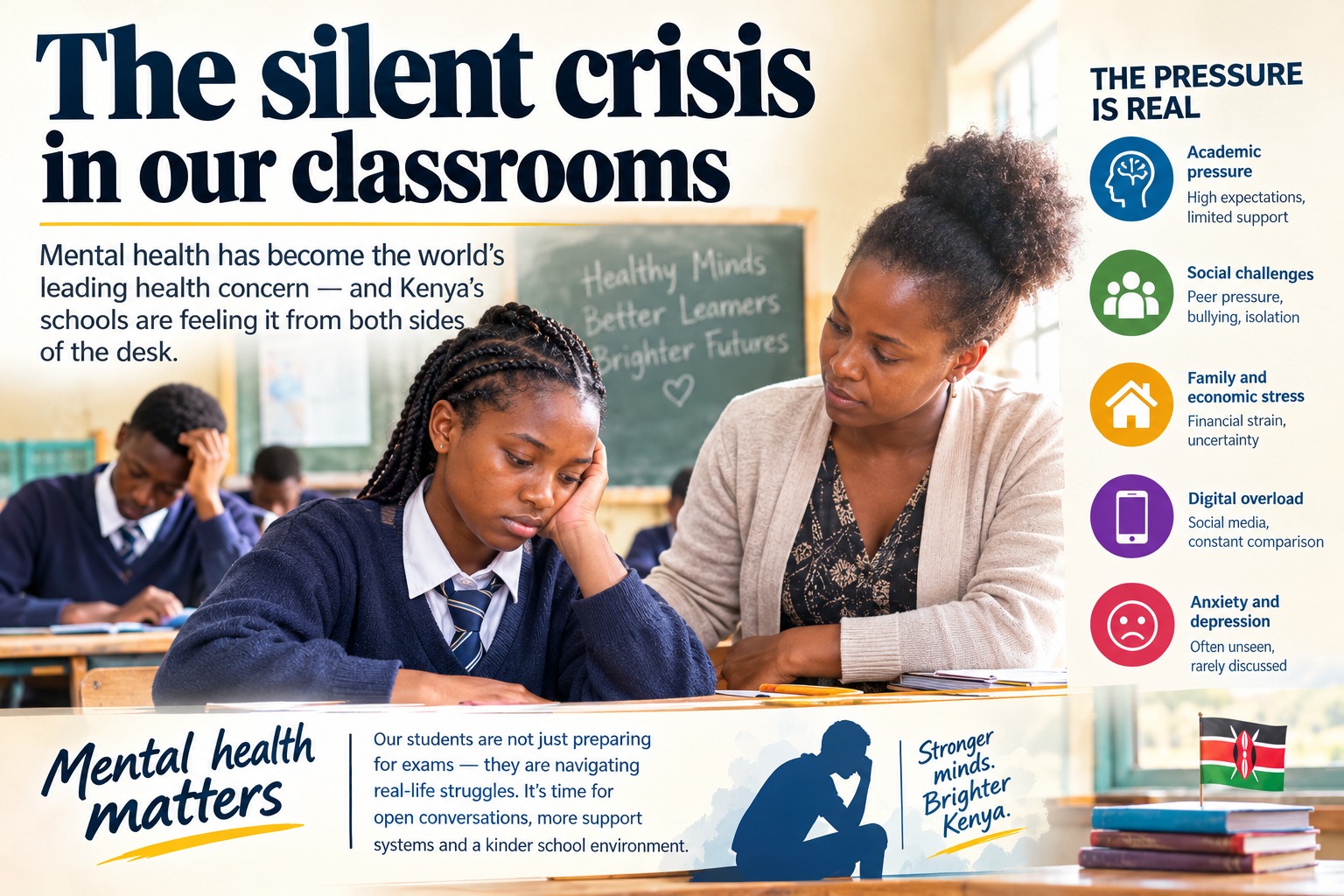
Mental health has become the world’s leading health concern — and Kenya’s schools are feeling it from both sides of the desk
By Wanjohi P. Mugambi
Mental wellbeing for young people is no longer a quiet crisis hidden in dormitories and staffrooms. It has become the leading health concern on the planet, and the numbers make that impossible to ignore.
The Ipsos Global Health Service Monitor 2024, which surveyed 23,667 respondents across 31 countries, found that 45 per cent of people now regard mental health as the biggest health issue in their country — ahead of cancer at 38 per cent and stress at 31 per cent. As a young teacher, I do not read that data as a statistic. I read it as my own story, and the story of my learners. We are present in class in body, but frequently absent in mind — anxious, withdrawn, irritable, or unusually aggressive. Many have lost interest in learning, not because they are lazy, but because something deeper is broken.
We know what it means to grow up under pressures that our parents simply did not face. Young people today navigate overcrowded classrooms, the demands of the Competency-Based Curriculum, relentless pressure to perform academically, and a simultaneous expectation to appear perfect online. A single smartphone exposes a 14-year-old to filtered lives, cyberbullying, social comparison, and information overload — all before the first lesson of the day. Beyond school, many carry adult burdens: caring for sick parents, walking long distances to class without breakfast, living in homes fractured by separation, or displaced by floods and drought. I have sat in staffrooms where teachers are exhausted, and in classrooms where learners are equally exhausted, and the realisation has settled on me with some weight — we are all young people carrying the same load.
When these pressures accumulate without a safe outlet, they manifest as chronic stress. Psychologically, unresolved stress changes how a young person thinks about themselves. They begin to internalise limitation. The shift is gradual but devastating — from “I am facing a difficult situation” to “I am the difficult one. I am not enough.” I described this pattern in earlier research as youth stress mania: intense, fluctuating stress responses among young people transitioning to adulthood under compressed timelines for success. I did not write about it from a distance. I wrote about it because I have lived it, and because I have listened to my learners live it too.
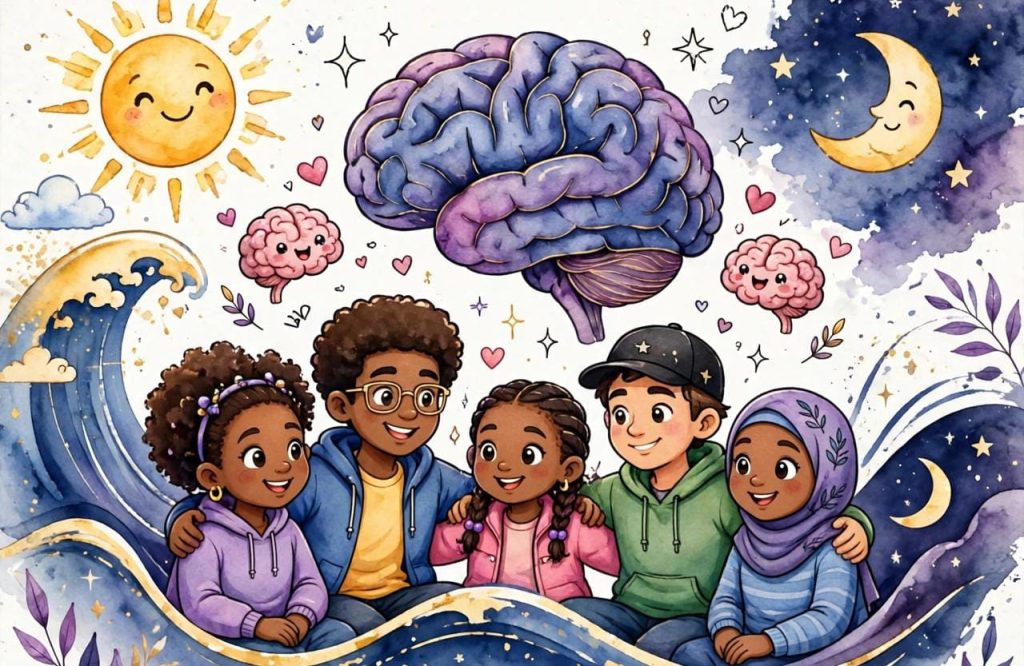 A young person struggling with poor mental wellbeing shows signs that an attentive teacher — or a fellow young person — can learn to recognise. Constant fatigue despite adequate sleep. Loss of interest in subjects once loved. Frequent headaches and stomachaches with no medical cause. Withdrawal from friends. Irritability over minor frustrations. Declining performance and unexplained absenteeism. In girls, it often appears as quietness, self-isolation, and tearfulness. In boys, it more commonly surfaces as anger, defiance, and truancy. Both are cries for help, expressed in different languages.
Educational psychology is clear on this point: learning cannot happen when the brain is in survival mode. A stressed brain cannot concentrate, cannot retain information, and cannot create. Abraham Maslow was right — belonging and safety must precede achievement. I have seen this truth in my own experience. On the days I am not well, I cannot teach well.
So how do we genuinely support the mental wellbeing of young people? The first step is deceptively simple: normalise asking, “Are you okay?” In my classroom, I have found that a quiet “Uko sawa?” — asked in the learner’s mother tongue — opens doors that a formal questionnaire cannot. Young people heal when they feel safe, not when they are lectured. Listening without judgement is the first intervention, and young people respond best to fellow young people.
Second, we must teach emotional literacy with the same seriousness we bring to mathematics or English. Young people need to learn how to name their emotions, understand stress, and develop practical coping mechanisms — controlled breathing, journalling, talking to a trusted adult, and taking deliberate breaks from social media.
Third, schools must become wellness spaces. This does not require a large budget. It requires a designated corner where a learner can decompress, a peer support club led by students themselves, at least one teacher trained in psychological first aid, and school leadership that does not use intimidation as a management tool.
Finally, young people must be involved as researchers of their own wellbeing. When given tools to document their own experiences and design solutions to their own stress, their sense of agency improves significantly. They move from being victims of stress to active participants in their own healing. That is what evidence-based practice looks like in a Kenyan classroom. We do not need expensive programmes imported from abroad. The most effective intervention is often a young teacher who genuinely cares, a classroom that truly listens, and a community willing to speak the language of the child.
The Ipsos data is a clear wake-up call. If 45 per cent of the world identifies mental health as the top concern, then young people are not exaggerating when they say they are struggling. They are telling the truth. The education of Kenya’s children depends not only on books, blackboards, and mean scores, but on the wellbeing of the child holding the pen — and the young teacher holding the chalk. Care for the mental health of the young person, and the young person will care for their future. And the nation, in turn, will be well.
Similar Posts by The Mt Kenya Times:
- China grants Kenya $2M for drought and Ebola response
- High Court upholds KSh2.5M IEBC fine against Gikaria
- Kenya’s opposition fractures with 11 months to the ballot
- Harambee Starlets thrash Seychelles 11-0 to take commanding grip on Olympic qualifier
- Safari Rally confirmed for 2027 WRC calendar as Kenya eyes motorsport revival
About the Author