Development is more than economic growth: Africa’s challenge and Kenya’s path to shared prosperity
 The Mt Kenya Times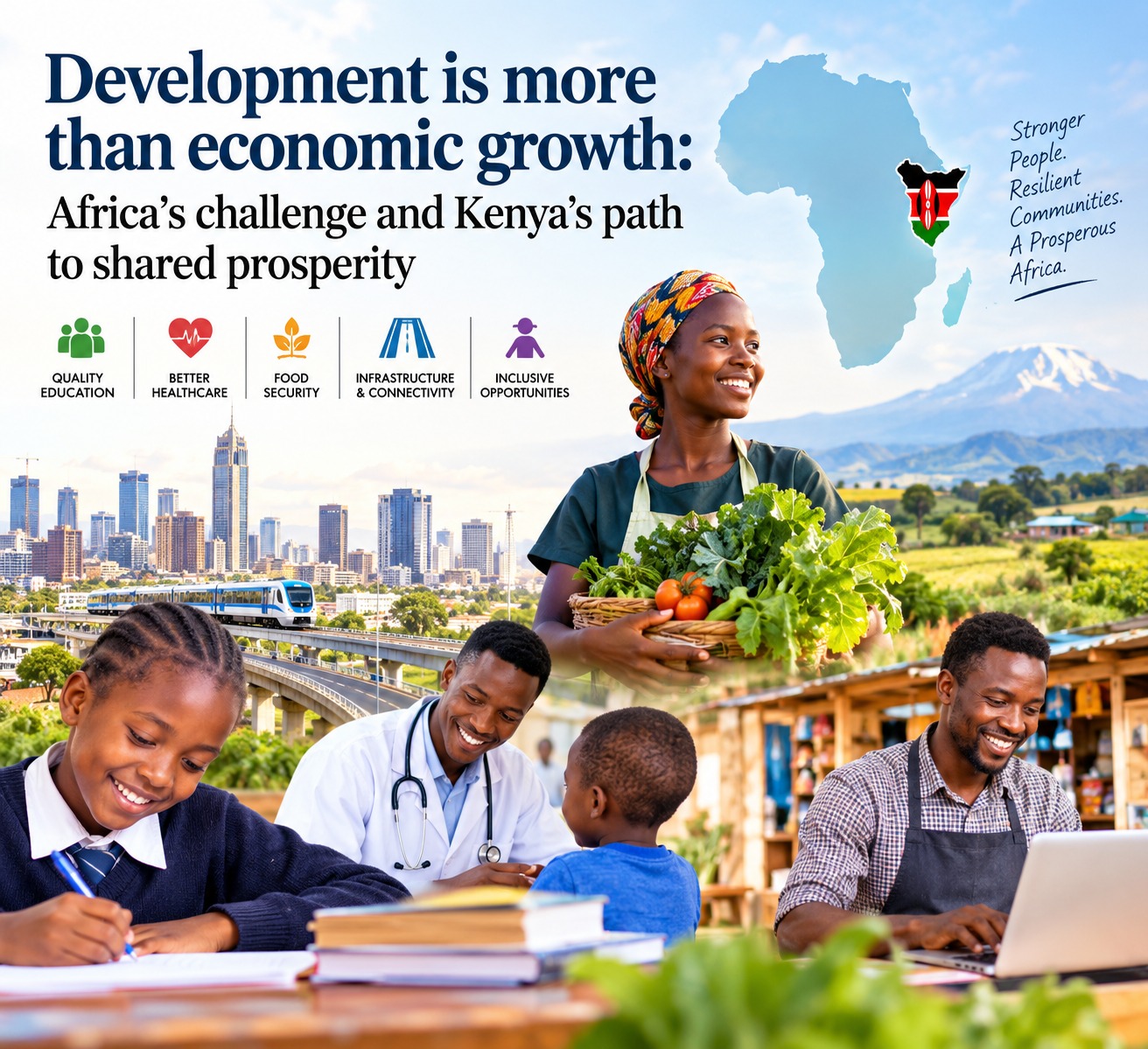
By Mr. Fredrick Kipchumba Chelimo – PWD
Email; fkipchelimo@yahoo.com
Every time leaders in Africa and more specifically Kenya travel to every corner of the country and more specifically towards elections period to pronounce what is development and what they have delivered or are intending to deliver towards development. In recent times, they come with real, skewed or abstract statistical data to drive their point home. Whether these approaches are true or false depends on the audience understanding of what is development and the perspective of the speaker.
A nation is not developed merely because it has impressive highways, modern buildings, expanding cities or rising economic statistics. Development becomes meaningful when ordinary citizens experience better living conditions, enjoy equal opportunities, access reliable public services and participate in shaping their country’s future. The fundamental question is therefore not simply how much wealth a nation generates, but how effectively that wealth improves human lives. This distinction is essential to understanding Africa’s development journey and determining what Kenya must do to align itself with internationally recognised standards of sustainable, inclusive and accountable development.
Development is a continuous process through which a society expands its economic productive capacity, strengthens institutions, improves human capabilities and creates conditions for people to live healthy, secure and dignified lives. The United Nations Development Programme’s Human Development Index captures three central dimensions: health, education and a decent standard of living. However, genuine development also requires attention to inequality, employment, human rights, environmental sustainability and public accountability. Economic growth is important, but it is a means to development, not its ultimate purpose. A growing economy that leaves millions struggling to afford food, healthcare, housing and education has not fully translated its economic potential into human progress.
Measuring development therefore requires clear, measurable key performance indicators. These include real GDP growth and income per capita; poverty and inequality levels; the number and quality of jobs created; school enrolment, completion and learning outcomes; life expectancy and access to affordable healthcare; electricity, clean water and sanitation coverage; food security and agricultural productivity; manufacturing and export competitiveness; and access to technology. Governance indicators must examine corruption control, the rule of law, public participation, procurement transparency and the quality of public services. Environmental indicators should measure climate resilience, renewable energy adoption and sustainable resource management. Equally important is whether women, young people, rural communities and persons with disabilities can participate meaningfully in economic and public life. These indicators should be disaggregated by county, gender, age and disability so that national averages do not conceal communities being left behind.
Africa’s development experience presents both encouraging opportunities and persistent structural challenges. The continent possesses abundant natural resources, a growing workforce, substantial agricultural potential and expanding digital innovation. Mobile financial services, renewable energy investments and the African Continental Free Trade Area provide opportunities to strengthen enterprise, regional commerce and industrialisation. Nevertheless, progress remains uneven. The 2025 Africa Sustainable Development Report found advances across several Sustainable Development Goals, but concluded that the pace remains insufficient to achieve the 2030 targets. Poverty, unemployment, infrastructure deficits, climate vulnerability, commodity dependence and debt pressures continue to constrain progress in many countries. Africa’s central challenge is to transform its resources into productive industries, decent jobs, effective public institutions and broadly shared prosperity. https://www.undp.org/africa/publications/2025-africa-sustainable-development-report
The appropriate African development approach must consequently combine national ownership with international best practices. Governments should invest in human capital, strengthen regional markets, process more raw materials locally, promote agricultural value addition and support technological innovation. Regional integration should facilitate trade, investment, skills transfer and cross-border infrastructure. Development partnerships must prioritise sustainable outcomes rather than dependence on external assistance. Above all, African countries must strengthen public institutions, manage debt responsibly and ensure that natural-resource revenues benefit their populations. The continent does not need to copy another region mechanically; it must adapt proven principles of industrial transformation, accountable governance and inclusive growth to its own circumstances.
Kenya demonstrates the opportunities and contradictions of this development journey. According to the Kenya National Bureau of Statistics’ Economic Survey 2026, real GDP grew by 4.6 per cent in 2025, compared with 4.7 per cent in 2024. Agriculture, construction, financial services, information and communication, and other sectors contributed to economic activity. Yet the employment figures reveal a critical challenge: of the 822,100 jobs recorded as created in 2025, approximately 87.2 per cent were in the informal sector. Informal work is an important source of livelihoods and entrepreneurship, but many workers face irregular earnings, limited social protection and uncertain prospects for growth. Kenya must therefore look beyond the number of jobs created to examine their quality, security and productivity.
The country’s development potential is substantial. Its entrepreneurial culture, agricultural base, digital capabilities, skilled workforce and devolved system of government provide important foundations for progress. However, persistent household financial pressures, unequal access to services, youth underemployment, expensive production inputs and regional disparities illustrate the distance between economic potential and everyday prosperity. A farmer who produces abundant maize or milk but cannot access reliable markets may remain poor. A graduate unable to secure productive employment may not experience economic growth as opportunity. A person with a disability excluded by inaccessible infrastructure or discriminatory recruitment cannot participate fully in national development. These are not peripheral concerns; they are tests of whether development is reaching the people it is intended to serve.
Similar Posts by The Mt Kenya Times:
- Mt Kenya Times ePAPER October 12, 2026
- Gachagua’s party storms Kikuyu from afar as 2027 countdown begins
- Counties caught: The KSh100B payroll scandal Kenya can no longer hide
- CS Ogamba: tree planting could generate carbon credit millions to fund education
- Farouk Kibet calls for unity and development as leaders rally behind Ruto’s 2027 re-election bid
About the Author