A growing population, poor breeds, inadequate feeds and weak extension services are strangling milk production — and the solutions are well within reach
By Nicholas Mwendwa
Kenya is facing a quietly worsening dairy crisis. With a population estimated at 58.6 million in 2026 and rising, demand for milk continues to climb — yet production is struggling to keep pace. The gap between what the country needs and what its farms are delivering is widening, and the consequences are being felt by consumers, farmers and the broader agricultural economy.
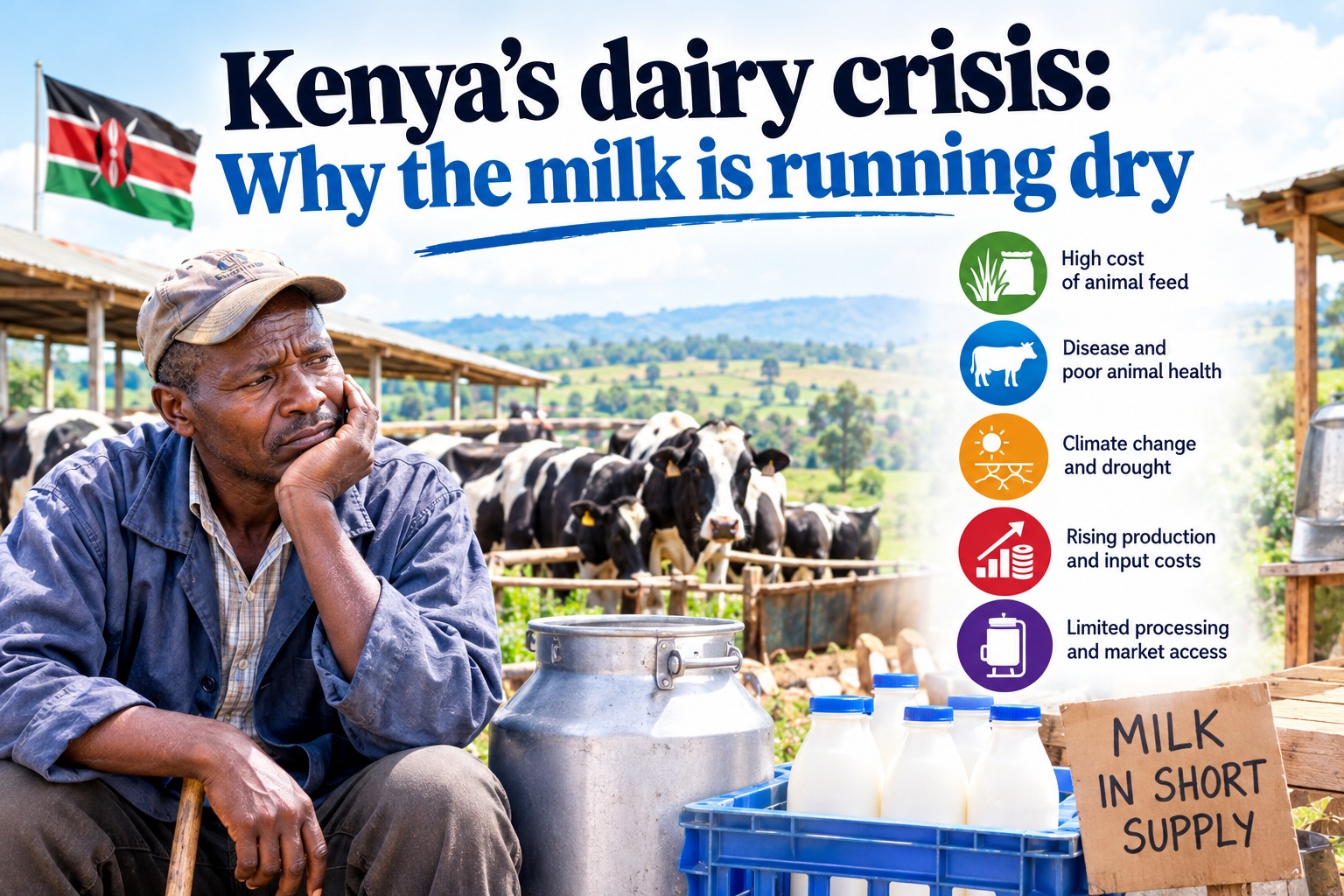
Dairy farming is woven into the fabric of Kenya’s agricultural life. It provides food, employment and income to millions of households, with active production concentrated in Kiambu, Nyandarua, Nakuru, Meru and large parts of the Rift Valley. Yet despite its importance, the sector is being held back by a cluster of persistent and interconnected problems: inadequate animal feeds, livestock diseases, poor cattle breeds, water shortages and the mounting pressure of climate change. Each of these factors reduces both the quantity and quality of milk produced, and together they represent a serious drag on an industry that Kenya cannot afford to neglect.
Feed is among the most immediate constraints. When pasture becomes scarce during dry periods, many smallholder farmers have no alternative to fall back on. The practical answer is for farmers to grow their own fodder crops and conserve hay and silage during the rainy season, building reserves that sustain their herds through lean months. Balanced feeding rations, matched to the nutritional needs of individual animals, improve health and directly increase milk yields. This is not complicated knowledge — it is accessible and proven, but it requires deliberate planning and consistent practice.
Breed quality is another central issue. Many Kenyan dairy farmers continue to rely on low-yielding cattle that cannot produce competitive volumes of milk even under good conditions. Transitioning to improved, productive dairy breeds — and supporting that transition with modern breeding technologies such as artificial insemination — would significantly raise the genetic ceiling of the national herd. The productivity gains from better genetics, combined with proper nutrition and care, are among the most reliable levers available to a smallholder farmer.
Animal health management deserves equal attention. Diseases, both preventable and parasitic, cause substantial losses across the dairy sector every year. Regular veterinary check-ups, timely vaccination programmes and effective parasite control reduce herd losses and allow cows to sustain consistent milk production. Early detection of disease is critical — and it requires both farmer awareness and a functioning veterinary infrastructure that is genuinely accessible beyond major towns.
The role of government in all of this is not peripheral. Agricultural extension officers and veterinary professionals are essential links between research, best practice and the farm. Where they are present, well-trained and adequately resourced, farmers benefit from timely advice on nutrition, disease prevention and modern livestock management. Where they are absent or thinly spread, farmers make do with incomplete information and avoidable mistakes. Strengthening extension services at both national and county level is not optional — it is foundational to any serious effort to raise milk production.
Infrastructure and inputs matter too. Poor rural roads raise the cost of getting milk to market and accelerate spoilage. Expensive commercial feeds squeeze margins for smallholders who have no affordable alternative. Investment in rural infrastructure, affordable agricultural inputs and reliable cold-chain facilities would reduce production costs and post-harvest losses simultaneously. Cooperatives offer a practical vehicle for giving farmers collective access to milking machines, milk-cooling tanks, fodder choppers and digital livestock-recording systems — technology that improves efficiency but remains out of reach for most individual smallholders acting alone.
Soil fertility, often overlooked in dairy discussions, is also part of the picture. Healthy, productive soil grows better fodder. Erosion control, appropriate fertiliser use and the cultivation of high-yield fodder crops all contribute to a more reliable and cost-effective feed supply, reducing dependence on expensive commercial options.
Low milk production is a solvable problem. The knowledge, the technology and the policy tools required to address it are available. What is needed is coordinated action — farmers investing in better practices, county governments delivering functional extension and veterinary services, and national government providing the research support, infrastructure and affordable inputs that make improvement possible at scale.
Kenya has the agricultural foundation to be a stronger dairy producer than it currently is. Closing the gap between potential and performance will require sustained commitment from every part of the system. The returns — in food security, farmer incomes and rural employment — are more than worth the effort.
Similar Posts by The Mt Kenya Times:
- Opposition cracks widen as Nyoro and Methu trade Ruto bribery claims
- Why helicopters crash more often than aeroplanes
- Matiang’i tells critics: Leave Uhuru to do his continental work
- Strike pause, brooms out: Laikipia students clean up local market
- Ebola in Kenya: Are we really ready?
About the Author