The Mt Kenya Times

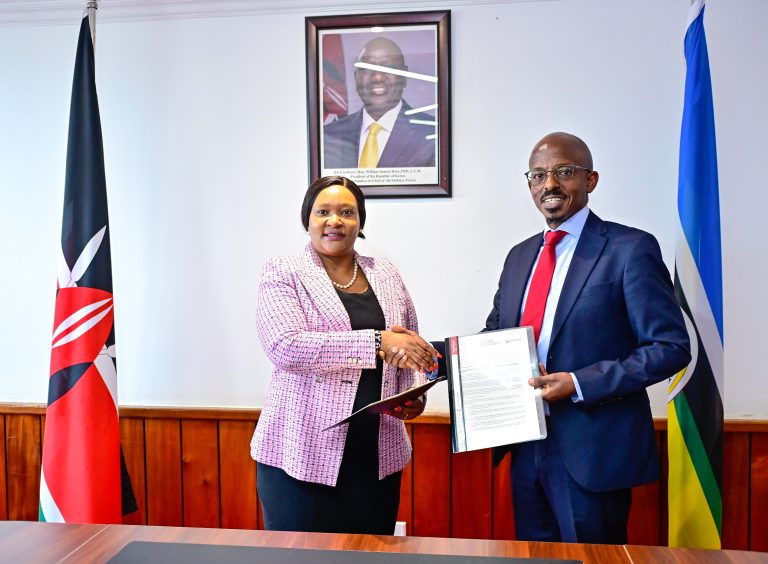
KWS Director General Erustus Kanga
The Thamani Asili initiative targets 1.6 million beneficiaries across 31 counties over a decade
By John Kariuki
Kenya Wildlife Service yesterday launched the Thamani Asili Programme at Maktau, Taita Taveta County, committing US$160 million — approximately KSh160B — over ten years to community-centred conservation across four priority landscapes covering 31 counties.
KWS Director General Erustus Kanga used the occasion to position local communities as indispensable partners in protecting the country’s wildlife and natural heritage, arguing that conservation cannot succeed without the active participation and economic empowerment of people living alongside protected areas.
“KWS and the community are one family. We belong to one landscape, share one natural heritage and have a common responsibility to protect it,” Kanga said.
The programme, jointly funded by the Government of Kenya and The Nature Conservancy, is expected to benefit an estimated 1.6 million people, strengthen more than 130 community conservancies and create over 20,000 direct and indirect jobs across four landscapes that include Tsavo, where human-wildlife conflict has long tested the relationship between conservation agencies and local communities.
Kanga acknowledged that conflict between wildlife and communities — crop destruction, livestock losses and threats to human life — remains one of the most significant obstacles to sustainable conservation. He said community participation, livelihood support and practical conflict-mitigation measures would be central to how Thamani Asili is implemented on the ground.
The programme was officially launched by Tourism and Wildlife Cabinet Secretary Rebecca Miano, who represented President William Ruto as chief guest. Miano said the initiative was designed to ensure that protecting nature translates into tangible benefits for the people who live alongside it.
“Our objective is clear: to protect nature, strengthen communities and ensure that conservation contributes to the prosperity of the people who safeguard our natural heritage,” she said.
KWS Board of Trustees Chairman Joseph Langat joined conservation leaders in emphasising the importance of sustained institutional commitment to the programme’s long-term success. Taita Taveta Governor Andrew Mwadime welcomed the initiative as an opportunity to deepen cooperation between national government, county administrations, conservation partners and local communities.
Also present were Tharaka Nithi Governor Muthomi Njuki, who chairs the Council of Governors, and Narok Governor Patrick Ole Ntutu. Taita Taveta Woman Representative Lydia Haika Mnene, Mwatate MP Peter Shake and Taveta MP John Okano Bwire attended alongside Taita Taveta County Commissioner Linda Okola. Alfred Kirigha Mwanake, chief executive of the Taita Taveta Wildlife Conservancies Association, also participated. The Nature Conservancy was represented by its regional managing director for Africa, Ademola Ajagbe.
The programme’s focus on community conservancies is central to its design. Such institutions allow communities to participate directly in conservation while generating income, employment and sustainable enterprise locally. With more than 130 conservancies targeted for support, Thamani Asili could substantially expand community ownership of conservation efforts across all four landscapes.
The projected creation of more than 20,000 direct and indirect jobs signals the programme’s economic ambition, particularly in areas where communities have historically borne the costs of living alongside wildlife without sufficient return. Linking conservation outcomes to measurable livelihood improvements is, Kanga argued, the only model that can deliver lasting results.
KWS will serve as the principal implementing institution, coordinating with government agencies, county administrations and conservation partners. The programme’s success will depend on effective accountability structures, sustained financing and genuine community participation — conditions Kanga said KWS is committed to upholding throughout the ten-year period.
The Tsavo West launch marks a meaningful shift in how Kenya frames its conservation model: not as an environmental obligation managed by government agencies alone, but as a shared national enterprise in which communities, institutions and partners hold common responsibility for protecting the country’s natural assets and ensuring they endure for future generations.
Similar Posts by The Mt Kenya Times:
- Students pay the price as lecturers’ strike drags on
- Phrasal Verbs in Journalistic and Literary Texts: Meaning and Context
- Como dismantle Manchester United 4-1 to deepen Carrick’s crisis
- Kvaratskhelia ruled out for months after ACL injury in PSG win
- Beyond the banter: Uganda’s university rivalry should be about impact
About the Author