The Italian side’s emphatic victory leaves the English club without a win in consecutive major European fixtures and Carrick’s position increasingly precarious
By Martin Weche
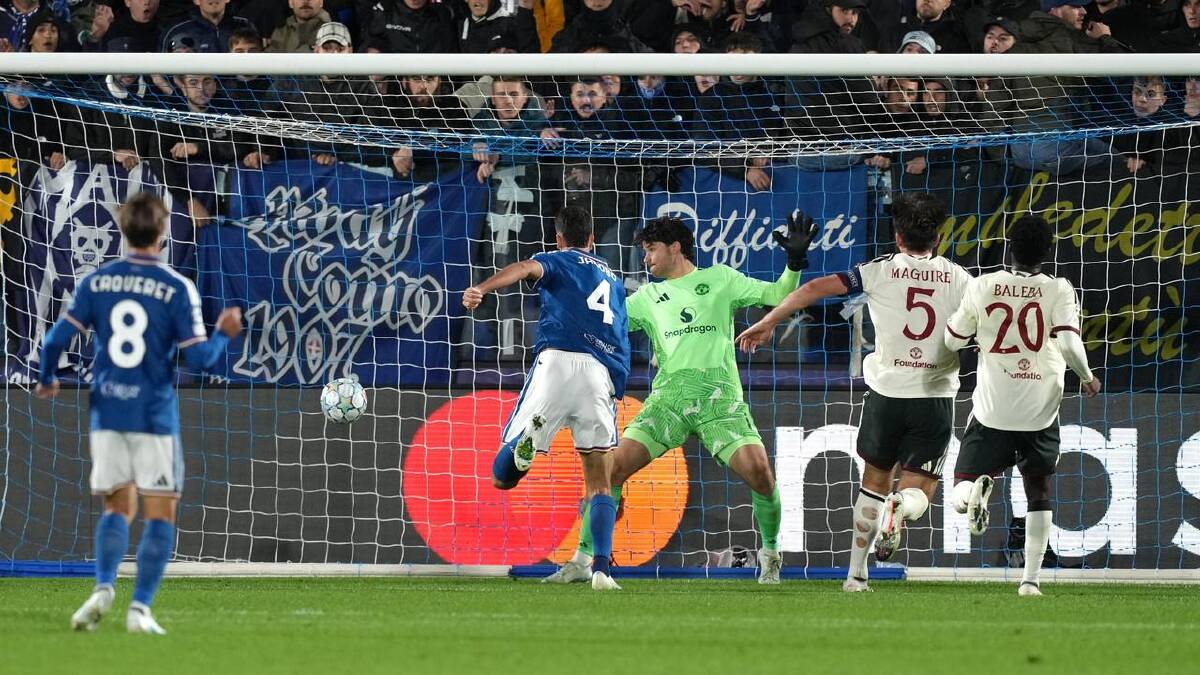
Manchester United suffered one of the most humiliating nights in their recent European history yesterday, losing 4-1 to Como in Italy to heap further pressure on embattled manager Michael Carrick.
The defeat was as comprehensive as it was demoralising. Como, a club who were playing in Serie D when United last lifted the Champions League trophy in 2008, overwhelmed their opponents from the opening minutes in a performance that underscored just how dramatically the fortunes of the two clubs have diverged.
United conceded after just 118 seconds, with Argentina midfielder Nico Paz — the most dangerous player on the pitch by a considerable distance — breaking through a defence that offered almost no resistance. The speed of the breakthrough carried an uncomfortable symmetry: eight days earlier, United had conceded in the first minute of their Champions League fixture against Atletico Madrid. Yesterday’s capitulation made them the first English club in history to concede within the opening two minutes of consecutive major European matches — a record that no one at Old Trafford will want inscribed in the history books.
Paz went on to dominate the evening in a manner that will have made uncomfortable viewing for Carrick and the United board. The 20-year-old scored twice and set up Greek striker Tasos Douvikas in between, before Jacobo Ramon added a fourth with a powerful header to complete the rout. At one point, as Como pressed for more, the spectre of United’s heaviest ever European defeat — a 5-0 loss to Sporting of Portugal in 1964 — briefly loomed over the visitors.
The personnel decisions made during the game did little to suggest Carrick has answers to his team’s problems. Matheus Cunha and Andrey Santos, two signings who cost a combined £110 million under the Ineos ownership, were withdrawn at half-time having failed to make any meaningful impression. Captain Bruno Fernandes, United’s most experienced creative force, was substituted midway through the second half, replaced by Joshua Zirkzee.
Zirkzee did pull one back in stoppage time, calmly converting a cross from fellow substitute Amad Diallo after beating the offside trap, but the consolation goal changed nothing about the evening’s narrative. A 4-1 defeat away from home in Europe, against a side with no previous experience at this level of continental competition, is not a result that admits of mitigation.
Como’s rise has been one of the more remarkable stories in European football. Backed by significant investment and coached by Cesc Fàbregas, the former Arsenal and Barcelona midfielder who has translated his football intelligence into a clear and effective managerial philosophy, the Lombardy club have built a team capable of competing seriously in Serie A and, evidently, in Europe. Fàbregas has instilled an attacking identity that was on full display yesterday, with Paz the embodiment of everything the manager is trying to build.
For United, the questions are more difficult and more urgent. The club’s defensive vulnerabilities have been exposed repeatedly this season, and conceding in the opening moments of back-to-back European games points to a structural problem that goes beyond individual errors. The midfield has struggled to assert itself, the expensive summer signings have yet to justify their fees, and the manager has not found a way to stabilise his side under pressure.
Carrick, who took charge during a turbulent period at the club, now faces scrutiny that will intensify with every poor result. The board has so far maintained public support, but patience inside elite football has its limits, and results of this nature test institutional loyalty quickly.
United’s next fixtures will be examined as much for what they reveal about the club’s direction as for the points at stake. Whether Carrick is given the time and resources to turn the situation around, or whether the board concludes that a change is necessary, the debate is no longer abstract.
What happened in Italy yesterday was not a stumble. It was a statement — and it came from a club that, not so long ago, was playing in the fourth tier of Italian football.
Similar Posts by The Mt Kenya Times:
- Students pay the price as lecturers’ strike drags on
- Phrasal Verbs in Journalistic and Literary Texts: Meaning and Context
- Kvaratskhelia ruled out for months after ACL injury in PSG win
- Beyond the banter: Uganda’s university rivalry should be about impact
- KWS launches KSh160B conservation programme in Tsavo
About the Author