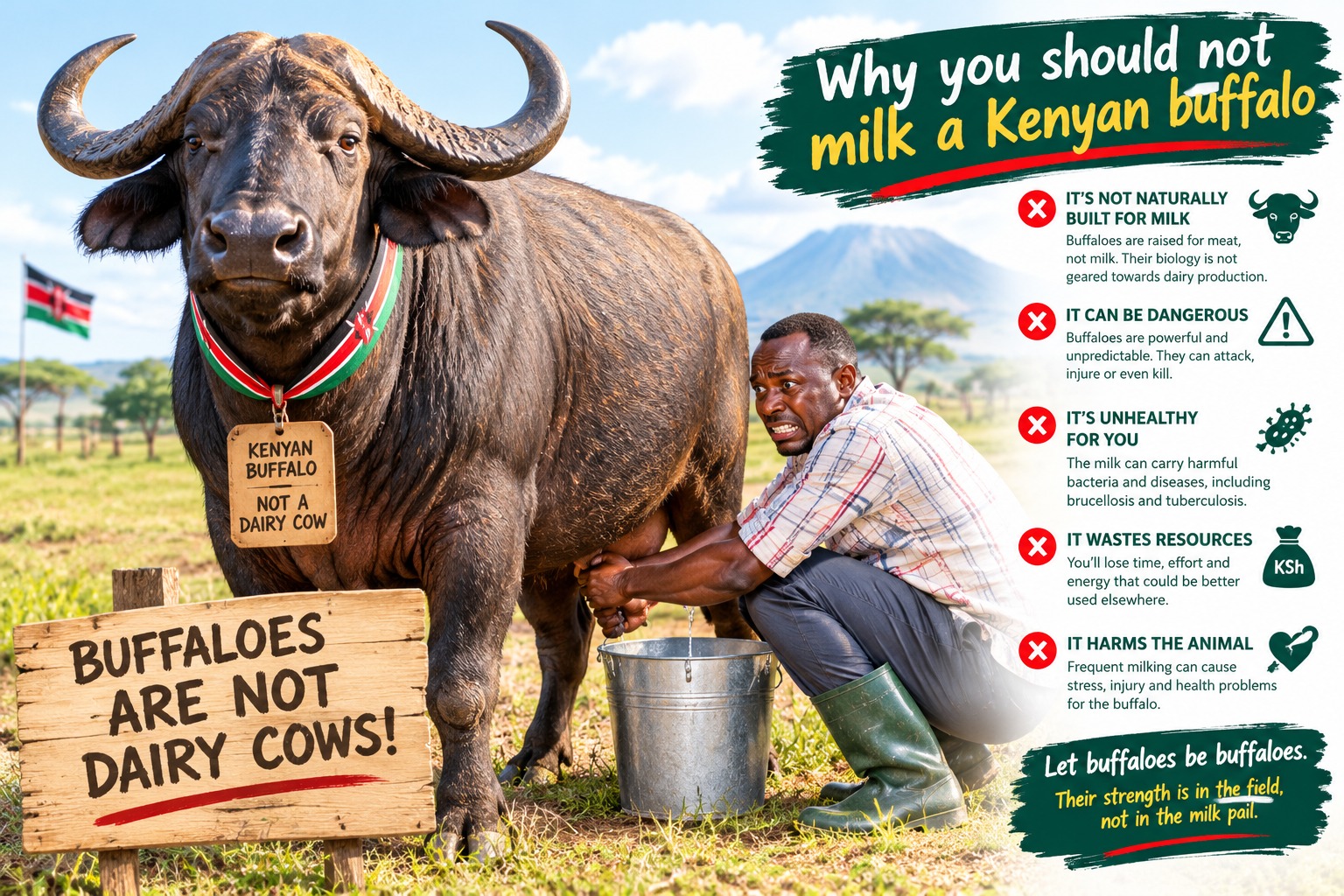
Syncerus caffer is one of Africa’s most dangerous animals — and no amount of nutritional value makes milking one a sensible idea.
By Daniel Mwangi
Milking a Kenyan buffalo is not a farming innovation — it is a fast route to serious injury or death.
The African buffalo, Syncerus caffer, is one of the continent’s most dangerous large mammals. Common across Kenya’s savannahs and forest edges, it is known for its size, unpredictability and aggression. Adults weigh between 600 and 860 kilograms, consume roughly 20 kilograms of grass daily and require up to 15 litres of water on hot days. Calves are born weighing 30 to 40 kilograms after an 11-month gestation period, with females reaching reproductive maturity between four and eight years.
Buffalo milk is nutritious and technically fit for human consumption. But that is where any case for milking them ends. The animals cannot be domesticated. They are notoriously difficult to restrain and react violently to human interference. Disease presents a further risk: buffalo carry infections that routinely go untreated in the wild, posing a direct threat to any human who comes into close contact.
Communities living near game reserves such as Mount Kenya National Park know this well. Reports to Kenya Wildlife Service of buffalo breaking through fences, destroying crops and injuring or killing residents are common. These are not isolated incidents — they are the predictable behaviour of a wild animal that has never been tamed and shows no inclination to be.
The buffalo belongs to the wild. Leave it there.
Similar Posts by The Mt Kenya Times:
- Mt Kenya Times ePAPER October 24-25, 2026
- Muturi calls on IEBC to keep election technology tender clean and on schedule
- Ruto meets UAE minister in push to deepen trade ties
- Gideon Moi breaks silence on Ruto fallout, cites broken promises
- The doctor who refused to abandon a sick Uganda
About the Author