Kalonzo and Gachagua to hold presidential ticket talks today as 2027 opposition race takes shape
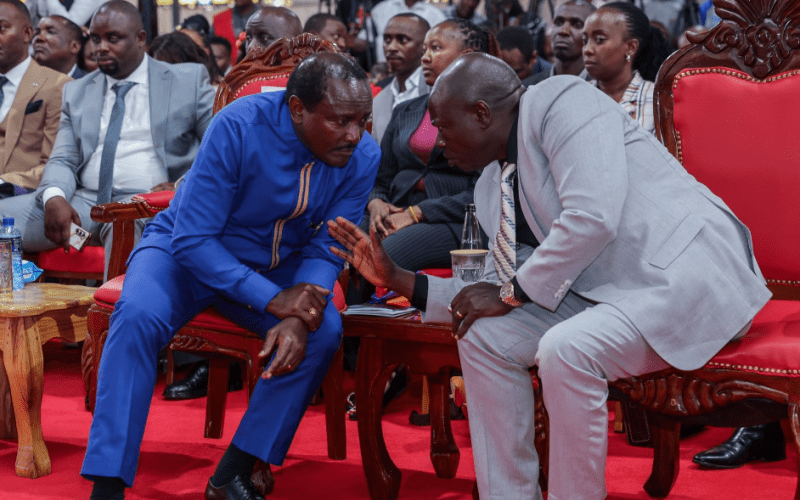
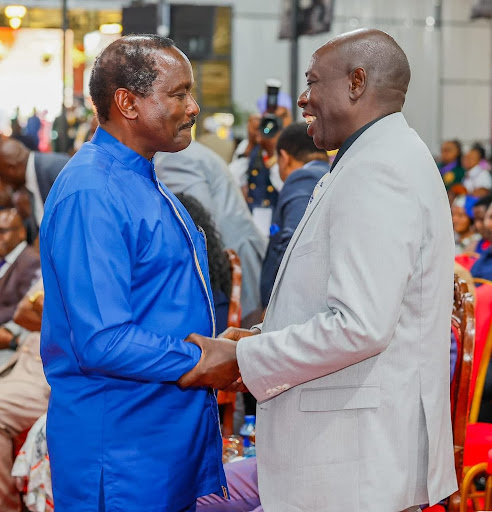
Democracy for the Citizens Party leader Rigathi Gachagua and Wiper Democratic Movement leader Kalonzo Musyoka
The meeting between Kenya’s two most consequential opposition figures signals the most serious attempt yet to consolidate an anti-Ruto alliance ahead of the August 2027 general election
By David Kimani
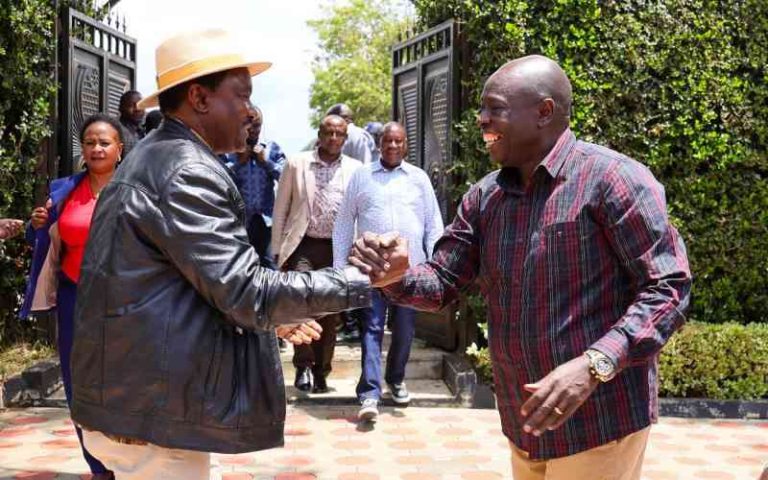
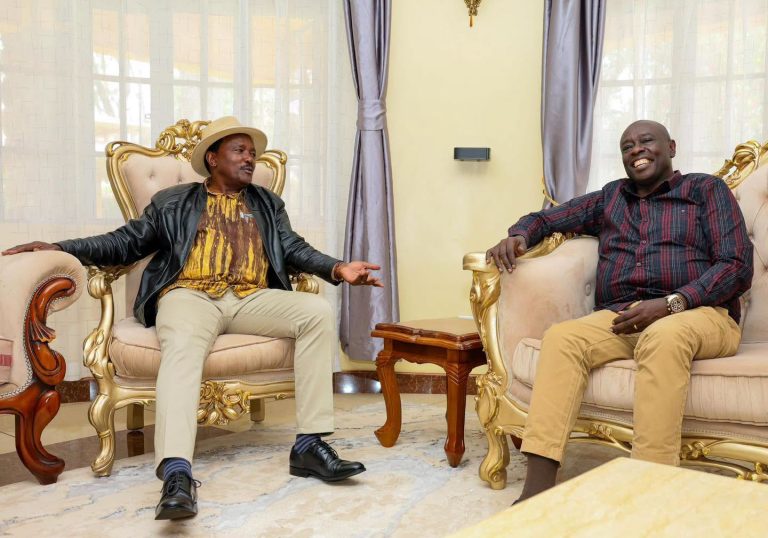
Democracy for the Citizens Party leader Rigathi Gachagua and Wiper Democratic Movement leader Kalonzo Musyoka are scheduled to meet today for talks over a joint opposition presidential ticket for the August 2027 general election, in what represents the most significant development yet in Kenya’s rapidly shifting pre-election political landscape.
The Monday discussions bring together two of the country’s most experienced and regionally influential politicians at a moment when the opposition’s ability to unite behind a single candidate is widely regarded as the decisive variable in any credible challenge to President William Ruto’s re-election bid. The outcome of today’s meeting could determine not merely who leads the opposition into 2027, but whether a coherent, disciplined opposition force capable of unseating an incumbent president emerges at all.
Kalonzo, a three-time presidential candidate and former Vice President, commands deep and loyal support across the Ukambani region of eastern Kenya — a bloc whose weight has historically proved decisive in close presidential contests. Gachagua, the impeached former Deputy President, has since his dramatic removal from office established himself as the single most consequential opposition figure in the country. The Democracy for the Citizens Party, which he leads, has grown into one of Kenya’s most powerful political forces, commanding formidable organisational depth across Mount Kenya and attracting prominent political heavyweights from Maasailand — giving it a geographic reach that extends well beyond its founding heartland. The party has already demonstrated real electoral credibility, securing three elected ward representatives and one Member of Parliament, a remarkable achievement for a party of its age.
Gachagua’s position in the 2027 political equation is, in many respects, unique. He has indicated publicly that he may not personally carry the party’s presidential flag, floating the possibility of passing the baton to DCP Secretary General John Methu. Whether he runs or steps aside, however, his significance is unchanged. As custodian of Kenya’s most populous voting bloc — a combined force spanning Mount Kenya and Maasailand — Gachagua is the undisputed kingmaker of the coming election. Whoever secures his endorsement or his party’s coalition support enters the race with a structural advantage that no amount of campaign spending can easily replicate. Every serious presidential contender understands this. It is precisely what makes today’s meeting with Kalonzo so consequential.
The political arithmetic is compelling for both sides. Mount Kenya, Maasailand and Ukambani together represent an electoral coalition of enormous potential. In 2022, Ruto secured the presidency in part because Gachagua delivered the mountain vote with remarkable discipline, denying the Azimio coalition the regional dominance it needed for victory. A unified Kalonzo-Gachagua arrangement would, in theory, reverse that calculation entirely — assembling the very coalition that denied Azimio victory and redirecting it against the incumbent.
The broader opposition landscape remains complicated, nonetheless. The Wantam brigade — the loose coalition of opposition figures attempting to coalesce around shared anti-government positions — has struggled to translate collective energy into institutional discipline. Questions of who leads the ticket, what each partner receives in return and how regional interests are balanced have bedevilled every previous opposition alliance in Kenyan electoral history. Today’s talks are, in that sense, both deeply promising and inherently fragile.
Further complexity is added by reports that Gachagua had separately indicated support for Nairobi Senator Edwin Sifuna as a potential presidential candidate, a claim made publicly by former Kakamega Senator Cleophas Malala. Neither Gachagua nor Sifuna confirmed that arrangement, and the apparent contradiction between that reported understanding and today’s Kalonzo discussions reflects the fluid, multilateral nature of Kenyan opposition negotiations at this stage of an electoral cycle. It also raises a question that today’s meeting must begin to answer: is Gachagua conducting genuine negotiations or managing multiple conversations to maximise his bargaining position ahead of a final decision?
The government is watching closely and has not been passive. Water and Sanitation Cabinet Secretary Alice Wahome pushed back publicly against the opposition’s intensifying Mount Kenya outreach, insisting that the region had been well served under Ruto’s administration. “The entire Mount Kenya region has received its due share from Ruto’s administration,” Wahome said. “We have not been left behind. Our people have no reason to be persuaded otherwise in terms of political direction for 2027.” Her remarks underscored how seriously the ruling establishment regards the threat of a consolidated opposition bloc linking the mountain, Maasailand and Ukambani.
The government’s anxiety was further illustrated by the episode involving Kiharu Member of Parliament Ndindi Nyoro, whom presidential aide Farouk Kibet publicly acknowledged had been deployed as a government-aligned operative within the opposition. “Wewe Ndindi Nyoro, tunakujua. Wewe ni wheelbarrow ndogo,” Kibet said — translated: “We know you, Ndindi Nyoro. You are a small wheelbarrow.” The disclosure drew widespread attention to the lengths to which the ruling establishment has gone to fragment and manage the mountain vote before it consolidates decisively behind a credible opposition alternative.
For Kalonzo, today’s meeting represents both opportunity and risk. His reputation as a man of principle and patience — the persistent bridesmaid of Kenyan presidential politics — has earned him credibility but also raised enduring questions about his ability to close a decisive political deal when it matters most. An alliance with Gachagua, whose political brand is combative and whose regional support rides a powerful wave of genuine grievance, could provide Kalonzo with the electoral momentum and geographic breadth his previous campaigns have lacked. The risk is managing perceptions of seniority on the ticket without alienating his own base in the process.
Both men are also operating against a backdrop of significant economic discontent. Kenya’s cost of living crisis, sustained pressure on household incomes and widespread frustration with the pace and fairness of government delivery have created a political environment in which incumbent vulnerability is higher than at any comparable point in recent memory. An opposition that speaks directly to that frustration, and can demonstrate the unity required to act on it, will find receptive audiences from Mombasa to Moyale.
Whether today’s meeting produces a durable alliance or merely another chapter in Kenya’s long catalogue of promising pre-election coalitions that dissolved under the weight of competing ambitions remains to be seen. Both men know that history intimately. Both have lived its consequences.
The mountain, Maasailand and the east meet today. Whether they march together in August 2027 will define the election — and the country.
Similar Posts by The Mt Kenya Times:
- Mt Kenya Times ePAPER October 28, 2026
- Ruto breaks ground on KSh70B cement plant that will create 3,000 jobs in Kitui
- Ruto orders Magadi soda ash monopoly broken as new investors set to enter
- Ruto heads to Moscow seeking trade deals and investment as Kenya eyes Russia partnership
- Waititu begs for mercy as Sh588M corruption sentencing looms
About the Author