Gachagua, Kalonzo, Wamalwa unite: Kenya’s 2027 opposition battle takes shape
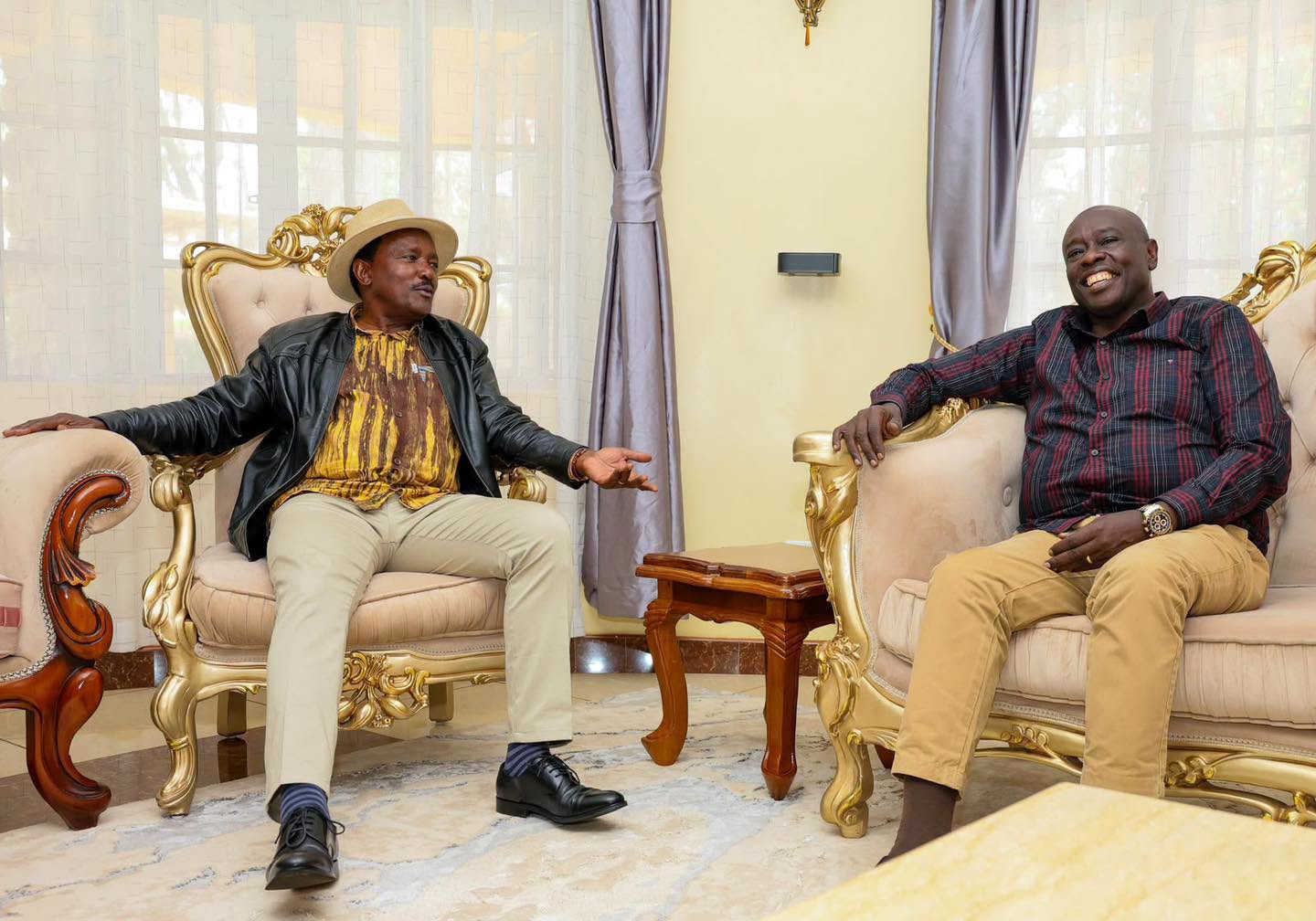
Former Deputy President Rigathi Gachagua and Wiper Patriotic Front leader Kalonzo Musyoka holding high-level consultations at his Wamunyoro residence.
With fourteen months to the general election, Wamunyoro residence has become the unlikely nerve centre of Kenya’s most consequential political realignment in a decade.
By James Mwangi
Kenya’s opposition realignment moved into a decisive new phase on Monday as former Deputy President Rigathi Gachagua hosted a series of high-level consultations at his Wamunyoro residence, meeting separately with Wiper Patriotic Front leader Kalonzo Musyoka and Democratic Action Party of Kenya (DAP-K)’s Eugene Wamalwa in talks aimed at forging a united front against President William Ruto ahead of the August 2027 General Election.
The meetings represent the most serious attempt yet to consolidate Kenya’s fragmented opposition into a single, credible presidential challenge. Gachagua, removed from office by impeachment in October 2024 and since repositioned as a rallying point for anti-establishment sentiment, described the consultations as focused on “the liberation of our country and the formation of the sixth administration.” He added that all parties had reached agreement on the need to settle on one presidential candidate, saying they would “make whatever sacrifices necessary” to achieve unity. The consultations, he confirmed, are continuing.
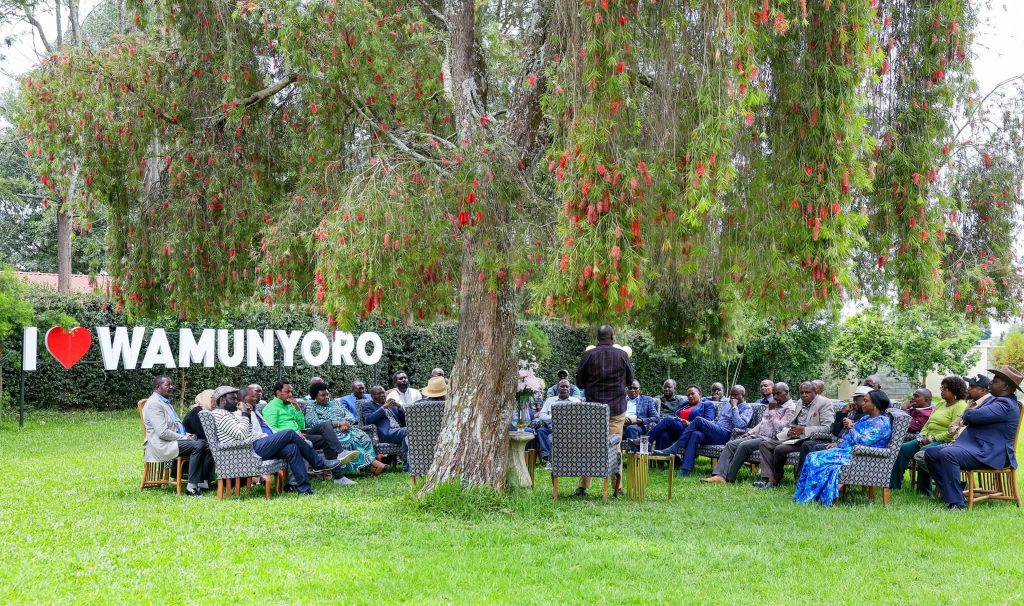
The choice of Wamunyoro as the venue for these engagements is itself a deliberate statement. Once the official residence of a sitting deputy president, the property has been recast as a symbol of political resilience and continuity — a place where, as Gachagua frames it, the work of national restoration proceeds regardless of the personal political reversals he has suffered. That framing is calculated. It positions Wamunyoro not as the home of a fallen official but as the headquarters of a movement in the making, and it invites the leaders who pass through its gates to associate themselves with that narrative.
Kalonzo, one of Kenya’s most enduring political figures, brings considerable assets to the emerging coalition. His Ukombozi Alliance, rebranded from the Azimio la Umoja One Kenya Coalition in September, has been quietly recalibrating its strategy, adjusting its coalition agreement to allow greater flexibility in selecting a presidential candidate. That adjustment is significant. It signals that Kalonzo is prepared to subordinate his own presidential ambitions — at least temporarily — to the broader goal of assembling a coalition capable of defeating Ruto. Whether that preparedness will survive the inevitable pressure of a campaign season remains to be seen, but the gesture itself has opened doors that were previously closed.
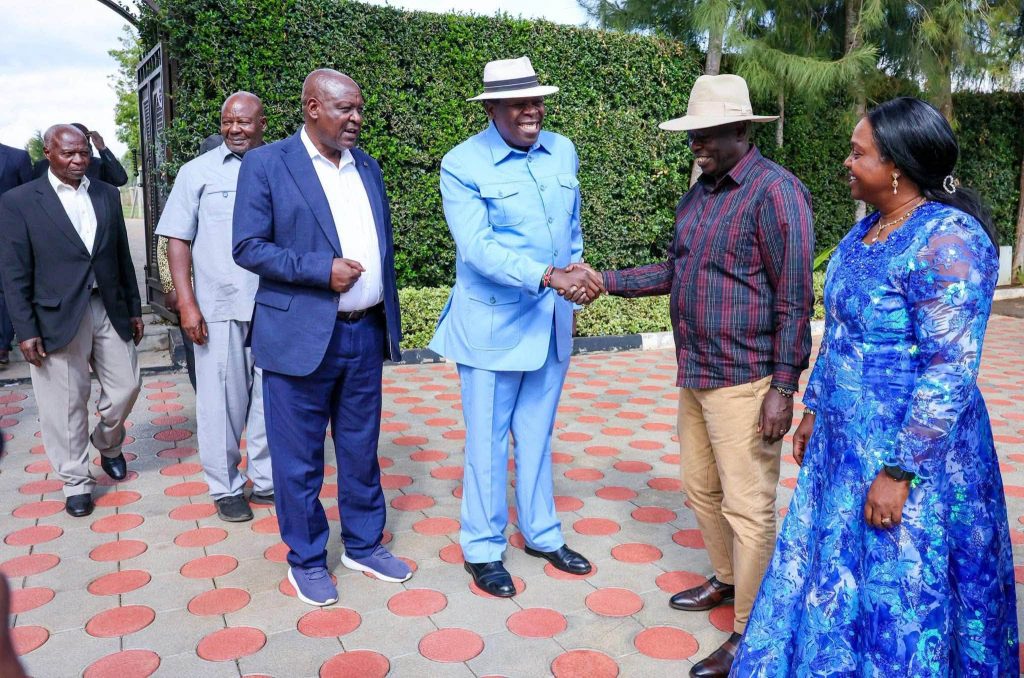
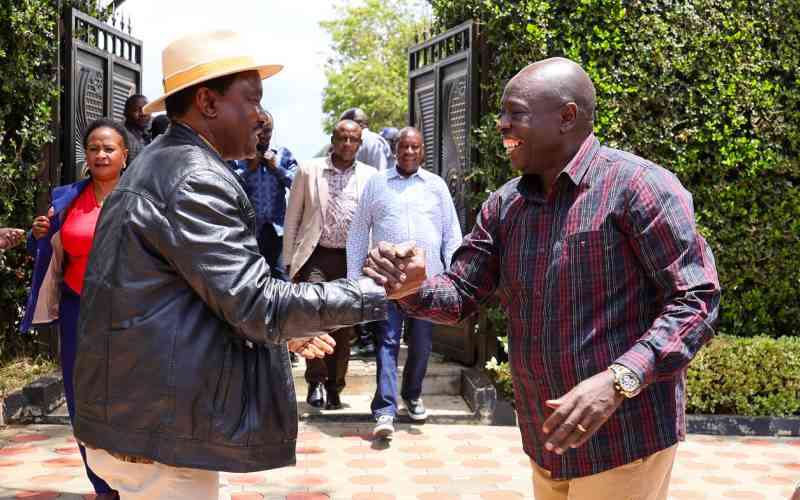
Wamalwa, leading DAP-K, adds a western Kenya dimension to the emerging alliance that neither Gachagua nor Kalonzo can replicate independently. Western Kenya’s electoral weight has historically been decisive in close presidential contests, and Wamalwa’s participation signals that the coalition’s architects are thinking seriously about geographic breadth rather than simply consolidating existing support bases. His arrival at Wamunyoro — welcomed publicly by Gachagua with the greeting “Omwami Eugene Wamalwa, welcome to Wamunyoro residence” — was a carefully staged moment designed to communicate momentum and inclusivity to a watching political class.
The political arithmetic underlying these consultations is straightforward, even if the execution is anything but. No single opposition leader commands the national reach required to defeat a sitting president with access to state resources, an established party infrastructure, and a broad-based parliamentary arrangement. Gachagua’s strongest support lies in the Mount Kenya region, where his impeachment generated significant sympathy and where perceptions that the region’s political interests have been marginalised under Ruto continue to simmer. Kalonzo draws from lower eastern Kenya and retains a national profile built over three decades of presidential campaigns. Wamalwa anchors western Kenya. Together, the three represent a potential coalition of regional blocs that, if properly integrated, could present Ruto with his most serious electoral challenge since his 2022 victory.
The challenge, as every Kenyan political observer knows, is that opposition coalitions in this country have a poor record of surviving contact with the campaign season. The 2022 Azimio coalition, which brought together Kalonzo, former President Uhuru Kenyatta, and eventual presidential candidate Raila Odinga, ultimately fell short despite commanding significant resources and public support. Before that, the 2017 NASA coalition fractured under the weight of competing ambitions. Kenya’s opposition has repeatedly demonstrated the ability to assemble impressive coalitions and the equal ability to destroy them from within.
What makes the current moment different — or at least potentially different — is the nature of the grievance driving the realignment. Gachagua’s impeachment, widely seen by his supporters as a politically motivated removal engineered by Ruto after a falling-out between the two, created a rupture within the ruling establishment that has not healed. Gachagua retains substantial loyalty within the Mount Kenya political community, and his ability to mobilise that community against his former running mate gives the opposition a weapon it did not have in 2022. The question is whether that grievance, powerful as it is, can be translated into a durable coalition platform that speaks to the broader national electorate rather than simply to those who share his sense of injustice.
On the government side, Ruto is pursuing his own coalition-building agenda with characteristic energy. His broad-based government arrangement with the Orange Democratic Movement has given UDA structural advantages in Parliament and shored up his political position following the anti-government protests of 2024. Negotiations between UDA and ODM over a formal electoral alliance, including a joint manifesto, are ongoing, though they remain contentious. ODM has been pushing for a 50-50 power-sharing arrangement and the allocation of the Deputy President’s position to the party should the alliance proceed into the next election — demands that have generated internal resistance within UDA and prompted public caution from government officials including Interior Principal Secretary Raymond Omollo, who urged leaders not to impose conditions on the President in exchange for electoral support.
The ODM factor complicates the opposition’s calculations considerably. If Raila Odinga’s party fully commits to a formal electoral alliance with Ruto, it removes from the opposition’s potential coalition a significant Nyanza and Coast vote base. ODM’s western Kenya networks, which overlap with Wamalwa’s own constituency, would be particularly consequential. The opposition is therefore operating against a clock: the longer the ODM-UDA alliance negotiations remain unresolved, the greater the uncertainty, but a concluded deal would substantially alter the electoral landscape.
Beyond the coalition arithmetic, the 2027 election will ultimately be shaped by issues that no alliance can paper over. The cost of living remains the dominant concern of ordinary Kenyan households, with food prices, fuel costs, and the burden of taxation all weighing heavily on a population that has seen its purchasing power eroded significantly in recent years. Youth unemployment, public debt management, the quality of public health services, and accountability for the violence that accompanied the 2024 protests are all live issues that voters, particularly young voters, are watching closely. Any opposition coalition that focuses its energy on position-sharing negotiations while neglecting a coherent policy platform risks repeating the mistakes of its predecessors.
Gachagua himself has signalled awareness of this. His public messaging has consistently emphasised substantive themes — equity in resource distribution, constitutional governance, and what he describes as the restoration of national dignity — alongside the coalition-building activity. Whether that messaging deepens into a genuine policy platform or remains at the level of political rhetoric will be one of the defining tests of his leadership of the emerging opposition.
With fourteen months remaining, the race is genuinely open. The incumbent has resources, infrastructure, and the advantages of office. The opposition has grievance, energy, and — if yesterday’s consultations are any indication — a growing recognition that unity is not optional. Kenya’s August 2027 election is shaping up to be the most consequential in years. The battle for the soul of the opposition has begun. Whether it produces a credible alternative or another cautionary tale depends on what the leaders meeting at Wamunyoro are genuinely prepared to sacrifice — and whether, this time, they mean it.
Similar Posts by The Mt Kenya Times:
- Jubilee’s coalition gambit: The opposition clock is ticking towards 2027
- From Moscow with ambition: Ruto bets on Russia to rewrite Kenya’s economic story before 2027
- Kenya’s 2027 election: Will political alliances and the fight over transparency decide who wins State House?
- 10 media personalities who never studied journalism
- Yvonne Okwara begins a new chapter at Shuga Global
About the Author