The Mt Kenya Times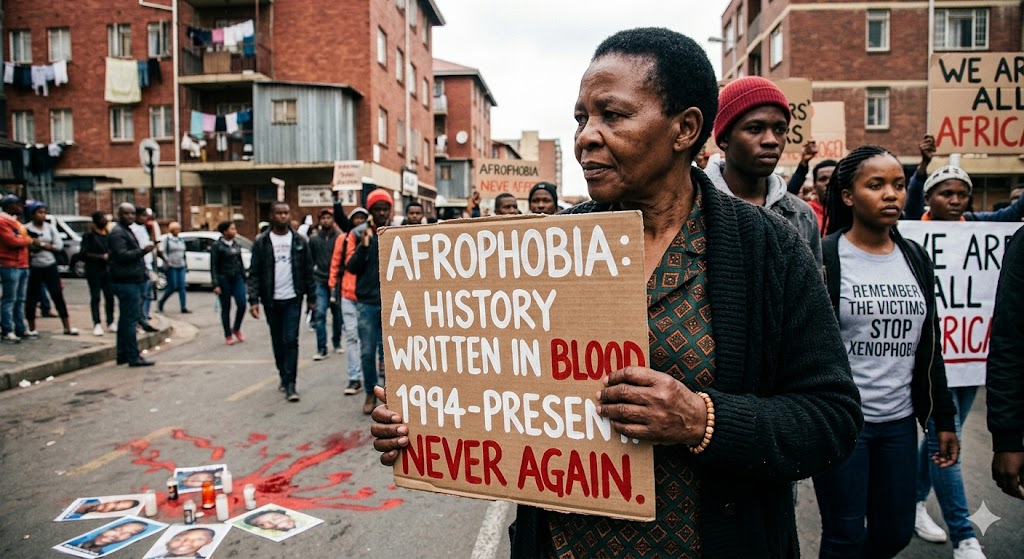
South Africa’s Xenophobia Crisis: Death, Diplomacy, and the Destruction of Pan-African Solidarity
By Silas Mwaudasheni Nande
When Africa Turns Against Itself
In the early hours of April 17, 2026, a 43-year-old Cameroonian shopkeeper in Durban, who had lived and worked in South Africa for nearly two decades, watched in horror as members of a vigilante group attacked his small business. He was not a criminal. He was not an undocumented migrant. He was a businessman, a father, and a neighbour. His crime, in the eyes of his attackers, was that he was foreign. That single incident encapsulates a crisis that has festered for three decades, grown more lethal with each passing year, and now threatens to unravel the very foundations of African unity.
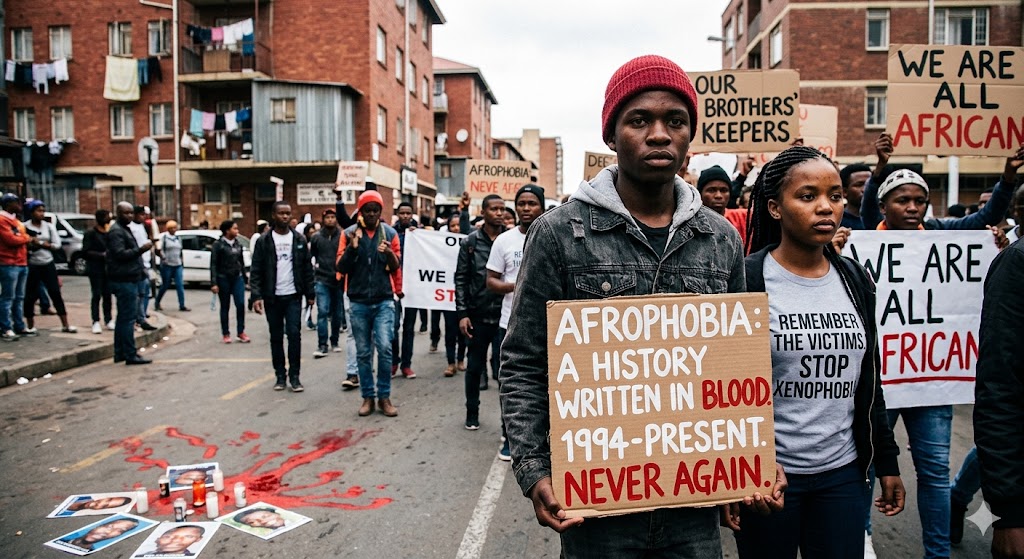
South Africa’s xenophobia— or, more precisely, its Afrophobia— is not a new chapter. It is a long, blood-stained novel. Between 1994 and March 2024, xenophobic attacks resulted in 669 deaths, 5,310 looted shops, and the displacement of 127,572 people, according to Xenowatch, a monitoring project at the University of the Witwatersrand. The most catastrophic single episode occurred in May 2008, when violence erupted in at least 135 locations across the country, killing more than 60 people. Since then, the violence has never truly stopped. It has merely paused to reload.
What distinguishes the current crisis from previous waves is its scale of organisation, its brazenness, its political emboldening, and its growing diplomatic consequences. In 2026, South Africa is not just a country with a xenophobia problem. It is a country whose xenophobia problem is rewriting its relationship with the African continent, threatening its economic standing, and exposing a fundamental contradiction at the heart of its national identity: a nation that was liberated by African solidarity now hunts down Africans in its streets.
This article examines the historical roots, the current explosion, the geopolitical fallout, the economic paradoxes, and the path forward. It does so not to condemn South Africa, but to confront it with the truth it urgently needs to hear.
A History Written in Blood: The Making of South Africa’s Afrophobia
To understand xenophobia in post-apartheid South Africa, one must understand the society that apartheid created. For nearly half a century, the apartheid state engineered a politics of exclusion, racial hierarchy, and resource competition. Black South Africans were stripped of citizenship, confined to homelands, and trained to see themselves as contestants in a zero-sum game for survival. When democracy arrived in 1994, it dismantled the racial architecture of exclusion, but it could not immediately dismantle its psychological legacy. The instinct to identify a threatening ‘other’ did not disappear; it merely redirected.
By the mid-1990s, as South Africa opened its borders and positioned itself as a beacon of African freedom, migrants from Zimbabwe, Mozambique, Malawi, Nigeria, the Democratic Republic of Congo, Somalia, and other nations began arriving in significant numbers. They came for the same reasons migrants anywhere in the world move: to escape conflict, economic collapse, and hopelessness. They settled in the same townships and informal settlements where the poorest South Africans lived. And in those crowded, under-resourced communities, friction was inevitable.
What was not inevitable was the violence. The 2008 pogrom demonstrated that xenophobic violence in South Africa was not spontaneous combustion; it was organised, targeted, and purposeful. Research by the African Centre for Migration and Society consistently showed that attacks were not random but structured. Local ‘committees’ identified foreign targets, coordinated attacks, and enforced a logic of ethnic cleansing in the township. The motive was not merely criminal. It was ideological.
That ideology — that foreign Africans are an existential threat to South African Black people — has proven stubbornly persistent. It resurged in 2015, killing seven in Durban and Johannesburg. It returned in 2019, when attacks in Johannesburg triggered retaliatory violence against South African businesses in Nigeria. And it has now returned with renewed ferocity in 2026, emboldened by organised movements, social media amplification, and the dangerous silence of political leaders.
 The 2026 Crisis: Organised Hatred in the Age of Social Media
The current wave of violence did not arrive without warning. Since 2024, South Africa’s deteriorating socioeconomic conditions, including an unemployment rate hovering above 31 percent in the fourth quarter of 2025 and youth unemployment reaching a catastrophic 43.8 percent, have provided fertile ground for anti-immigrant mobilisation. Two vigilante formations have emerged at the centre of the current storm: Operation Dudula and a newer movement called March and March.
Operation Dudula, whose name derives from the isiZulu word meaning ‘to push back’ or ‘to bulldoze’, was founded around 2021 in Soweto. Its stated priorities include constitutional reforms, the mass deportation of undocumented migrants, and what it terms ‘economic empowerment’. In November 2025, the South Gauteng High Court issued an injunction against Operation Dudula, prohibiting members from blocking foreign nationals from accessing healthcare facilities. Judge Leicester Adams, in ruling against the group, declared without ambiguity: human dignity has no nationality.
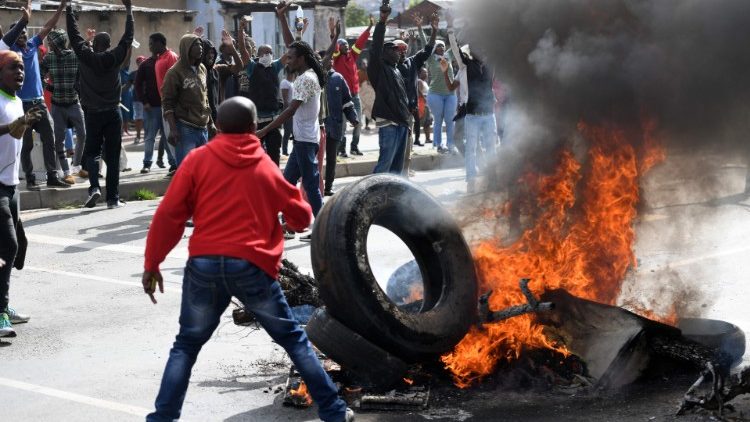
The court order did not stop the violence. In April and May 2026, March and March organised demonstrations across South Africa targeting foreign-owned businesses, demanding, in their own words, that ‘all foreigners, documented or not’ leave the country. The organisation’s communications on social media platforms were unambiguous. ‘We are xenophobic,’ read one widely circulated message. Social media became an accelerant. Videos showing migrants— including legal residents— being harassed, having their documents demanded, and being expelled from their homes spread across WhatsApp groups and social media platforms, triggering diplomatic protests from multiple African governments.
Human Rights Watch, in a report released in May 2026, documented a pattern that extended well beyond physical violence. Foreign nationals reported sustained intimidation, unlawful evictions from their homes, workplace discrimination, police extortion, and denial of access to healthcare and other basic services. The organisation’s warnings were echoed by Kopanang Africa Against Xenophobia, whose media coordinator Mike Ndlovu stated that ‘reports of intimidation, threats, harassment, unlawful evictions, workplace discrimination, police extortion, and denial of access to healthcare and other basic services’ were arriving continuously through community networks.
What makes the 2026 crisis particularly alarming is the mainstreaming of anti-migrant language. Anti-immigrant campaigns have increasingly framed their activities as community protection, ‘clean-up operations’, or responses to legitimate security concerns. This linguistic strategy is not innocent. By couching xenophobia in the vocabulary of civic responsibility, these movements legitimise exclusion, lower the threshold for violence, and make it easier for ordinary people to participate in what is, in essence, ethnic persecution.
The Economic Fallacy: Will Foreigners Leaving Create Jobs?
The central argument of the anti-immigrant movement— that foreign nationals steal South African jobs, drain public services, and drive up crime— is the most emotionally powerful and the most empirically hollow claim in the entire debate. It deserves rigorous examination, because millions of South Africans believe it sincerely, and their belief, even if mistaken, reflects a real experience of economic suffering.
South Africa’s unemployment crisis is real, structural, and severe. An official unemployment rate of 31.4 percent in Q4 2025, combined with youth unemployment at 43.8 percent, places the country among the most economically distressed in the world. Millions of South Africans live in poverty, lack access to quality education, and compete for a shrinking pool of formal employment. In that context, the presence of visible foreign traders, shopkeepers, and workers creates an understandable sense of displacement.
But correlation is not causation, and grievance is not analysis. South Africa’s unemployment crisis is rooted not in immigration but in structural economic failure: a growth rate too weak to absorb its expanding labour force, an education system that produces graduates without market-relevant skills, logistical and energy infrastructure that throttles business expansion, and the long-unaddressed spatial inequality inherited from apartheid. Removing every foreign national from South Africa tomorrow would not create a single new job unless the underlying structural failures were simultaneously addressed.
The research evidence on this point is unambiguous. Studies consistently show that migrants do not take jobs from South Africans but rather fill niches in the labour market that South Africans are either unwilling or structurally unequipped to occupy. In many townships, foreign-owned small shops extend operating hours, offer credit to poor customers, and provide goods at competitive prices. Their removal would not enrich local communities; it would impoverish them.
A study in the South African Social Attitudes Survey found that citizens dissatisfied with government performance were still, to a significant degree, welcoming of immigrants. This suggests that the anger driving xenophobia is primarily directed at government failure, with migrants functioning as a proxy target— easier to see and confront than the abstract failures of the state. As researcher Carolyn Chisadza observed, xenophobia in South Africa appears to be a result of negative spillovers from false narratives surrounding immigrants, particularly in a climate where competition for economic resources intensifies under conditions of scarcity.
By 2022, South Africa had approximately 2.4 million immigrants in a population of 63 million— roughly 3.8 percent of the population. The notion that this relatively small percentage of people, many of whom are themselves vulnerable and living in poverty, is responsible for South Africa’s decades-long economic underperformance is not merely incorrect. It is a dangerous fiction that serves to protect the actual architects of South African poverty— failed policy, state capture, corruption, and apartheid’s unfinished economic legacy— from accountability.
South Africa’s business landscape tells a further story. South African corporations — MTN Group, Standard Bank, Shoprite, SABMiller — have expanded aggressively across the African continent for three decades, generating billions of rands in profit from markets across Nigeria, Ghana, Kenya, Zambia, Zimbabwe, and beyond. South African investors, South African brands, and South African workers depend on continental access. That access is now under direct threat from the very violence that anti-immigrant groups promote as economic liberation.
 Diplomatic Earthquake: When Pretoria Loses Africa
The geopolitical consequences of South Africa’s xenophobia crisis have now moved from the realm of diplomatic concern to active crisis management. In 2026, South Africa is no longer merely embarrassed on the continental stage. It is diplomatically isolated, economically threatened, and forced to answer to its neighbours as though it were the accused rather than the continental elder.
Ghana moved first and most loudly. Accra summoned South Africa’s acting High Commissioner over xenophobic incidents targeting foreign nationals, framing the move explicitly as a betrayal of the African solidarity that Ghana extended to South Africa during the anti-apartheid struggle. The diplomatic protest carried a moral weight that no amount of South African government assurance could deflect. Ghana’s message was clear: you were liberated by African solidarity, and you are repaying that solidarity with machetes and evictions.
Nigeria followed. The Nigerians in Diaspora Commission issued urgent calls for South African authorities to act against the violence. Nigeria’s Federal Government began evacuating affected citizens, with at least 270 Nigerians expected as the first batch of returnees. Mozambique and Malawi, whose nationals have historically formed large parts of South Africa’s migrant population, also raised formal concerns through diplomatic channels. Zimbabwe condemned the violence and urged its large diaspora population in South Africa to exercise caution.
The economic dimensions of the diplomatic fallout are significant. South African companies, including MTN Group and Standard Bank— both of which derive substantial revenues from operations across Africa— faced calls for boycotts in multiple countries. South African artists reported cancelled performances and growing public hostility across the continent. In Ghana, protesters formally called on their government to reconsider the future of South African business interests, including Gold Fields’ significant mining operations. The message was unmistakable: African states are prepared to use economic leverage to respond to the mistreatment of their citizens.
South Africa’s Justice Minister, Mmamoloko Kubayi, acknowledged that recurring xenophobic violence is damaging the country’s international reputation and weakening regional relations. Yet acknowledgement without decisive action is insufficient. South Africa currently holds significant institutional weight in African governance structures, including the African Union and the Southern African Development Community. That weight is eroding. A country that cannot protect African migrants within its borders forfeits the moral authority to lead African institutions.
The timing could not be more damaging. The African Continental Free Trade Area, which positions Africa as a $3.4 trillion economic zone built on free movement of people, goods, and capital, depends fundamentally on a culture of regional solidarity and mutual respect. South Africa, as one of the continent’s most industrialised economies, was expected to be among the primary architects and beneficiaries of that integration. Instead, it has become the most powerful argument against it. As one analysis from African Vibes noted pointedly: how can Africa unite its markets if it cannot protect its people?
The Role of Political Leaders: Silence as Complicity
Leadership in a democracy has two dimensions: what leaders do and what they say. In South Africa’s xenophobia crisis, political leadership has failed on both counts, though the failure is not uniform.
During the May 2024 general elections, several candidates for political office adopted harmful anti-immigrant rhetoric, scapegoating foreign nationals in ways that heightened the risk of xenophobic violence. Operation Dudula emerged as a political party contesting elections on an explicitly anti-migrant platform. The mainstreaming of anti-immigration politics — the transformation of hatred into campaign strategy — marks a dangerous inflection point. When political parties compete for votes by promising to remove foreigners, they normalise the idea that violence against those foreigners is, at worst, a misguided but understandable response to legitimate grievances.
The Frontiers in Political Science journal noted this dynamic with precision: the securitisation of African immigrants is being used as a deflection strategy to camouflage failures of governance. Immigrants are scapegoated to allow the government to posture as taking action on citizens’ concerns— specifically crime and unemployment— while avoiding accountability for its own failures in delivering economic opportunity and public services.
President Cyril Ramaphosa and responsible members of the cabinet have spoken out against xenophobia on multiple occasions. The South Gauteng High Court’s intervention against Operation Dudula demonstrates that legal institutions retain both the capacity and the will to act. But institutional responses have been insufficient to change the culture. Words from the presidency have not been matched by prosecutions of vigilante leaders, the systematic dismantling of anti-immigrant networks, or an honest national conversation about the structural failures that have made scapegoating so politically profitable.
Africa’s continental leaders have also been conspicuous in their restraint. The African Union, an institution founded on the principle of African solidarity, has been slow to apply meaningful institutional pressure on Pretoria. Beyond individual government protests, there has been no coordinated African response: no emergency summit, no formal censure, no structured framework for protecting African migrants in member states. This institutional silence is itself a form of complicity. The world is watching. The leaders are watching. And what they are watching is inaction dressed as diplomacy.
Is South Africa Becoming a Lone Wolf?
The question is uncomfortable but necessary. Is South Africa, the continent’s most powerful economy and its most celebrated post-colonial democracy, in the process of severing itself from the Pan-African family that sustained its liberation?
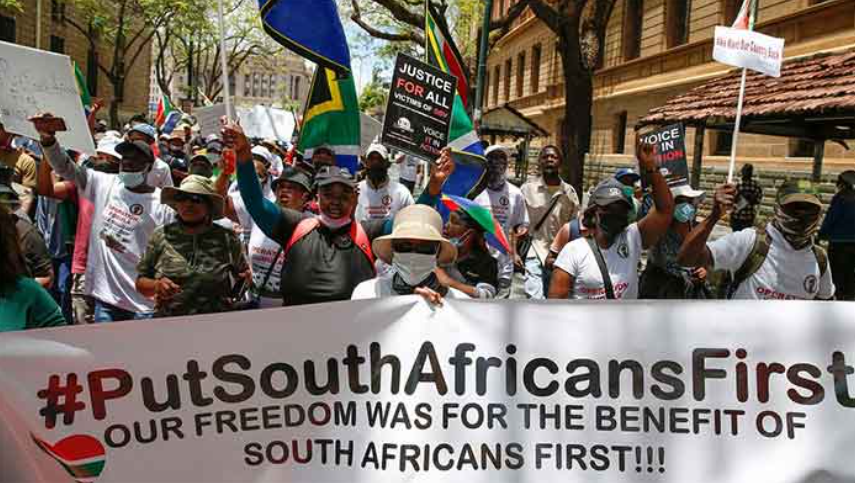
The evidence suggests that, at the community and political level, a significant segment of South African society has already answered this question in the affirmative. The slogans of Operation Dudula — ‘Put South Africans First”, ‘South Africa for South Africans” — carry an unmistakable echo of the exceptionalism that historically defined apartheid South Africa’s relationship with the rest of the continent. The irony is not lost on those who remember that anti-apartheid movements operated from Lusaka, Harare, Dar es Salaam, and Luanda, and that African states provided sanctuary, training, and political recognition to the ANC in exile for decades.
Ghana’s diplomatic formulation was the sharpest articulation of this irony: that South Africa’s current treatment of African migrants constitutes a betrayal of the solidarity that made South African freedom possible. Nigeria sacrificed. Mozambique sheltered exiles. Tanzania gave land. And now South Africa is driving their nationals from its townships with machetes.
The lone wolf metaphor, however, requires qualification. South Africa’s civil society, its judiciary, its academic institutions, and significant portions of its political class continue to resist xenophobia and advocate for migrants’ rights. The High Court ruling against Operation Dudula is not a trivial event; it reflects an institutional refusal to surrender to vigilante nationalism. Organisations such as Kopanang Africa Against Xenophobia represent South Africans who understand that the violence committed in their name does not represent them.
South Africa is not uniformly xenophobic. It is a country in which xenophobia has been allowed to organise, mobilise, and act while institutions respond too slowly and leaders speak too quietly. That distinction matters because it determines whether the country can be pulled back from the edge or whether it has already fallen.
 The Deadly Ground: Human Rights in Collapse
For African migrants in South Africa, the country has, in significant parts, become exactly what the question posed at the opening of this article suggests: deadly ground. The statistics compiled by Xenowatch — 669 deaths, more than 5,000 looted businesses, and over 127,000 displacements between 1994 and 2024 — describe not an occasional crisis but a sustained campaign of terror against a specific demographic category. That campaign has continued and intensified since 2024.
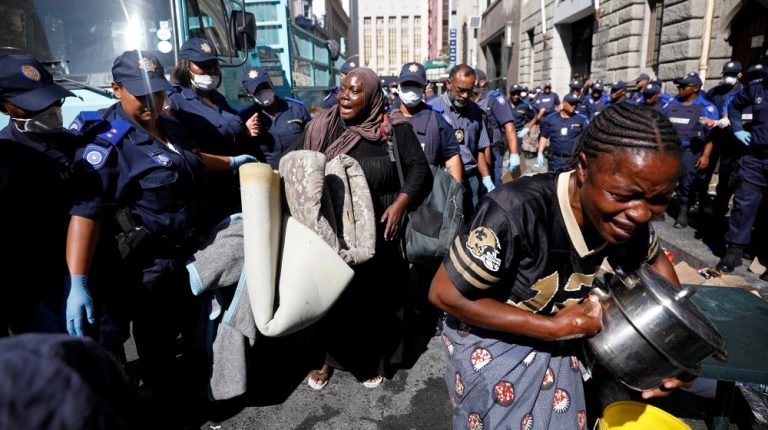
The violence is not limited to physical assault. Foreign nationals report being evicted from their homes by mobs in the night. They describe police officers who stand by during attacks or who demand bribes rather than offering protection. They report being denied access to public hospitals by groups affiliated with Operation Dudula, even as courts issue injunctions against such conduct. They describe discrimination in the formal labour market that pushes them into the informal economy and then face further attack for operating there.
For refugee and asylum-seeking populations, the situation carries additional legal dimensions. South Africa is a signatory to the 1951 Refugee Convention and its 1967 Protocol. It is bound by the African Union’s 1969 Convention Governing the Specific Aspects of Refugee Problems in Africa. The denial of healthcare, education, and basic services to refugees and asylum seekers, as documented by Human Rights Watch and Xenowatch, constitutes a violation of South Africa’s binding international legal obligations. It is not merely a moral failure; it is a legal one.
Children of foreign nationals in South Africa face particular vulnerability. Reports document incidents of school-age children of migrants being denied access to public education. In a country that has itself enacted laws to ensure access to basic education, the exclusion of children from schooling on the basis of their parents’ nationality is a profound institutional failure. Children do not choose their parents’ nationality. They should not pay the price for it.
A Path Forward: Solutions for a Continental Crisis
The xenophobia crisis in South Africa is not unsolvable. It is, in fact, the kind of problem that responds to sustained political will, institutional reform, economic investment, and cultural transformation. What it does not respond to is silence, half-measures, or the management of appearances. The following recommendations are addressed to South Africa, to the African Union, and to the international community.
- Political Leadership Must Be Unambiguous and Sustained
South Africa’s president and cabinet must move beyond periodic condemnations toward a sustained, public, and politically costly rejection of anti-immigrant violence and rhetoric. This means refusing to compete with anti-immigrant parties on their own terrain, explicitly naming and condemning vigilante groups by name, and making the prosecution of hate crimes and vigilante violence a national priority. It also means commissioning and publicly responding to a National Xenophobia Commission with investigative powers and binding recommendations.
- Prosecute the Organisers, Not Just the Perpetrators
South Africa’s criminal justice system must distinguish between the individuals who participate in xenophobic attacks and the networks that organise them. The leaders of March and March and Operation Dudula who have incited, coordinated, and celebrated violence must face criminal accountability. The High Court injunction against Operation Dudula is a necessary but insufficient step. Sustained prosecution of the leadership structures is required to dismantle the organisational capacity of these movements.
- Address the Structural Economic Crisis as the Urgent Priority
The most sustainable solution to xenophobia is a South African economy that generates enough employment to reduce the scarcity that makes scapegoating politically viable. This requires substantive structural economic reform: fixing the energy infrastructure that has cost South Africa an estimated two percentage points of annual growth, investing in technical and vocational education that matches labour market demand, tackling the spatial exclusion that traps millions of Black South Africans far from economic opportunity, and prosecuting the corruption and state capture that have hollowed out public services.
- Reform Immigration Management Without Militarising Borders
South Africa has a legitimate interest in managing its borders and enforcing immigration law. The problem is not that it enforces immigration rules; it is that immigration enforcement has been effectively delegated to vigilante groups whose methods are illegal and whose targets include documented migrants and long-term residents. The government must invest in a professional, rights-respecting immigration service capable of distinguishing between undocumented migrants and refugees, and between criminals and traders. It must also provide clear, accessible pathways to legal status for migrants who have long-standing ties to South African communities.
- Education and Cultural Transformation
The false narratives that drive xenophobia — that migrants take jobs, drive crime, and drain resources — are sustained by ignorance and amplified by social media. South Africa’s education system must incorporate migration literacy and human rights education as core components of citizenship education. Community dialogue programmes that bring South African citizens and migrant communities into structured contact have shown early evidence of effectiveness in changing attitudes. The research by Freirean-inspired education scholars suggests that dialogue, rather than confrontation, is the most durable tool for humanising migrants in the eyes of communities that have been taught to fear them.
- The African Union Must Act Institutionally
Individual government protests, however justified, are insufficient to compel a change in South Africa’s behaviour. The African Union must develop a binding framework for the protection of African migrants in member states, with monitoring mechanisms, reporting requirements, and consequences for non-compliance. The free-movement of persons protocol under the AfCFTA must be accompanied by a protection protocol that guarantees the safety of African citizens living outside their countries of birth. The AU cannot campaign for continental integration while remaining institutionally silent when its citizens are killed for crossing borders.
- The International Community Must Not Look Away
South Africa’s international partners, including the United Nations High Commissioner for Refugees, the European Union, the Commonwealth, and bilateral partners, must be prepared to link diplomatic and development relationships to measurable progress in protecting migrant rights. Travel advisories from affected countries, while disruptive, have a role to play in signalling international disapproval. But beyond signalling, South Africa’s international partners must offer technical and financial support for the structural economic reforms that represent the long-term solution to the crisis.
Conclusion: The Mirror South Africa Must Face
South Africa stands before a mirror, and what it sees must disturb it. A nation that achieved its freedom through solidarity is destroying the solidarity of others. A nation that was sheltered in the townships of Lusaka and the universities of Dar es Salaam is burning the shops of those who might be the children of those who once offered shelter. A nation whose Constitution is one of the most progressive in the world is watching that Constitution be mocked by vigilantes in the streets of Johannesburg and Durban while its leaders manage public relations.
The crisis is real. The deaths are real. The displacements are real. The diplomatic damage is real. The economic threat is real. And the solution, while difficult, is knowable.
South Africa must choose what kind of country it wishes to be. It can continue to allow xenophobia to organize and escalate until it faces economic isolation, diplomatic expulsion from continental institutions, and an irreversible fracture in its relationships with 53 African neighbours. Or it can confront its demons with the same moral courage that characterised its negotiated transition from apartheid— acknowledging historical failure, building new institutional frameworks, and investing in the long-term project of a truly non-racial, non-xenophobic democracy.
The continent is watching. The world is watching. African migrants are watching— from their hospital beds, from their burned-out shops, from the police stations where they sought refuge, from the airports where they are being evacuated. They are watching to see whether South Africa remembers what it owes. They are watching to see whether ‘Africa for Africans’ is a principle or merely a slogan.
The answer will define South Africa’s place in Africa— and Africa’s future— for a generation.
Similar Posts by The Mt Kenya Times:
- Trauma, Friendship, Love, and the Search for Self-Worth in Hanya Yanagihara’s A Little Life
- Kenya’s scouting laws face overhaul: Kiarie leads push to align movement with devolved governance
- Mt Kenya Times ePAPER September 19-20, 2026
- Kenya joins US and UK to put citizens on the terrorism frontline
- Kenya’s parliament races to tame the AI frontier
About the Author