A Crown Meets a Classroom: Miss World Namibia 2026 Carries Her Advocacy to the Heart of Rural Ohangwena
 The Mt Kenya Times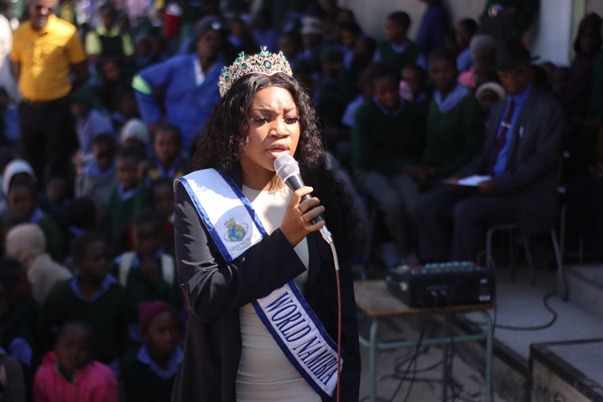
Elly Penomwene Aron
In an era when pageantry is being redefined by purpose and intellect, Miss World Namibia 2026, Elly Penomwene Aron, chose a rural school in the Ohangwena Region as the stage for a message that transcended beauty; a message about education, dignity, resilience, and the future of Africa’s youth.
By Silas Mwaudasheni Nande
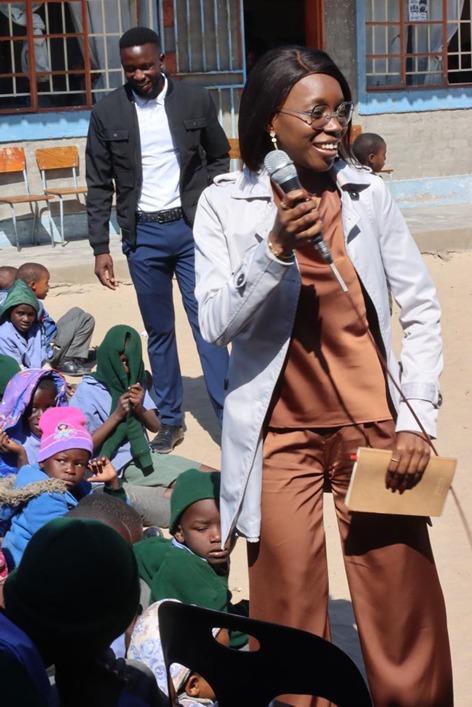
There is a moment, not uncommon in the best of classrooms, when a room of restless young people grows suddenly and entirely still. It is not the stillness of boredom or fear. It is the stillness of recognition, of a young person catching, perhaps for the first time, a vivid and credible reflection of what they might become. That moment descended upon Kornelius Combined School in the Ohangwena Region of Namibia on Wednesday, 2 July 2026, when Elly Penomwene Aron, Miss World Namibia 2026, walked through the school gate.
She did not arrive as a celebrity on a publicity tour. She arrived as an advocate with a mandate, a software development student with a national platform, and a young Namibian woman with something urgent to say to the children of one of the country’s most underserved rural regions. That she chose Kornelius Combined School, a modest institution in the Ondobe Circuit of the Ohangwena Region, as the setting for her visit was itself a statement. It was a declaration that the rural child matters, that the rural school is worthy of national attention, and that the most meaningful advocacy is not the kind conducted in conference halls and hotel ballrooms, but the kind delivered face-to-face with the people it is meant to serve.
She came accompanied by Mr. Robert Andreas, National Director of the Miss World Namibia Organisation and Executive Director of the Miss NGO Namibia pageant, a globally recognised youth mentor, author, and award-winning inclusive educator. Also in the delegation was Ms. Liina N. Mutilifa, a lecturer in Water and Environmental Engineering in the Department of Civil, Mining and Process Engineering (DCMPE) at the Namibia University of Science and Technology (NUST), who has additionally served in the aviation industry, as well as a media team that would ensure the day’s proceedings reached a far wider audience than the several hundred learners and teachers gathered under the morning sun of Ohangwena.
What unfolded over the course of the visit was, in the truest sense of the word, an intervention, not merely a programme item, but a sustained, multi-voiced engagement with some of the most pressing social and educational challenges confronting rural Namibia and, by extension, sub-Saharan Africa as a whole: teenage pregnancy, academic underperformance, the silent crisis of the boy-child, indiscipline, substance abuse, and the desperate need for young people to believe that education is not a luxury but the most reliable instrument of liberation they will ever hold.
The Welcome: Setting the Stage for Honest Conversation
The event was opened by the school’s principal, Mr. Silas Mwaudasheni Nande, whose welcoming address was notable not merely for its cordiality but for its intellectual and moral seriousness. He extended a formal welcome to Miss World Namibia as the Guest of Honour and took the opportunity to situate her visit within a broader educational and social framework, one that the school itself has been navigating with considerable effort.
In his remarks, Nande drew a direct and deliberate line between the advocacy work of Miss Aron and the lived mission of Kornelius Combined School. He acknowledged her dual identity as both a national beauty queen and a student of software development, characterising this combination as emblematic of the new definition of achievement: one that prizes intellectual ambition alongside public representation. He stressed that her advocacy focus, centred on teenage pregnancy prevention, youth empowerment, and dignity for vulnerable and disadvantaged children, resonated deeply with the priorities of a school serving a predominantly rural, resource-constrained community.
He reminded the assembled learners, drawn from multiple grades of 865 learners, that the opportunity to hear directly from a figure of Miss Aron’s stature was rare and precious. He urged them to listen not as passive recipients of a motivational address, but as young people capable of internalising the message and translating it into concrete choices about their lives. In thanking the Miss World Namibia Organisation for prioritising rural schools and rural communities in its advocacy agenda, the principal also issued a gentle but pointed challenge: that the visit should not be a one-day affair but the beginning of a sustained relationship between national institutions and rural schools that too often feel invisible on the national stage.
The Strategist Speaks: Robert Andreas and the Rehabilitation of the Boy-Child
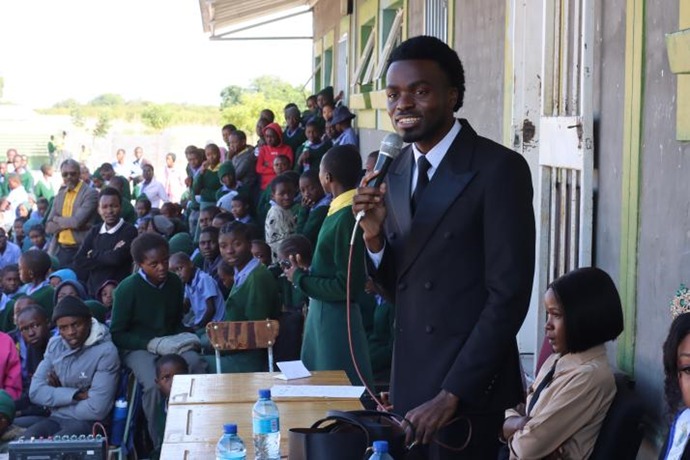
Robert Andreas is a figure who defies easy categorisation. As National Director of the Miss World Namibia Organisation and Executive Director of the Miss NGO Namibia pageant, he is the chief architect of the advocacy platform upon which Miss Aron’s national campaigns are built. But his influence extends well beyond the pageantry world. He is the author of the Boys’ Club Manual: Re-Defining Manhood, a resource that has gained traction in inclusive education circles across Africa. He was named the IFIP Educator of the Year for Boy-Child Inclusion by the International Forums of Inclusion Practitioners, a recognition that speaks to the seriousness and global resonance of his work.
When Andreas took the podium at Kornelius Combined School, he spoke with the directness of a man who has spent years working at the intersection of masculinity, youth development, and social dysfunction. His address was focused squarely on the boy-child, a constituency too often rendered invisible in conversations about youth vulnerability, and he did not soften the message for the sake of comfort.
He spoke candidly about the crisis of alcoholism among young men: how the bottle becomes, for too many boys in rural communities, a substitute for direction, for purpose, for belonging. He addressed the tragedy of early fatherhood, not as a moral failing to be condemned, but as a pattern to be understood and interrupted, rooted in a deficit of responsible male mentorship and a cultural silence around what it genuinely means to be a man. He spoke about drug abuse, about the culture of indiscipline that erodes not only academic performance but the internal architecture of self-belief, and about the profound responsibilities that come with education, responsibilities not only to oneself but to one’s family and community.
Andreas was equally direct in his counsel to the girls in the audience. He asked them to choose their education above all else, not as a denial of their femininity or their social aspirations, but as the foundation upon which every other good thing in their lives would ultimately rest. He argued with quiet forcefulness that finishing school is not a delay of life, it is the beginning of it: the first and most important act of self-determination available to a young woman growing up in rural Africa.
What distinguished Andreas’s address was not merely its content but its structural novelty. In a context where advocacy visits to schools tend to focus exclusively on girls and the prevention of teenage pregnancy, his insistence on centering the boy-child, on naming the specific vulnerabilities, temptations, and failures of young men with honesty and without contempt, was both rare and necessary. The implicit argument of his address was one that the global development community is only beginning to absorb in earnest: that you cannot protect girls without also transforming boys, and that comprehensive youth development is, by definition, inclusive youth development.
From Lecture Hall to Cockpit: Ms Liina N Mutilifa’s Message on the Power of Education
The third voice of the day belonged to Ms. Liina N. Mutilifa, a lecturer in engineering at the Namibia University of Science and Technology (NUST), whose biography is itself a compelling argument for the boundlessness of educational ambition. Having worked in the aviation industry, a field that remains, globally and particularly in Africa, one of the most demanding and exclusive professional environments, Ms Mutilifa brought to Kornelius Combined School a perspective shaped by both academic rigour and real-world professional achievement.
Her address to learners and teachers was structured around several interlocking themes. She spoke about what it means to be a responsible learner: not merely a student who attends school and sits examinations, but one who understands that the habits of mind cultivated in a Grade 8 classroom will determine the quality of decisions made in a lecture hall, a boardroom, or a cockpit. She outlined, with practical specificity, what successful transition to university requires: not only academic competence, but the kind of self-discipline, curiosity, and intellectual resilience that cannot be improvised at the moment of departure from secondary school.
She addressed the relationship between indiscipline and academic performance with the directness that the data consistently support: learners who are unable to regulate their behaviour are learners who are unlikely to sustain the concentration, the effort, and the delayed gratification that academic achievement demands. The same logic applied, she argued, to alcoholism, not as a moral sermon but as a practical observation about cognitive function, attendance, and the gradual erosion of potential that substance abuse invariably produces.
But the centrepiece of Ms. Mutilifa’s message was the power of education itself, not as an instrumental good measured in examination scores and employment statistics, but as a transformative force in the life of a community and a continent. She spoke with evident conviction about what education can unlock for a young person from rural Namibia: access to opportunities that geography and circumstance would otherwise foreclose, the ability to contribute to national development at the highest levels, and the capacity to give back to the communities that shaped them. In a world increasingly defined by knowledge, she argued, the most dangerous form of poverty is not material but intellectual, the poverty of untapped potential, of minds that could have changed the world but were never given the tools to try.
The Crown in the Classroom: Miss Elly Penomwene Aron
When Elly Penomwene Aron rose to speak, the atmosphere in the school shifted perceptibly. Here was a young woman who looked not unlike the girls in the front rows, young, Namibian, from this part of the world, yet who occupied the national and international stage in a way that few of them had yet dared to imagine for themselves. The power of that proximity, that visible sameness, is difficult to overstate in a rural school context where role models tend to feel remote, fictional, or drawn from another social universe entirely.
Miss Aron’s address was substantive, wide-ranging, and at times deliberately uncomfortable, the kind of speech that a school assembly rarely receives and often most needs. She addressed the crisis of teenage pregnancy with unflinching directness, articulating not only its personal consequences for the young women it claims, their interrupted education, their narrowed futures, the compounding weight of early motherhood in a low-resource environment, but its communal consequences: the signal it sends to younger learners, the burden it places on families, and the systemic educational loss it represents for a nation that cannot afford to squander the potential of its youth.

She called for keeping girls in school as a non-negotiable national priority, one that demands coordinated effort from schools, families, community leaders, NGOs, and government alike. She placed particular emphasis on the role of education, ICT, and innovation as instruments of empowerment, tools through which young women in rural Namibia can access economic opportunity, professional mobility, and the kind of agency that previous generations were structurally denied. As a student of software development herself, she spoke from a position of lived conviction rather than theoretical advocacy: she is, in her own person, the argument she is making.
Her vision of community collaboration was notably systemic. She spoke of the need for schools, NGOs, and parents to function not as separate institutions pursuing parallel agendas but as an integrated ecosystem of support around the young person. She acknowledged, with the kind of honesty that is rare among any public figure, her disappointment in Kornelius Combined School’s academic performance, and she did so not to shame but to challenge. She named the interconnected factors that contribute to underperformance: teenage pregnancy, poor discipline, and ambiguity in the roles and strategic responsibilities of teachers and school leaders. Her call for improvement was not rhetorical; it was accompanied by a concrete, personal commitment.
That commitment took the form of a pledge: she announced that she would sponsor, annually, the provision of a full school uniform set for the best academic performer in Grade 4, the best in Grade 7, and the best in Grade 8 at Kornelius Combined School. This pledge was not incidental. In a context where the cost of school uniforms is a genuine financial barrier for many families, the symbolic and material value of such a commitment cannot be dismissed. It says to learners: excellence is seen, excellence is rewarded, and someone who occupies the highest pinnacle of national youth recognition believes in you enough to invest in your success.
She also spoke of charity and social responsibility with a particularity that elevated the conversation beyond the generic. She referenced her programme of providing shoes to vulnerable children, a seemingly simple act that carries enormous significance in communities where the absence of proper footwear is a literal obstacle to school attendance and a daily source of indignity. She spoke about health and dignity for disadvantaged youth with the same specificity, understanding that abstract commitments to justice mean little without the concrete, material interventions that make dignity operational.
Perhaps most strikingly, Miss Aron addressed the relational architecture of the school itself. She spoke of teachers as parents of learners in the deepest sense. figures upon whom learners lean not only for academic guidance but for social support, emotional stability, and the kind of consistent human presence that family circumstances may not always provide. And she spoke of the school principal as the strategic centre of the institution: the figure to whom teachers look for direction, for vision, for the clarity of purpose that determines whether a school merely functions or genuinely transforms.
In naming these roles explicitly, she was not flattering the adults in the room. She was holding them accountable. Her implicit message was that the challenges facing the school, academic underperformance, teenage pregnancy, and disciplinary erosion are not inevitable features of rural education; they are, at least partly, leadership problems. And leadership problems admit of leadership solutions.
The learners Speak: A Generation That Refuses to Be Silent
What elevated the day beyond the ceremonial was the decision to give the floor to the learners themselves, a gesture of respect that produced some of the most arresting moments of the entire visit. The young people of Kornelius Combined School, it turned out, had a great deal to say.
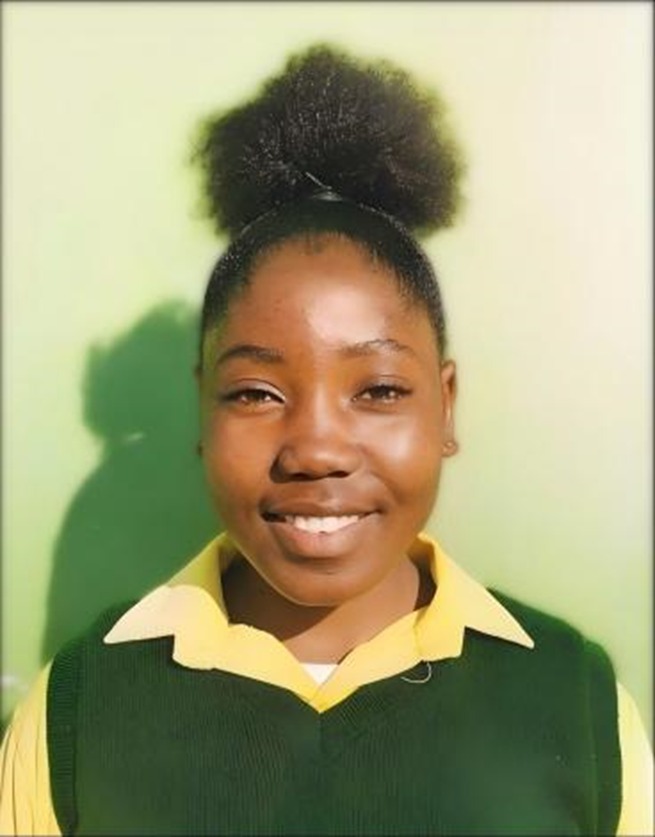
Nsimba Romeu, a Grade 9 learner, rose to address his peers with a composure and a moral clarity that belied his age. His message was direct to the point of starkness: he counselled both girls and boys to abstain from sexual activity while in school. “One will not die,” he said, with the calm certainty of someone who has thought carefully about the arithmetic of sacrifice, “if they refrain from having sexual intercourse.” It was a statement that drew both laughter and recognition from the assembled learners, the laughter of shared knowledge, the recognition of a truth that is rarely said plainly in public but is understood privately by many.
Amon Ndilimeke, Tangeni Nghinyekwa, and Haunini Festus also took the opportunity to address their peers. Their messages built on Nsimba’s foundation: they urged their fellow learners to protect themselves from the consequences of teenage pregnancy, to resist the social pressures that too often lead to premature sexual activity, and, with a pragmatism that perhaps surprised some of the adults in the room, to use condoms correctly if they chose to have sexual intercourse. This was not recklessness; it was honest harm reduction, of the kind that public health research consistently identifies as the most effective approach to adolescent sexual behaviour in high-prevalence contexts.
The voices of these young men and women, for they were, predominantly, young men choosing to address a mixed audience on a topic that carries considerable social weight, were themselves a rebuttal to any narrative that positions rural African youth as passive recipients of education and advocacy. These were young people exercising moral agency, intellectual engagement, and the willingness to make themselves accountable to each other in a public forum. It was, in its way, the most genuinely educational moment of the day.
The final learner voice belonged to Ms. Nghiyaamene Penexupifo Kemutangeni, a Grade 11 learner who delivered the votes of thanks with poise and verbal dexterity that stopped the room. She thanked Miss World Namibia and her entire delegation, not with the formulaic gratitude of a school function, but with the eloquence of a young person who understood both the significance of the occasion and her own power to name it. She drew a distinction that is rarely made explicit in such settings: she said that having Miss World at Kornelius Combined School was not merely an honour, a word that speaks to institutional recognition, but a privilege, a word that speaks to personal grace and undeserved gift.
She closed her remarks with a wish and a commission: she asked Miss Aron to carry the strength and determination evident in her advocacy work all the way to the Miss World stage in Vietnam, to raise the Namibian flag with dignity and pride, and to know that Kornelius Combined School, and Namibia at large were watching and believing. It was a moment of genuine eloquence from a young woman who, if the trajectory of this day means anything at all, is herself on her way somewhere.
The Pledge: A Covenant, Not a Ceremony
The day did not conclude with applause alone. Miss Aron introduced what she described as a formal pledge, a commitment made in writing, signed individually by participating learners, in which they committed to not becoming pregnant and to remaining in school until the completion of their education. She was explicit about the nature of this pledge: it was not a bureaucratic form, not a school exercise, not a publicity gesture. It was, she said, a covenant, a binding commitment between herself as an advocate and each signatory as a young person with a future worth protecting.
The language of covenant is deliberate and powerful. It invokes not merely obligation but relationship: the pledge creates a social bond between Miss Aron and the learners who signed it, a bond she made clear she intended to honour through her continued advocacy presence in their lives. In a social context where institutional commitments often arrive without consequence and depart without trace, the act of signing, of physically committing one’s name to a statement of intent, carries considerable psychological weight. Research in behavioural science consistently demonstrates that public commitment increases follow-through. Miss Aron, whether by instinct or design, was deploying that insight in the service of a cause that demands it.
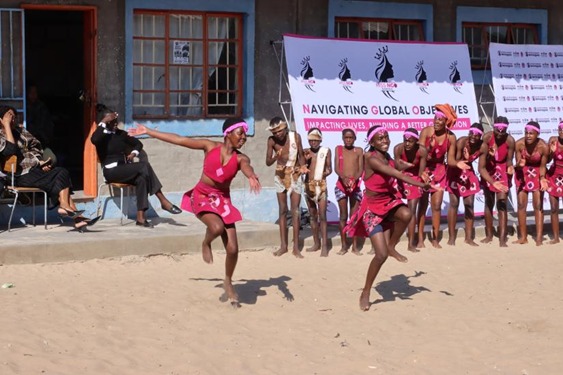
Before the day was complete, she also convened a special meeting with the Kornelius Combined School team that would be participating in the Miss Kornelius 2026 pageant, scheduled for the following day, 3 July 2026. Her counsel to them was characteristically blunt and characteristically wise: beauty without brains, she told them, is useless. The modern pageant, she explained, is not a beauty contest in any traditional or superficial sense. It is an intelligence contest, a communication contest, a character contest, one in which intellectual engagement and personal vision are as determinative as physical presentation. She wished them well before taking photographs with the learners and teachers assembled on the school stage, a final moment of shared joy before the formal proceedings gave way to the festive business of escorting the delegation to the school gate.
What the Visit Means: A Reflection for the local International Reader
For the local and international reader, the visit of Miss World Namibia 2026 to Kornelius Combined School might appear, at first glance, to be a local story, a notable community event at a small school in a remote region of southern Africa. It is worth pausing to consider why it is considerably more than that.
Across sub-Saharan Africa, the challenge of keeping girls in school remains one of the most stubborn and consequential educational problems of our time. UNESCO data consistently show that adolescent pregnancy is among the leading causes of school dropout among girls in southern Africa, with Namibia’s own statistics reflecting regional patterns that development economists and education researchers have identified as deeply linked to cycles of poverty, gender inequality, and constrained social mobility. The advocacy work that Elly Aron and her organisation are doing, taking the conversation about teenage pregnancy, youth empowerment, and the transformative potential of education directly into rural schools, is, in its structure and its intention, the kind of last-mile intervention that development literature repeatedly identifies as the most effective.
The inclusion of a sustained focus on the boy-child, on male youth development, on the specific vulnerabilities that young men in resource-constrained communities face, on the social costs of absent male mentorship, reflects an intellectual evolution in the approach to youth advocacy that is globally significant. For too long, programmes addressing teenage pregnancy have been structured as exclusively female problems requiring exclusively female solutions. The work of Robert Andreas, and the platform that the Miss World Namibia Organisation has provided for that work, represents a more complete and more honest understanding of the social dynamics that produce the outcomes everyone is trying to prevent.
The voices of the learners themselves, particularly the young men who chose to speak publicly about abstinence, responsibility, and sexual health, are a reminder that young people in rural Africa are not problems to be solved but agents to be engaged. They possess moral seriousness, social intelligence, and the capacity for the kind of peer-to-peer influence that no teacher or celebrity advocate can fully replicate. When Nsimba Romeu told his classmates that one does not die from abstinence, he was doing something that no externally designed programme can manufacture: he was making a community’s values audible in a community’s own voice.
And when Nghiyaamene Penexupifo Kemutangeni drew the distinction between honour and privilege, when she sent Miss Aron to Vietnam with the commission of an entire school on her shoulders, she was practising exactly the kind of leadership, the kind of eloquence, and the kind of social consciousness that every education system in the world exists to cultivate. That she was doing so in a rural school in Ohangwena, with the dust of a Namibian dry-season morning still in the air, makes it neither less impressive nor less important. It makes it more so.
Elly Penomwene Aron will compete at Miss World. She will carry Namibia’s name to an international stage. But on 2 July 2026, the most important stage she occupied was a modest school hall in the Ondobe Circuit, where the children of a rural community looked up at someone who looked like them and heard, perhaps for the first time, that the future she represents is also available to them, if they choose it, protect it, and fight for it with everything they have.
That is not a local story. That is the story of this generation.
Similar Posts by The Mt Kenya Times:
- Ruto commissions Uasin Gishu dam to boost year-round farming
- Ruto calls Kenyatta a conman as Kenya’s 2027 battle begins in earnest
- Electricity access must lead to local opportunity
- God had to break your marriage to save your mother’s house
- Meru commissioner urges residents to act before the rains claim more lives
About the Author