Indians Are Still Swamped By British Colonial Cultural Hangover: Time To Switch And Go Beyond Appearances?

British Colonial style Champagne-Lounge-style still lives on in modern India despite seven decades of independence. Photo Courtesy

By Antara Roy Bhattacharjee
Life is such an amazing thing that we take everything for granted. What we read and hear is of-ten taken at face value. Look at social media: What we read or see there is taken as the gospel truth. Often, what is told are facts twisted to suit the narrator, who may have an axe to grind.
It is a well-known fact that a story starts from an almost honest footing, but as it travels from one mouth to the other along the long line of people who have heard if from someone they know or someone they think that they know, it changes direction with added spices and half-baked truths, insinuations, allegations or what they think they should say: Call it gossip, call it tittle tat-tle, call it what you may – back biting? The biggest culprit is the rumour machine with half-baked truths. The face value of an honest comment is lost to the winds. Let’s say some people make a mountain out of a molehill.
Politics is often about convincing the sceptics with outright lies, concocted facts, and promises that crumble like cookies. Politicians are pathological liars who will say anything to win votes and fool the public into believing they are there to look after the welfare of those people who voted for them and the public in general. Contrary to that, they have their own axe to grind. But not all of us are politicians, and many of us still have a conscience and the sincerity and goodwill to be good citizens.
Flip the other side of the coin, as we say, every story has another side.
Take life and let us search its meaning beyond appearances. Appearances can deceive. A stink-ing rich person flaunting his wealth with the motto: Money is not the problem, how to spend it is the problem, could be earning his wealth by breaking the law – a smuggler, a people trafficker, a pimp, a dealer in drugs. The well-meaning public, admiring his wealth, only finds out the truth after his racket is smashed and the law steps in. Some people may not believe what is being said about this person in public until they see him handcuffed in the media with screaming head-lines and breaking news.
There are two sides to the coin, as we say. Let us look at the consequences of ‘loose talk’.

We often jump to conclusions without considering the consequences or the outcomes they may have later. We should be more patient, observant, and persevering in our approach to what we see and hear around us, and make decisions accordingly.
Life is not a one-way street; rather, it is a point of intersection where many roads, highways, and pathways converge. For example, are all prisoners vindictive? Or might some of them be victims of false allegations or miscarriages of justice? Before judging others, we should remember that appearances and assumptions do not always reveal the complete truth.
This contrast teaches us that patience, resilience, and forbearance are powerful virtues. My grandmother’s reminder that true strength lies in self-restraint can inspire the audience to feel hopeful and confident in the power of peaceful perseverance.
This is a lesson for people who take to the streets at the drop of a hat. People have been seen joining protests just for the sake of it, to swell the crowds, or because they have nothing better to do with their lives and are unemployable or do not wish to work – why not spend a few hours complaining?
All this reminds me of the period when India was under British colonial rule. Although political co-lonialism ended in 1947, one may argue that many colonial patterns of thought-such as defer-ence to Western standards of success, dress, and education-continue to shape our social con-sciousness. In several ways, we have yet to free ourselves from the obsession with appearances, hierarchy, and the need for validation through Western standards. These attitudes were not acci-dental; they were carefully cultivated during the colonial period and became deeply embedded in our collective psyche. Consequently, Eurocentric ways of thinking continue to influence our per-ceptions, often without our even realising it.

This is precisely where Edward Said’s concept of Orientalism becomes relevant. Said argues that the West did not merely study the East; it constructed and represented the East according to its own interests and imagination. The Orient was portrayed through a Western lens—as exotic, irra-tional, backwards, and in need of guidance—while the West positioned itself as rational, civilised, and superior. In other words, the West assumed the authority to define and speak for the East.
Such representations were not innocent descriptions; they became instruments of power that jus-tified colonial domination.
Although colonial rule has formally ended, many of these Eurocentric assumptions-such as per-ceptions of beauty, language, and social hierarchy-remain deeply rooted in Indian society. They continue to shape our understanding of identity, culture, and social status. Therefore, when we discuss the importance of appearances, we must also recognise how colonial discourse has influ-enced how we see ourselves and how we believe others should see us.
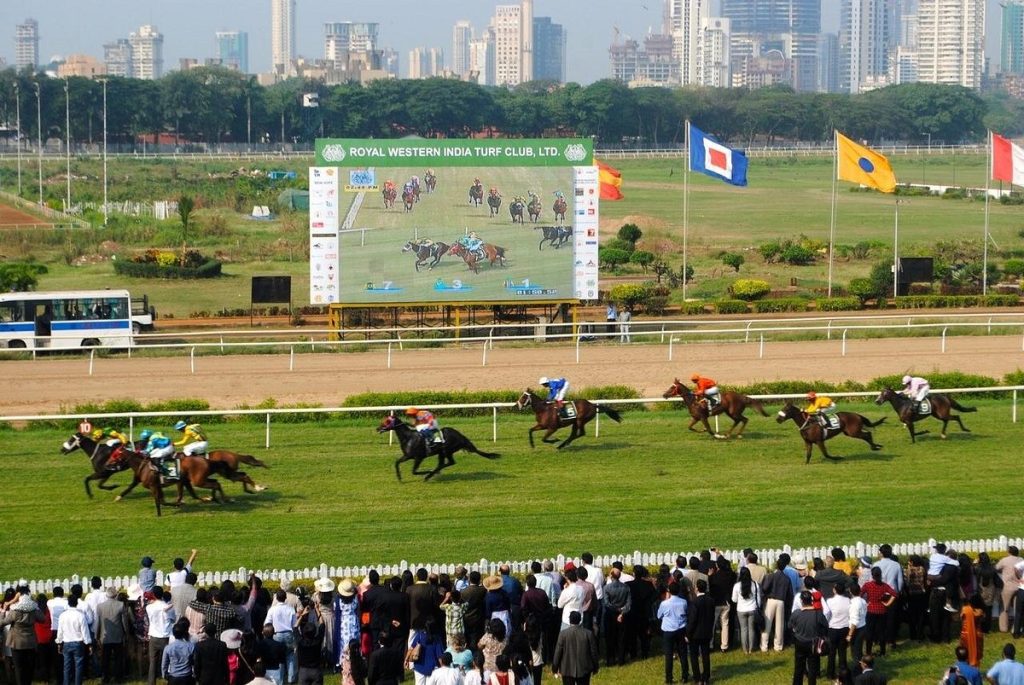
Even though the British have long been gone, their influence still exists. Persistent British colonial cultural patterns among Indians include the emphasis on English fluency, reliance on English common law and parliamentary governance, a bureaucratic ‘babu’ mentality, and an enduring passion for British-introduced sports like cricket. These patterns define institutional and social be-haviours across the subcontinent.
Political independence marked the end of British rule in India. Still, an important question contin-ues to demand attention: Did colonialism merely occupy our land, or did it also shape our ways of thinking? More importantly, have we truly decolonised our minds-our perceptions, values, and self-image-so that we can forge an authentic cultural identity?
This question becomes particularly relevant in contemporary India, where public discourse often oscillates between patience and polarisation, dialogue and confrontation. While one section of society believes in restraint, perseverance, and peaceful engagement, another increasingly views protest and aggression as the first response to disagreement. The challenge lies not merely in political differences but in understanding the historical forces that continue to influence our collec-tive consciousness.
Edward Said’s Orientalism offers an important framework for examining this legacy. Said argued that colonialism was sustained not only through military and political domination but also through systems of knowledge that allowed the West to define and represent the East. The Orient was portrayed as irrational, backward, and dependent, while the West positioned itself as rational, progressive, and superior. These representations were not neutral; they became instruments of power that shaped how colonised societies came to perceive themselves.
Although colonial rule formally ended decades ago, many of these inherited assumptions persist. Eurocentric standards still influence perceptions of language, education, beauty, social status, and even cultural legitimacy. In subtle ways, colonial patterns of thinking continue to shape social attitudes and everyday interactions.
India’s remarkable diversity of cultures, religions, castes, and communities should be a source of strength. Yet, social divisions are often reinforced by inherited prejudices and hierarchical ways
of thinking. In many instances, these divisions resemble a form of internal colonisation, in which people judge one another by rigid social categories rather than by shared humanity.
Casteism, not inherited from the British colonisers, has made a dent in the social classes and is used as a power leverage to keep the less powerful and poor under their thumb and suppress them. That has to be eradicated if India is move into the league of modern nations. A nation’s strength is known by the success of the people living there and not suppression.
The colour of blood of those in the lower castes is not any different from the blood of the ‘high’ priestly class—the Brahmins.
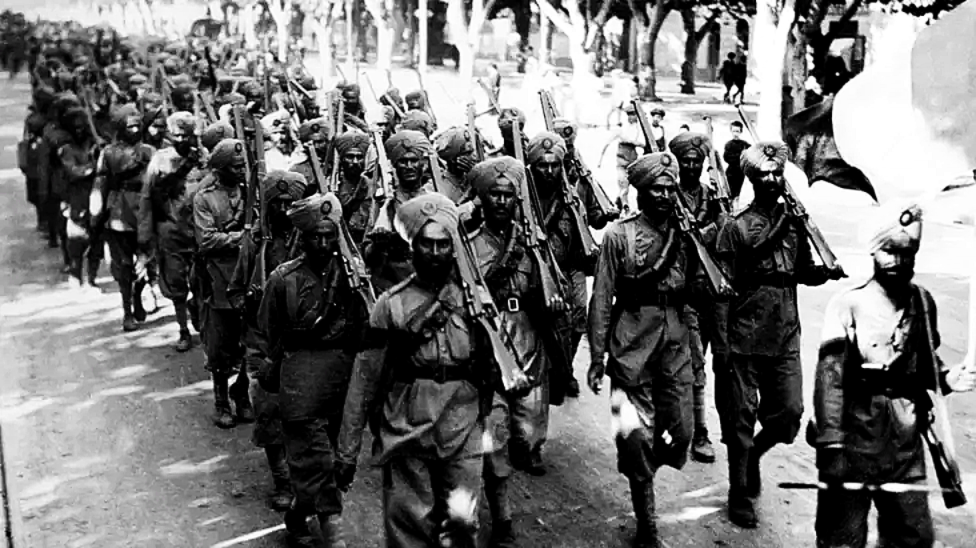
The British were racists and they looked down upon at all the Indians as ‘coolies’. At least, merci-fully, that form of racism no longer exists in independent India. These days it’s how rich and influ-ential and politically connected you are that does the talking.
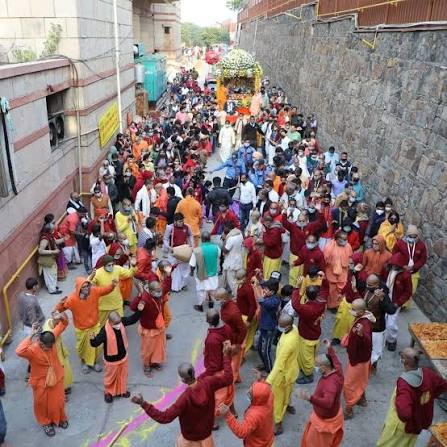
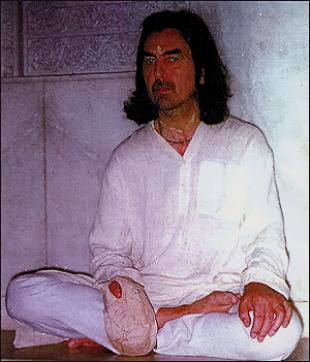
We have seen how, over the years, young white British people have come to India to follow Hin-duism, live in the ashrams, and follow Hindu culture because of its uniqueness and the lure of the holy Ganges River settling in places like Haridwar, Kashi and other places with religious connec-tions. They have learned how to play the sitar and harmonium and enjoy Indian culinary delights. The foundations of this were laid by the Hare Krishna Movement (ISKCON) and the Beatles pop group in Britain, who established bases in India.
We have not forgotten writers likethe British-blood Ruskin Bond, the legendary children’s writer who set up base in Mussoorie in the Himalayas. He is now in his 90s. The other name that comes to mind is the late Bollywood actor Tom Alter, who studied at Wynberg Allen School in Mussoorie. There are many white Britons like these two who refused to return to Britain after In-dia’s independence, choosing to stay in India. The famous BBC Radio and TV Broadcaster, the late Mark Tully, also lived in India until his death. He was fluent in Hindi like Bond and Altar.
Indian cities like New Delhi, Mumbai, Kolkata, still have small numbers of second and third gener-ation white British people living there whose parents refused to return to the United Kingdom, preferring to be Indian citizens.
Decolonisation, therefore, is not simply a historical event; it is an ongoing intellectual and cultural process. It requires questioning inherited assumptions, rejecting imposed hierarchies, and em-bracing a more inclusive understanding of identity. True freedom is achieved not only when politi-cal chains are broken but also when the mind is liberated from the structures of domination that colonialism leaves behind.
Perhaps the most enduring lesson comes not from political theory alone but from the values that generations before us quietly practised—patience, self-restraint, resilience, and compassion. These virtues remind us that a truly decolonised society is built not on anger or division but on empathy, critical reflection, and mutual respect. Only then can India fully realise the promise of both political independence and intellectual freedom.
Our writer:
Antara Roy Bhattacharjee is an established Indian journalist, author and educationist based in Kolkata. Her articles have been published in various publications.
Editing: SHAMLAL PURI, Senior Editor, London
Similar Posts by The Mt Kenya Times:
- Mt Kenya Times ePAPER October 10-11, 2026
- Cabinet clears path for pending bills payout in relief for Kenya’s struggling suppliers
- Karanja quits UDA and targets Nakuru governorship on Gachagua’s DCP ticket
- Gachagua’s team plants DCP flag in Kiambu as 2027 battle lines harden
- A moment of recognition for service in energy
About the Author