Advocating For Inclusivity: A Spotlight On The ‘Sign Language Rights ‘Initiative
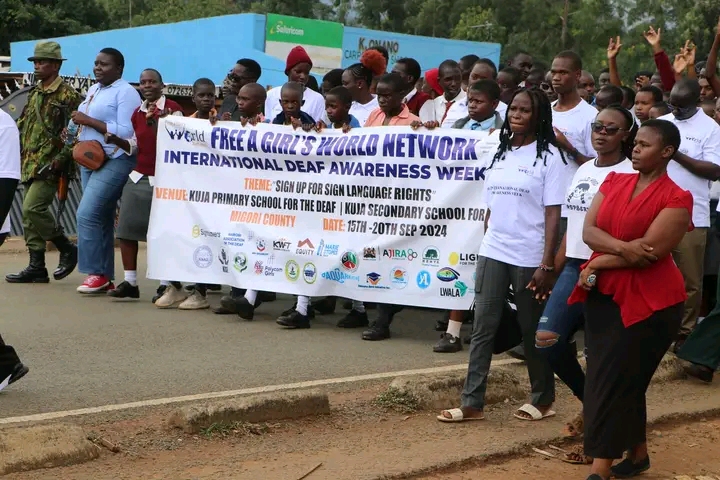
Sign Up for Sign Language Rights initiative, held at Kuja Primary School for the Deaf

By: Daisy Moraa
Worth Noting:
- Kuja Primary School for the Deaf, a long-standing beacon of hope for deaf children in the region, was an ideal venue for this event. The school has consistently worked to provide quality education while equipping its students with the skills necessary to succeed in a world that often overlooks their unique needs.
- Throughout the week-long initiative, the school became a center for various activities, including workshops, interactive sessions, and sign language lessons, all aimed at raising awareness about deaf culture.
- Participants had the opportunity to engage directly with deaf students, educators, and advocates, gaining insight into the challenges faced by the community and the critical role that sign language plays in fostering a more inclusive environment.
As the International Deaf Awareness Week came to a close, the spirit of inclusivity and advocacy echoed throughout Rongo town, Migori County. The successful “Sign Up for Sign Language Rights” initiative, held at Kuja Primary School for the Deaf, marked a significant moment in the efforts to raise awareness about sign language and ensure the deaf community’s rights in Kenya are recognized and respected.
Spearheaded by Free a Girls World Network in collaboration with Community-Based Inclusive Development (CBID) and other organizations, the initiative showcased a dynamic approach to fostering understanding and promoting a more inclusive society. The event aimed not only to empower the deaf community but also to bridge the communication gap between deaf individuals and the hearing community by advocating for the widespread learning and use of Kenyan Sign Language (KSL).
The ability to communicate is fundamental to human interaction, and for the deaf community, sign language is a vital tool that enables expression and full participation in everyday activities. However, a lack of awareness about sign language rights and the difficulties deaf individuals face in accessing essential services such as education, healthcare, and employment continue to be major barriers to inclusivity. This initiative addressed these challenges by uniting educators, volunteers, non-governmental organizations, and community members, all of whom were committed to emphasizing the importance of sign language in achieving equal opportunities for the deaf.
Kuja Primary School for the Deaf, a long-standing beacon of hope for deaf children in the region, was an ideal venue for this event. The school has consistently worked to provide quality education while equipping its students with the skills necessary to succeed in a world that often overlooks their unique needs. Throughout the week-long initiative, the school became a center for various activities, including workshops, interactive sessions, and sign language lessons, all aimed at raising awareness about deaf culture. Participants had the opportunity to engage directly with deaf students, educators, and advocates, gaining insight into the challenges faced by the community and the critical role that sign language plays in fostering a more inclusive environment.
One of the event’s standout features was the active involvement of Rongo University’s Rongo Writers Club. This group of passionate students, through their dedicated media team, played a vital role in covering the event and amplifying its message to a wider audience. Their presence added a professional touch to the event’s documentation, while also demonstrating the importance of youth involvement in advocacy efforts. By capturing stories of resilience and determination from the deaf community, conducting interviews, and sharing the lessons learned throughout the week, the Rongo Writers Club ensured that the message of inclusivity extended beyond the event’s borders, reaching people both locally and nationally.
The initiative was packed with meaningful activities, with one of the highlights being a series of workshops designed to teach participants the basics of Kenyan Sign Language. Led by skilled interpreters, these sessions offered educators, parents, and community members a hands-on opportunity to learn the language while also gaining a deeper appreciation for the patience, empathy, and understanding needed to communicate effectively with deaf individuals. In addition, panel discussions featuring deaf advocates allowed participants to hear personal stories and gain a more profound understanding of the everyday challenges the deaf community faces in accessing essential services.
Volunteers played a central role in ensuring the event’s success, demonstrating extraordinary dedication and commitment to the cause. From managing workshops to coordinating logistics, these individuals worked tirelessly to make sure the initiative ran smoothly. Their enthusiasm for advocating for deaf rights was inspiring, and their contributions were essential in creating a welcoming and productive environment for all involved.
The event also attracted a diverse range of participants, including students, local government officials, and representatives from various organizations. Their collective involvement demonstrated a growing recognition of the importance of advocating for the rights of the deaf community and fostering inclusivity within society. Together, these individuals helped create a space that not only celebrated sign language but also advocated for its widespread acceptance and use in everyday interactions.
While the “Sign Up for Sign Language Rights” initiative was undoubtedly a success, it also served as a reminder that the journey toward full inclusivity for the deaf community is ongoing. As the event concluded, there was a call to action for all participants to continue advocating for the rights of the deaf and to promote the use of sign language in their daily lives. This message of continued advocacy is essential, as true inclusivity will require sustained efforts from not only the deaf community but also from policymakers, educational institutions, and the general public.
Looking to the future, it is clear that initiatives like this must continue, with even greater support from government bodies, the private sector, and civil society organizations. The deaf community deserves equal access to opportunities, and the best way to achieve that goal is through advocacy, policy reform, and a societal shift toward embracing inclusivity.
In reflecting on the success of the “Sign Up for Sign Language Rights” initiative, it becomes clear that this event was more than just an awareness campaign. It was a celebration of the deaf community’s resilience and a powerful reminder of the importance of inclusivity. Thanks to the tireless efforts of the organizers, volunteers, and participants, the event succeeded in raising awareness, fostering greater understanding, and advocating for equal rights for the deaf.
As we move forward, the words of one of the deaf advocates from the event should resonate with us all: “Sign language is not just for the deaf; it is for everyone.” Let this message inspire us to continue advocating for the deaf community and to promote inclusivity in all aspects of society for years to come.
Similar Posts by The Mt Kenya Times:
- Dr. Ekrah Ndung’u wins TVET advocacy award after 12 years
- Mt Kenya Times ePAPER October 17-18, 2026
- Ruto bets billions on Kerio Valley — with one eye on 2027
- Ruto’s health ministry kills Murang’a’s digital hospitals
- Kenya bets on Mount Kenya to drive a billion-shilling tourism revival
About the Author