Alisher Navoi – The Sovereign Of Words And The Interpreter Of Hearts
Iroda Rakhimova Islombek
By: Iroda Rakhimova Islombek
Throughout history, thousands of poets, scholars, and statesmen have made their mark. Yet only a few of them live on in the hearts of people for centuries. Generations change, eras come and go, but the spiritual treasures left behind by certain figures only grow brighter with time. One such eternal personality is Alisher Navoiy – the sovereign of words and the interpreter of souls.
For the Uzbek people, Alisher Navoiy is not merely a poet – he is a symbol of the nation’s spirit, the embodiment of cultural identity, and the pride of our language. He was a statesman, a patriot, a promoter of enlightenment, and a patron of arts and science. His life was a true example of devotion to justice and morality. It is rare in history to find an individual who leaves a legacy across such a broad spectrum of fields – literature, politics, philosophy, architecture, charity, and nation-building. Navoiy was one of those rare, multi-talented figures.
While much of the medieval Islamic world was steeped in Persian literature, Navoiy took a bold path: he chose to write primarily in Chagatai Turkic, the literary ancestor of modern Uzbek. Through his efforts, this language evolved from a spoken vernacular into a refined literary medium.
Navoiy performed miracles with language. He expressed the beauty of words and the depth of meaning in his ghazals, epics, masnavis, and prose, with such subtlety and eloquence that his works remain captivating even today. He is rightly called the “King of the Realm of Words,” for through language he reached hearts and touched the deepest layers of the human spirit.
He wrote about love – not merely earthly passion, but divine love, a journey toward spiritual perfection. He wrote about pain – not just personal sorrow, but the collective yearning for justice, dignity, and unity. Navoiy’s poetry is a journey inward – a map of the human soul drawn in elegant metaphors and mystic symbols. Love, in his verses, is never superficial; it is transformative, painful as well as purifying.
Beyond poetry, Navoiy was an influential statesman under Sultan Husayn Bayqara. He built madrasas (schools), libraries, hospitals, bridges and caravanserais, showing his deep concern for social justice, education, and public welfare. In his prose masterpiece “Mahbub ul-qulub” (The Beloved of Hearts), he critiques the corruption of rulers and emphasizes wisdom, humility, and fairness. In this, he becomes not only the voice of poetry, but also the conscience of society.
Navoiy was not only a poet of his time, he is also a poet for our time. The ideas he promoted – national unity, moral purity, intellectual enlightenment, and service to the people – are as relevant today as they were five centuries ago. For the younger generation, his literary and spiritual legacy is an invaluable guide. In his “Khamsa” (Five Epics), he teaches life lessons through each character. In “Mahbub ul-qulub” (The Beloved of Hearts), he depicts the conditions of ordinary people and calls on rulers to be just and wise.
Now we are living in an age of digital noise. Yet our souls still yearn for peace, for depth, for meaning. In such times, turning to Navoiy means returning to our essence – a kind of spiritual purification. Navoiy stands for language, nationhood, and the soul of a people. To read him is to converse with our own hearts. For a global reader, Navoiy offers more than literary pleasure – he offers a window into the heart of Central Asia, a culture rich in spirit, wisdom, and compassion.
Today, statues of Navoiy stand not only in Uzbekistan, but in cities like Moscow, Tokyo, and Washington. His words are still recited by children, scholars, and spiritual seekers alike. His voice – melodious, wise, unbroken – continues to inspire. Therefore, let us not confine Navoiy to textbooks. Let us carry him in our lives, hearts, and thoughts. For truly, Navoiy is the heart of the Uzbek nation!!!
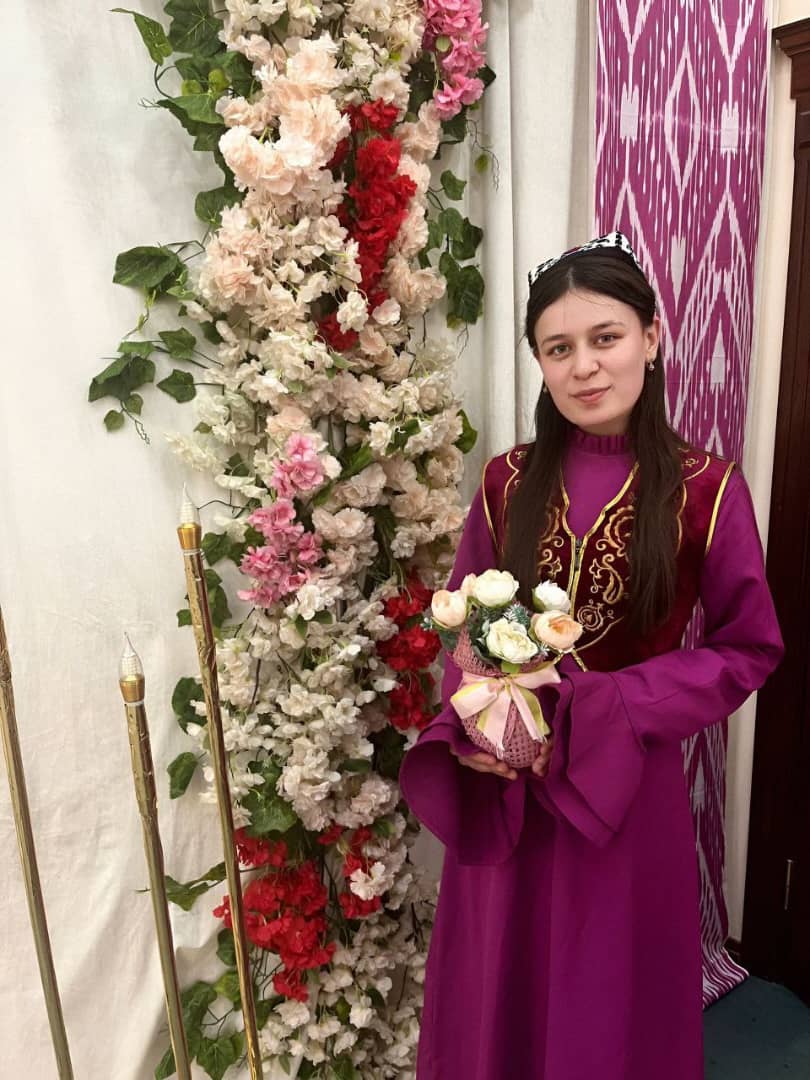
Iroda Rakhimova Islombek qizi was born on August 8, 2005, in the city of Khiva, located in the Khorezm region of Uzbekistan. She graduated from School No. 11 in Khiva with a gold medal and was admitted to Urgench State University named after Abu Rayhan Beruni on the basis of a state scholarship. Currently, she is a second-year student at the Faculty of Philology and Arts at the same university. Her poems, short stories, and articles have been published in both national and international journals. She is an active member of the “Mushaira” literary club established at the university and continues her creative work through this platform.
Similar Posts by The Mt Kenya Times:
- Diaspora Times Global Oct 17 – Oct 23, 2026
- Is social media a blessing or a curse for university students?
- Light at last: How electricity is reshaping Nandi and Uasin Gishu
- The triple squeeze: how EPRA’s fuel price hike is reshaping the survival equation for the common mwananchi
- Zelenskyy accuses Trump of rewarding Putin as Pope pleads for peace from a hospital bed
About the Author