Angola Oil & Gas 2026: Time for Africa to write its own energy equation
 The Mt Kenya Times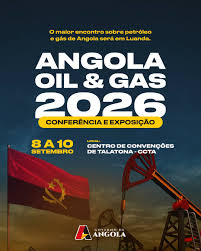
By Silas Mwaudasheni Nande
A Conference at a Crossroads
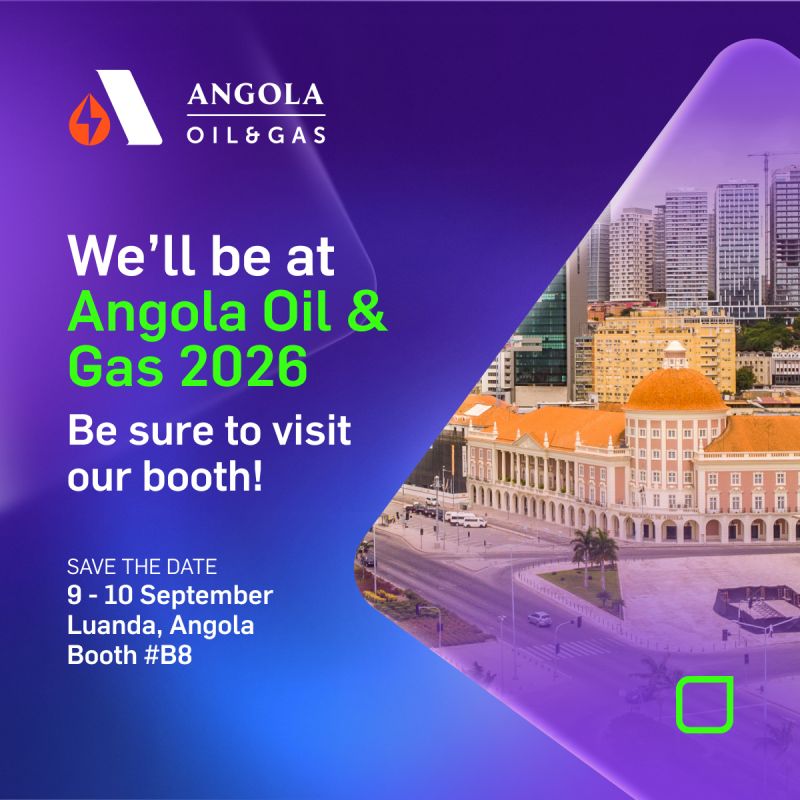
On 9 and 10 September 2026, Luanda will host the Angola Oil & Gas Conference, staged under the patronage of President João Manuel Gonçalves Lourenço. The organisers, Energy Capital and Power, describe the gathering as Angola’s premier investment platform, a stage on which the country intends to shape its energy future for the next fifty years. More than sixty billion dollars in upcoming projects sit on the table. Ministers, chief executives, investors and technical specialists from more than forty countries are expected to attend.
The scale of the event is not in dispute. What deserves scrutiny is the shape of the room. At the 2025 edition, 2,931 delegates gathered, backed by 604 participating companies, 80 sponsors and 105 exhibitors, and 8 billion dollars in investments were announced. Diamond, platinum and gold sponsorship tiers were dominated by Chevron, TotalEnergies, ExxonMobil, bp and Azule Energy, alongside Sonangol, the national oil company of Angola. Namibia, the Democratic Republic of Congo, Equatorial Guinea, Nigeria, Sierra Leone and the Republic of Congo appeared among the leading countries in attendance, yet the commercial weight of the conference still rests with capital based in Houston, Paris, London and The Hague.
This is not an accusation. It is an observation about where the money, the technology and the risk appetite currently sit. The deeper question, and the one this article sets out to answer, is whether Angola and its neighbours can convert that observation into a strategy, rather than accept it as a permanent condition.
The Numbers Behind the Handshakes
Angola holds an estimated 9 billion barrels of oil reserves and 11 trillion cubic feet of gas reserves, according to figures published in the Angola Oil and Gas 2026 brochure. Daily oil production stood at 1.06 million barrels in October 2025, drawn mainly from Blocks 17, 15, 32 and 0, fields that have anchored the economy of Angola since 1969. Twenty three investment opportunities are on offer, carrying a potential of six billion barrels, spread across onshore blocks, permanent offer acreage and limited tender rounds.
These figures describe geological wealth. They say nothing about who captures the value once the oil leaves Angolan waters. The World Bank places oil at roughly twenty per cent of gross domestic product, sixty per cent of government tax revenue and ninety five per cent of total exports. The International Monetary Fund estimates that eighty three per cent of the broader economy of Angola moves in step with the oil price, once indirect channels such as government spending and credit are included. Growth accelerates when Brent rises and stalls when it falls. Few countries anywhere illustrate the textbook definition of a single commodity economy as starkly as Angola does.
That dependence has not translated into shared prosperity. The African Development Bank recorded a poverty rate of 40.6 per cent in Angola in 2025, a Gini coefficient of 0.51, meaning inequality among the highest in the world, and youth unemployment of 43.3 per cent. Angola ranked 148th of 193 countries on the 2025 Human Development Index. Informality touched 78.6 per cent of the workforce. Real income per person remained twenty four per cent below its 2014 level by 2025, even as the country pumped, exported and celebrated. This is the paradox that any honest account of Angola Oil & Gas 2026 must confront before it discusses pipelines, licensing rounds or gala dinners.
The Refining Trap
If Angola exported crude and imported nothing in return, the arithmetic of dependence would still be troubling. The reality is worse. Africa holds between seven and eight per cent of proven global crude reserves, yet its refining capacity has stagnated near 3.5 to 4 million barrels per day, with utilisation below fifty per cent in many countries. The continent spends an estimated sixty to ninety billion dollars a year importing refined petroleum products, even as it exports crude worth several multiples of that figure. Angola typifies the pattern. Despite producing over a million barrels a day, the country has relied for decades on a single ageing refinery, and imports of refined petroleum remain a persistent line item on its import bill.
There are signs of correction. The Cabinda Oil Refinery, developed by Gemcorp, began phase one operations in September 2025 with a capacity of 30,000 barrels per day, with a second phase planned to double that figure. The Lobito Refinery, a planned 200,000 barrel per day facility and the largest in the country upon completion, targets 2027, though Angola is still seeking 4.8 billion dollars to close its financing gap. Across the continent, Nigeria’s Dangote Refinery, now operating near its full 650,000 barrel per day capacity, has begun to dent West African import dependence and to supply fuel as far afield as Europe and the United States. These are the first real steps toward what the African Refiners and Distributors Association calls energy security built at home, rather than security borrowed from elsewhere.
The scale of what remains undone is sobering. Net African imports of refined products are projected by the African Energy Chamber to rise from roughly two million barrels a day today to 3.4 million barrels a day by 2050, driven by demand growth that domestic refining is not yet positioned to absorb. A continent that supplies the world with crude and buys back its own fuel at a premium is not merely inefficient. It is forfeiting the largest single source of value addition available to it.
The Ghost in the Room: Resources, Opacity and Conflict
Any Angolan writing about oil in 2026 writes in the shadow of a war that lasted, with brief interruptions, from 1975 to 2002. Scholarship on that conflict, published in the Journal of Peace Research and elsewhere, has traced how access to oil revenue sustained the government of the Popular Movement for the Liberation of Angola, while access to diamond revenue sustained the National Union for the Total Independence of Angola, the rebel movement known as UNITA. Mineral wealth did not merely fund the fighting. Researchers have found that it shaped the tempo and geography of military operations for almost three decades.
Human Rights Watch and the campaign group Global Witness documented, in reports published from 1999 onward, that hundreds of millions of dollars in Sonangol signing bonuses and oil-backed loans passed through opaque channels during and after the war, with limited disclosure to the Angolan public. The Angolagate affair, a French arms-for-oil scandal that led to a Paris trial concluding in 2009, showed that the opacity around Angolan oil revenue was not a purely domestic failing. It implicated arms dealers, intermediaries and political figures in France as well as in Angola. Cabinda, the enclave that supplies roughly half of Angolan oil output, has hosted a low-level separatist insurgency for decades, one in which the enclave’s own communities have long argued that oil wealth extracted from their coastline has produced limited local benefit.
None of this history proves that the government of the United States or the governments of Europe conspired to prolong the Angolan civil war for commercial gain, and a responsible article should not claim that it does. What the documented record does show is that revenue opacity, whichever government or company benefits from it, is the mechanism through which resource wealth has repeatedly converted into conflict financing, elite enrichment and weakened state legitimacy, in Angola and across the African continent. Since 2004, Sonangol has published more revenue data than it once did, a change that Human Rights Watch itself described as an important step forward. The lesson of this history for Angola Oil & Gas 2026 is not that foreign investors should be excluded. It is that transparency over who pays what, and where that money goes once it has reached the state, remains the single most important safeguard against the past repeating itself, regardless of the nationality of the company writing the cheque.
Who Sits at the Table
Return to the sponsor list of Angola Oil & Gas. The official partners are the Government of Angola, the National Agency for Petroleum, Gas and Biofuels, the Regulatory Institute of Petroleum Derivatives and Sonangol. The diamond sponsor is Sonangol itself. But the platinum tier, the layer that funds the largest share of the conference and commands the most prominent branding, belongs to Chevron, TotalEnergies, Azule Energy and ExxonMobil, joined by the African Energy Chamber as an official partner. Gold sponsors include bp, Trafigura and Vitol. These are not African companies. They are, respectively, American, French, British and Swiss trading houses and majors, each with balance sheets and technical capabilities that African national oil companies, Sonangol included, have not yet matched at scale.
None of this makes their presence illegitimate. Angola needs deepwater engineering, seismic technology and refining expertise that took these firms a century to build. What it should trouble any observer is the asymmetry in who sets the terms. Licensing rounds, production sharing agreements and technology transfer clauses are negotiated between a national oil company with limited fiscal leverage and a small number of supermajors with global portfolios and the option to walk away. That imbalance is precisely why Angola and its counterparts have historically accepted contract terms that favour the capital that arrives first, rather than the resource owner that stays behind.
The composition of high-profile speakers at Angola Oil & Gas tells a similar story, though a more balanced one than the sponsor list. Alongside President Lourenço and Angolan ministers, the programme features Farid Ghezali, Secretary General of the African Petroleum Producers Organization, Omar Farouk Ibrahim, Secretary General of the Organization of Petroleum Exporting Countries counterpart for Africa, NJ Ayuk of the African Energy Chamber, and Anibor Kragha of the African Refiners and Distributors Association. Deputy Minister Kornelia Shilunga of Namibia and Minister Aimé Sakombi Molendo of the Democratic Republic of Congo also feature. These figures represent the emerging African institutional architecture. Their presence is proof that the debate this article raises is already underway inside the industry itself, not only outside it.
 The Quiet Shift: Africans Organising for Themselves
The African Petroleum Producers Organization, founded in Lagos in 1987 partly to reduce dependence on Western technology and Western markets for oil revenue, has spent much of the past four decades as a forum for policy coordination rather than commercial action. That is changing. Under Secretary General Farid Ghezali, the organisation named local content its strategic priority for 2026. Its February 2026 editorial noted that Africa still imports seventy per cent of the goods and services required for its energy projects, despite Angola having reached twenty five per cent local content and the Republic of Congo having cut gas flaring by fifteen per cent. The organisation adopted a Local Content Framework in Nairobi in March 2026, alongside mandatory audits of international oil companies and a one billion dollar seed fund earmarked for African small and medium enterprises.
The most consequential development is financial. The African Energy Bank, spearheaded jointly by the African Petroleum Producers Organization and the African Export-Import Bank, is scheduled to reach an initial capitalisation of five billion dollars, rising toward a first phase target of ten billion dollars. Its first tranche of lending is expected to concentrate on Angola, Nigeria and Libya, the three largest oil producing nations on the continent, with priority given to gas to power projects, refining and regional pipelines. Headquartered in Nigeria, the bank operates under what its founders call a Mutual Assured Development framework, an explicit attempt to replace dependence on the World Bank, the International Monetary Fund and Western commercial lenders with capital raised, governed and directed by Africans.
This matters more than any single pipeline or licensing round, because financing has always been the point at which sovereignty over resources quietly changes hands. A government that must borrow abroad to develop a field, refine its own crude or build a export terminal cedes negotiating power the moment the loan is signed, regardless of what the constitution says about ownership of the subsoil. An African bank, capitalised by African oil producers and lending on terms set in Lagos or Cairo rather than Washington or London, is the closest instrument yet built to the balanced equation this article calls for.
Agenda 2063 and the Unfinished Architecture
The African Union adopted Agenda 2063, its fifty-year development blueprint, in 2015. Among its fifteen flagship projects sit the African Continental Free Trade Area, projected to lift intra-African trade by more than fifty per cent, and a continental commodities strategy explicitly designed to move Africa from raw material supplier to a continent that processes its own resources before selling them onward. The Agenda’s energy chapter calls for harnessing African energy resources to serve African households, businesses and industries first, through integrated national and regional power pools and grids.
Much of this remains aspiration rather than infrastructure. The African Single Electricity Market, intended to become the largest electricity market in the world by 2040, is still assembling its legal and technical foundations. The Grand Inga hydropower project in the Democratic Republic of Congo, one of the largest potential renewable energy schemes anywhere, has moved slowly for a generation. Where the European Union has stepped in as co-funder of continental power planning through its Global Gateway strategy, it has done so on terms that still position Brussels, not Addis Ababa, as the source of capital and technical standards.
Oil and gas, unlike electricity, generates immediate cash. That is precisely why the sector offers the fastest available proving ground for the principle that Agenda 2063 sets out on paper. If Angola, Nigeria, the Republic of Congo, Namibia and the Democratic Republic of Congo can demonstrate that African capital, African refining and African trading arrangements can move a barrel of oil from wellhead to petrol pump without routing value through Rotterdam or Houston, the credibility of the wider integration agenda improves immeasurably. If they cannot, sceptics of Agenda 2063 will have a ready example of good intentions failing to survive contact with commercial reality.
Angola as a Regional Anchor
Angola already possesses more of the diplomatic groundwork for regional energy cooperation than is commonly acknowledged. Since 2019, deals signed at successive editions of Angola Oil & Gas have included a memorandum of understanding on oil and gas cooperation with Namibia, agreed in 2022, and cross-border terms with the Democratic Republic of Congo covering Block 14, concluded in 2024 alongside a finance cooperation agreement. The National Agency for Petroleum, Gas and Biofuels has also committed to joint sector development with Sierra Leone and strengthened cooperation with Equatorial Guinea. Namibia’s own frontier discoveries in the Orange Basin, still years from production, give these arrangements long-term relevance, since Windhoek will eventually need precisely the refining, export and financing infrastructure that Angola is now building.
None of these agreements yet amount to a genuine regional value chain. Namibian crude, when it flows, could in principle be refined at Lobito rather than shipped to Rotterdam. Congolese gas could feed Angolan liquefied natural gas trains rather than flare uselessly at the wellhead. Sierra Leonean and Congolese engineers could train at Angolan facilities rather than at facilities in Aberdeen or Houston. The Angola Oil & Gas conference, precisely because it draws ministers and national oil company leadership from across the continent into one room in Luanda twice a year, is a natural venue at which such commitments could be converted from memoranda into contracts. The Trans-Kalahari and Lobito Corridors, already under construction to move minerals from the interior of the continent to Atlantic ports, suggest that African governments are capable of building shared infrastructure when the incentive is strong enough. Oil and gas deserve the same ambition.
Angola is also positioned, through the Southern African Development Community and its bilateral ties, to lead by example rather than merely by declaration. A regional gas market linking Angola, Namibia, the Democratic Republic of Congo and the Republic of Congo would allow associated gas that is presently flared, a wasteful and polluting practice that the Republic of Congo has already begun to reduce, to be gathered, processed and sold within the region instead. Angola LNG, operating since 2012 with a capacity of 5.2 million tonnes a year, has the technical experience to anchor such a market. A regional approach would also strengthen the negotiating hand of every government involved when the next international licensing round opens, since no single African state, Angola included, currently commands the leverage that a coordinated regional bloc would carry into talks with a supermajor.
Why Sponsor and Exhibit
The organisers of Angola Oil & Gas market five reasons for companies to sponsor and exhibit: network access, brand visibility, business growth, deal-making potential and the chance to showcase innovation. Each of these reasons is written from the standpoint of the investor deciding whether Angola is worth the trip. Fewer conference materials are written from the standpoint of the Angolan communities deciding whether the investor is worth the concession. A balanced equation requires that second perspective to carry equal weight on the same stage, not as an afterthought delivered in a corporate social responsibility session, but as a condition attached to every production sharing agreement signed at the event.
The Counter-Argument: Why Foreign Capital Still Matters
A fair analysis must resist the temptation to romanticise self-reliance. The Kaombo development at Block 32, an ultra deepwater project with 658 million barrels of reserves, required two floating production vessels and technology that no African firm currently possesses independently. The Agogo Integrated West Hub, which reached first production in July 2025 only twenty nine months after its final investment decision, depended on international engineering, procurement and construction capacity assembled across several continents. Angola’s own Cabinda Refinery was developed by Gemcorp, a firm with international, not purely Angolan, ownership.
Deepwater exploration, liquefied natural gas trains and large scale refining are among the most capital intensive and technically demanding activities in modern industry. International oil companies bring balance sheets capable of absorbing multi-billion dollar losses on a single dry well, decades of subsea engineering experience and access to global markets that African national oil companies, however well governed, cannot replicate overnight. China, the United Arab Emirates, Saudi Arabia and other Gulf and Asian investors have also entered African energy markets in recent years, offering a genuine alternative to purely American or European capital, though their arrangements deserve the same scrutiny over local content and value retention that this article applies to Western majors.
The honest position, then, is not that Angola should expel foreign capital from Angola Oil & Gas or from its licensing rounds. It is that foreign capital should operate within terms set predominantly by Angola and its African partners, rather than terms imported wholesale from London or Houston. Norway, a country frequently cited by African policymakers as a model, did not exclude foreign operators from the North Sea. It built Equinor, a sovereign wealth fund now worth more than one and a half trillion dollars, and a tax and licensing regime that ensured the greater share of the rent stayed in Norway. Angola’s task is not to reject partnership. It is to negotiate partnership from a position where the African Energy Bank, a functioning refining sector and coordinated regional policy give it genuine leverage at the table.
From Rhetoric to Rents: What Balance Actually Requires
A balanced oil and gas equation, the kind this article’s opening question calls for, rests on four measurable pillars rather than slogans.
The first is financing. The African Energy Bank must move beyond its announced capitalisation and begin disbursing loans on terms that African governments, not foreign creditors, can shape. Ten billion dollars is a meaningful start against a continent that spends sixty to ninety billion dollars a year on fuel imports alone, but it remains a fraction of what full downstream self-sufficiency will require.
The second is local content, enforced rather than merely legislated. The African Petroleum Producers Organization’s mandatory audits of international oil companies, agreed in Nairobi in March 2026, offer a mechanism. Angola’s own twenty five per cent local content figure should be treated as a floor to build upon, not a ceiling to defend, with specific targets for Angolan engineering firms, Angolan shipping companies and Angolan financial institutions written into every future licensing round.
The third is refining and regional trade. Cabinda, Lobito and comparable projects across Nigeria, Ghana and Senegal must be finished on schedule and linked, through the African Continental Free Trade Area, into a genuine intra-African fuel market, so that a tanker leaving Luanda increasingly serves Windhoek or Kinshasa rather than only Rotterdam or Houston.
The fourth is transparency and the direction of rents. Oil wealth that never reaches ordinary citizens cannot claim to serve Africa merely because an African flag flies over the wellhead. Angola’s Kwenda cash transfer programme and its increased allocation to education, though still below the sub-Saharan African average as a share of gross domestic product according to International Monetary Fund analysis, point toward the correct destination for oil revenue. A poverty rate above forty per cent, recorded in a country producing over a million barrels of oil daily, is not a statistic that any national oil company, foreign major or conference sponsor can be permitted to treat as background noise.
None of these four pillars requires Angola to sever ties with the United States, the European Union or any other partner. They require Angola, the African Union and organisations such as the African Petroleum Producers Organization to insist that partnership is negotiated among relative equals, backed by African capital, African refining capacity and African regional coordination, rather than extended as a favour from Washington or Brussels to a continent still treated, too often, as a supplier of raw material rather than a shaper of its own energy destiny.
Conclusion: The Next Fifty Years
The organisers of Angola Oil & Gas have chosen an ambitious slogan for 2026: investing in the next fifty years of Angola. Fifty years ago, in 1976, Angola had only just emerged from a war of independence and was entering a still longer civil conflict, one in which control over oil revenue from Cabinda has financed successive parties to the fighting for decades. That history is precisely why the question posed at the start of this article carries weight. A continent that has already watched natural resources fund conflict, entrench inequality and enrich distant shareholders cannot afford to repeat the pattern for another fifty years simply because the conference halls are grander and the sponsor logos more polished.
Angola Oil & Gas 2026 will bring together the ingredients of a different outcome: a functioning national oil company in Sonangol, an emerging regional financing institution in the African Energy Bank, a continental local content mandate from the African Petroleum Producers Organization, new refining capacity at Cabinda and Lobito, and diplomatic groundwork already laid with Namibia, the Democratic Republic of Congo, the Republic of Congo and Sierra Leone. Whether those ingredients combine into a balanced equation, one in which African governments, African capital and African citizens capture a fair share of African oil and gas wealth, will not be decided by any single conference. It will be decided by whether the agreements signed on stage in Luanda this September are still being honoured, funded and audited five years from now.
The world’s investors, Americans and Europeans among them, will keep arriving in Luanda so long as Angola’s reserves remain among the most attractive in Africa. That is not, in itself, a problem to be solved. The problem worth solving is whether Angola and its neighbours arrive at the same table with equivalent financial strength, equivalent technical capacity and an equivalent seat in deciding the rules. Fifty years after independence, and on the eve of a conference that claims to shape the next fifty, that remains the unfinished business of African oil and gas.
Similar Posts by The Mt Kenya Times:
- Mt Kenya Times ePAPER October 1, 2026
- Museveni backs Lamu but keeps Uganda’s money at home
- Sifuna’s party wins its name — and Kenya’s opposition race begins in earnest
- Lamu’s $16B gamble: Africa’s biggest refinery divides the region
- Ruto launches KSh2.2 trillion Lamu refinery in East Africa’s biggest energy bet
About the Author