Spare the rod, spoil the child

By Daseta Gray, M.A.ed
VP Sabree Education Services Gambia
Edited by: Nyasha Franklin
Worth Noting:
- Guidance is the best way to help children to develop discipline during the early years .You may be asking what I mean by “guidance”. Guidance helps young children to move from one developmental stage to the next while learning what the socially acceptable social rules for his society are.
- Children will achieve this by guidance and discipline from their caregivers. According to Alice S.Honig and Donna S. Wittmer (1987) guidance takes time to absorb and for children to understand what you are trying to teach .Guidance and caring works together .When you give positive guidance it leads to discipline.
- All children are different and as caregivers we need to adjust to their temperament. Toddlers have limited understanding about obeying rules therefore you need to guide them in a gentle way that is caring.
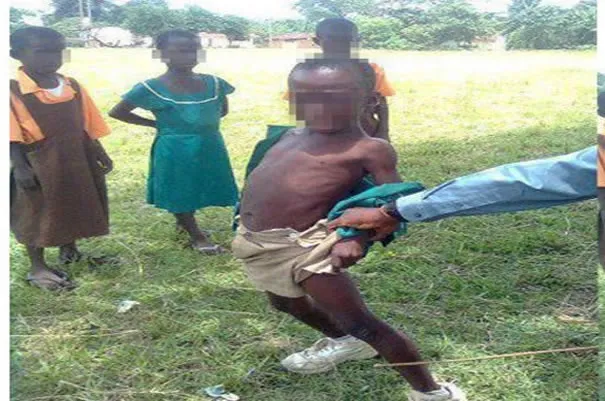
Growing up in the Caribbean when you heard the word discipline you knew that you were going to get a beating/spanking .The favorite phrase for many adults was “don’t spare the rod and spoil the child”. Does beating really help children to become disciplined? Today many places outlaw beating children both at home and at school. However, this practice continuous in some places in our global communities although “corporal punishment” is outlawed. In this article I will discuss Guidance, discipline and punishment and how they impact children for life.
I recently saw a video with a prominent Jamaican expressing his concerns about the violence that children learn when they get “beaten”. He feels that children are not learning how to resolve conflicts .I do agree with this thought, however we are not looking at the root of these behaviors and how to help parents to learn new skills for their parenting tool box.
The architecture of the brain grows the most during the first 3 years of life. These years are critical for learning the basic social skills that are needed before you get to kindergarten. During these years the caregiver can be intentional. Teaching social skills begins during the infant/toddler years. Self-regulation is the most important skill for the young child to have as this is a critical life skill that is needed before this young children get to kindergarten .Self-regulation is defined as a child[‘s ability to gain control and manage their powerful emotions and maintain focus and emotion. Linda Groves Gillispie and Nancy L. Seibal (2006) this ability is one of the major developments in infant/toddler development .Once this skill is mastered it will go across all areas of behavior. During the infant /toddler years the caregivers serve as the social mirror for the young brain.
When the architecture of the brain is being developed it is important to have a routine for the young brain. This consistency will help the brain to cement routines and begin to learn socially acceptable behaviors including one of the most important social skills ,self-regulation .When young children are able to predict what is next it makes transitions smoother and acceptable .
Guidance is the best way to help children to develop discipline during the early years .You may be asking what I mean by “guidance”. Guidance helps young children to move from one developmental stage to the next while learning what the socially acceptable social rules for his society are. Children will achieve this by guidance and discipline from their caregivers. According to Alice S.Honig and Donna S. Wittmer (1987) guidance takes time to absorb and for children to understand what you are trying to teach .Guidance and caring works together .When you give positive guidance it leads to discipline. All children are different and as caregivers we need to adjust to their temperament .Toddlers have limited understanding about obeying rules therefore you need to guide them in a gentle way that is caring.
Discipline teaches cooperation and helps children to comply with what is requested of them. Research shows that the brain recalls details rather than just “no” . It is very important that you explain why the toddler should comply with your request .Discipline focuses on the rule that is needs to be learned, not the unacceptable behavior of the child. Do not yell at the child this will cause anxiety and a feeling of rejection ,positive discipline supports the child’s self-confidence .The objective is to have the child follow rules without you being there all the time to enforce the them. This is the beginning of allowing the child to develop self-regulation, or inner controls that will be needed for the rest of the child’s life. Positive guidance helps to teach trust in self and children begin to learn confidence in their environment.
Physical punishment is not is not good research shows that it may lead to defiance, sneaking around. For example: when a child is hit for touching a hot stove and you hit the child but you have not explained why this child should not touch the stove. The child remains curious, wanting to touch it when you are out of sight.
According to Paul c. Hollinger (2015) physical punishment is a serious public health problem throughout the world, and it profoundly affects the mental health of children and the societies in which we live. Research also suggests that physical punishment is associated with increases in delinquency, antisocial behavior, and aggression in children, and decreases in the quality of the parent-child relationship, children’s mental health, and children’s capacity to internalize socially acceptable behavior. Adults who have been subjected to physical punishment as children are more likely to abuse their own child or spouse and to manifest criminal behavior (Gershoff, 2008). According to The Word Health organization physical punishment can have negative outcomes for children.
- Evidence shows corporal punishment increases children’s behavioral problems over time and has no positive outcomes.
- All corporal punishment, however mild or light, carries an inbuilt risk of escalation. Studies suggest that parents who used corporal punishment are at heightened risk of perpetrating severe maltreatment.
- Corporal punishment is linked to a range of negative outcomes for children across countries and cultures, including physical and mental ill-health, impaired cognitive and socio-emotional development, poor educational outcomes, increased aggression and perpetration of violence.
- The elimination of violence against children is called for in several targets of the 2030 Agenda for Sustainable Development but most explicitly in Target 16.2: “end abuse, exploitation, trafficking and all forms of violence against and torture of children”.
It is time that we stop hitting children in order to get them to listen. I got a lot of beatings and I can remember the anger, fear and hatred that I felt .There was no one to talk with about the pain that I was enduring inside.
Sonia s. Wittmer(1909) developed what she sees as a problem with physical punishment . I will share a few:
Physical punishment does not teach does not teach children about constructive ways to resolve conflicts.
Physical punishment will usually increase rather than decrease
The physical punishment can also result in low self-esteem for some children.
Physical punishment also impacts children’s learning.
Guidance is one of the major techniques in teaching socially acceptable behaviors to young children in order for them to function in their society. Here are a few ideas that you can use with guidance that will lead to discipline: offer choices to young children, speak firmly about hurting, have a routine, be consistent, and give the child an opportunity to speak while you listen. Have children create solutions when there is a conflict. All of these strategies help to build the frontal lobe in the brain that is responsible for executive function.
Parenting in the 21st century
Africans across the globe must use some of the latest research on brain development to incorporate into what we are already doing. Utilizing research on brain development will allow us to be more intentional about guiding our children towards acceptable social skills for our world. Proper guidance teaches discipline .Physical punishment “beating” teaches violence and creates anti-social behaviors in children. As we move along this century let us think about adding new tools to our parenting tool box. Also treat our children like the royalties that they are.
References
Linda Groves Gillespie and Nancy L.Seibal(2006)
Self- Regulation a Cornerstone of Early Childhood Development
A Guide To Social Emotional Growth and Socialization
Developed by California Department of Education(1990)
(PDF) Socialization, guidance, and discipline with infants and toddlers (researchgate.net)
ps://www.who.int/news-room/fact-sheets/detail/corporal-punishment-and-health#
Similar Posts by The Mt Kenya Times:
- Mt Kenya Times ePAPER October 23, 2026
- Ruto’s parting COMESA call: Remove the barriers, honour the commitments
- Direct hospital access to KEMSA cuts drug delays, says PS
- Africa can’t wait: Continent seeks $1 trillion for climate adaptation
- Ruto passes the baton as Africa’s trade bloc faces a fragmenting world
About the Author