The Mt Kenya Times
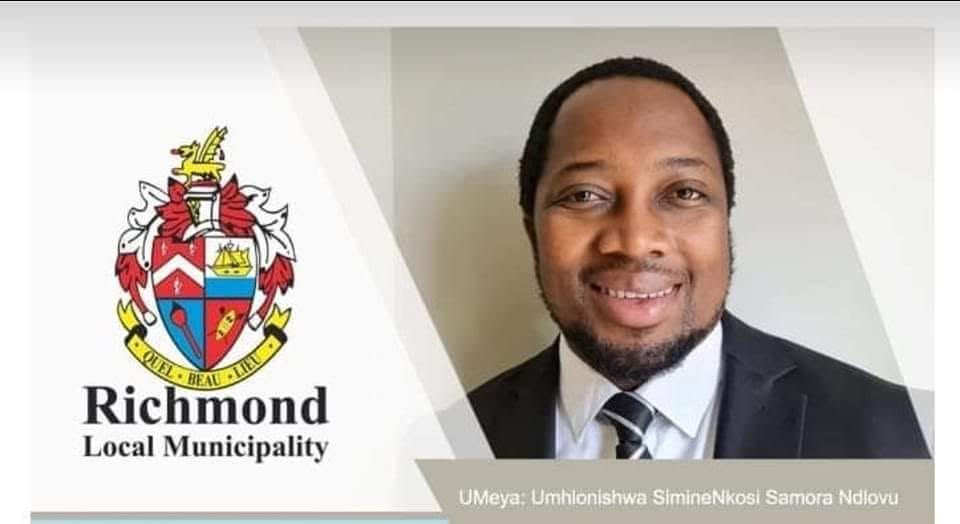
Samora Ndlovu, a former mayor of Richmond
Political assassinations are rising in South Africa before the local elections of 4 November 2026. Members of the African National Congress have suffered the heaviest toll. The motive is rarely ideology. It is access to power, money and patronage, a pattern shared with Mexico, Brazil, Colombia and the Philippines.
By Silas Mwaudasheni Nande
Introduction
On the evening of 13 October 2026, mourners walked through Katlehong, east of Johannesburg, singing in tribute to a slain local leader. Jeanette Magugu, a figure in the African National Congress (ANC) and its youth league in Ekurhuleni, had been shot dead earlier that month. As the procession moved along the street, a gunman opened fire. Four people died. According to Daily Maverick, the first two victims were ANC Youth League members aged 21 and 23.
Two days later, gunmen in a vehicle ambushed ANC canvassers in Umgababa, about 35 kilometres south of Durban. Police reported that a man and a woman died at the scene. A week before that, Samora Ndlovu, a former mayor of Richmond, survived a shooting on the R56 near Pietermaritzburg. Ndlovu sits on the ANC regional task team in KwaZulu-Natal. He was driving alone when another vehicle blocked his path and a gunman fired several shots.
These attacks did not occur in isolation. They are the latest entries in a ledger of political murder that has grown steadily before the local government elections of 4 November 2026. On 17 October, The Witness, a Pietermaritzburg daily, reported that politically motivated killings were surging, with KwaZulu-Natal again at the centre.
This article examines that surge. It asks three questions. Who is dying? Why are members of the ANC, the largest party in the national coalition government, so heavily represented among the dead? And is South Africa unique, or part of a wider pattern in which local office has become a prize worth killing for?
The Scale of the Problem
The most detailed public data come from the Global Initiative Against Transnational Organized Crime (GI-TOC), a research organisation based in Geneva. Its October 2026 report, Ballots and Bullets, written by Julian Rademeyer, records 45 political attacks between 1 January and 30 September 2026. At least 43 people were killed.
The 45 attacks comprise 37 incidents in which people died and six attempted assassinations in which the target survived. Two further plots were stopped before any shot was fired.
The figures are stark when placed against history. The GI-TOC recorded 23 political killings in the same nine months of 2025. Within three quarters, 2026 has already surpassed the full year political totals for 2021 (30), 2024 (33) and 2025 (31). It also exceeds the previous annual peaks since 2015, namely 2019 (42) and 2022 (40). The report warns that the most dangerous months still lie ahead.
Geography matters. KwaZulu-Natal recorded 16 of the 45 political attacks. Gauteng followed with 10. The Eastern Cape, North West and the Western Cape recorded five each, Mpumalanga two and Limpopo one. The spread into the Western Cape, North West and Limpopo is new. Political killings have historically been rare in those provinces.
Timing matters too. The GI-TOC found that killings clustered around key moments of electoral mobilisation: branch meetings, candidate selection and voter registration. The deadliest point was the registration weekend of 20 and 21 June 2026, when five people linked to political parties were killed in four provinces.
The victims that weekend included Sicelo Mleve, an ANC ward councillor shot inside his ward office in Gqeberha. Leon Ngcikwe, a Build One South Africa candidate, was killed in Cape Town. Two uMkhonto weSizwe (MK) Party members died in Bekkersdal. Vukani Majozi, an ANC branch executive member, was shot outside his home near Durban.
There is a paradox in these numbers. The GI-TOC notes that political killings are rising in a year when the national murder rate has fallen. Political assassination therefore appears to follow its own logic. It is not simply a reflection of general crime.
A note of caution on the data is necessary. The GI-TOC relies largely on open sources, including media reports, court records and official statements. It acknowledges that its database almost certainly undercounts. Some killings occur where media coverage is thin. Others are disguised as robberies. All totals in this article should therefore be read as minimum estimates that will change as investigations progress.
A Party Under Fire
Of the 42 people killed in fatal attacks on party officials, councillors, activists and traditional leaders, the GI-TOC attributes 13 to the ANC. The MK Party, founded by former President Jacob Zuma in 2023, lost eight. Civic movements lost seven and traditional leadership six. The Inkatha Freedom Party (IFP) lost three. The Economic Freedom Fighters (EFF) and the Democratic Alliance (DA) lost two each, and Build One South Africa one.
Two points follow. First, ANC members form the largest single group of victims. Second, they do not form a majority. Roughly seven in ten victims came from other parties, movements or traditional structures. The popular perception that the violence targets the ruling party is therefore partly accurate but incomplete. It is further complicated by the fact that the ANC no longer governs alone. It lost its national parliamentary majority in 2024 and now leads a coalition government.
Why, then, does the ANC dominate the casualty list? The evidence points to three overlapping explanations.
The first is exposure. The ANC retains the largest network of branches, councillors and local office holders in the country. Where more positions exist to be contested, more people are at risk.
The second is history. The GI-TOC observes that, for most of the past 26 years, political assassination in South Africa was primarily a problem internal to the ANC. Other parties averaged about two cases a year. Many killings were not attacks by rival parties. They were contests among comrades for the same ward, the same list position or the same municipal post.
The third is fragmentation. Since around 2022, the violence has spread to other parties, notably the MK Party. The rise of the MK Party in KwaZulu-Natal has turned former ANC strongholds into contested ground. Umgababa, where two ANC canvassers died on 15 October, was once such a stronghold. According to AFP, support there has shifted towards the MK Party. Where control of a ward or council becomes uncertain, the incentive to remove a rival grows.
Care is required here. Exposure, history and fragmentation explain a pattern. They do not establish who ordered any particular killing. In most cases, that remains unknown.
The Motive: A Political Economy of Murder
The question most often asked is simple. Why kill a ward councillor? The answer is rarely ideology. The research consensus points to material interest.
The ward as a livelihood
A ward councillor in South Africa earns more than 25,000 rand a month before allowances, according to government figures cited by AFP. That is about four times the national minimum wage of nearly 6,000 rand. The official unemployment rate stands at about 33 per cent.
In such an economy, a council seat is more than public service. It is a secure income, often for an extended family. Zakhele Ndlovu, a political analyst at the University of KwaZulu-Natal, told AFP that many people regard becoming a councillor as an escape from poverty.
The seat also brings influence. The GI-TOC notes that a ward councillor shapes housing lists, local jobs and access to municipal contracts. Each of these is a valuable resource in communities where formal work is scarce.
Procurement and the Moerane diagnosis
The deeper driver is public procurement. In October 2016, the Premier of KwaZulu-Natal appointed a commission of inquiry, chaired by advocate Marumo Moerane, into the murders of politicians in the province. Its report, released in September 2018, found overwhelming evidence that access to resources through the tender system was a primary cause of political killings.
According to the GI-TOC summary of its findings, the commission described a procurement system manipulated “by politicians and public officials in collusion with businesspeople”. It also found that politicians recruited criminals to achieve political ends. State security institutions had been manipulated for political purposes. Weaknesses in Crime Intelligence had undermined both prevention and investigation.
The recommendations of the commission were wide. Parties were told to take responsibility for violent competition among their members and to report those implicated to the police. The state was told to professionalise the public service, end the deployment of unqualified political appointees and prosecute tender corruption vigorously. A peace and dispute resolution panel was proposed. The GI-TOC reports that the panel was never established and that the recommendations were largely ignored.
Crispin Hemson, who documented the political wars of KwaZulu-Natal in the final years of apartheid, has summarised the shift succinctly. He told AFP that, with ideology gone, “the motive is a tender, a ward, a job”.
Candidate selection and the contest within
The calendar of killings supports this reading. Wonele Gontshi, an ANC branch elections coordinator in Qumbu in the Eastern Cape, was shot on 13 June. According to the GI-TOC, the shooting came a day after a branch meeting endorsed the man wounded beside him. In such cases, the threat does not necessarily come from another party. It may come from within.
Municipal elections carry particular risk. Between 2000 and 2023, the GI-TOC recorded 191 political assassination cases in election years. Municipal election years accounted for 110 of them, or about 58 per cent. The pattern is logical. Local elections determine who controls municipal budgets, and therefore contracts.
A ready market for killers
Motive alone does not produce murder. Capability is also required. South Africa has a functioning market for contract killing. GI-TOC research published in 2021 estimated the price of a hit at between about 145 and 8,700 United States dollars.
In the case of Nhlalayenza Ndlovu, a DA councillor in uMngeni killed in December 2023, court evidence put the fee at 75,000 rand. According to AFP, the court heard that a traditional chief ordered the killing over disputed land sales and electricity connections. Two men were sentenced to life imprisonment in September 2026.
The minibus taxi industry plays a particular role. The GI-TOC has repeatedly found that parts of the industry supply firearms and experienced shooters for political and organised crime killings. Some political figures also hold taxi interests, which blurs the line between categories of motive.
Silencing the watchdogs
Some victims appear to have been targeted because they stood in the way of corruption. Mbuso Mthimkhulu, an IFP councillor shot during a community meeting in Bekkersdal in May, served on the municipal public accounts committee of Rand West City. He was known for opposing corruption.
Martha Rantsofu, an Emfuleni municipal finance official described as a whistleblower in a bribery case, was shot dead in Vanderbijlpark in March. The GI-TOC describes this wider pattern as criminal governance. Networks of politicians, officials and criminal actors use violence to control councils, contracts and appointments.
Not Every Killing Is Political
Responsible analysis requires restraint. Not every killing of a politician is a political assassination, and not every attack on a party member is ordered by a rival.
The Katlehong shooting illustrates the difficulty. A suspect surnamed Sibeko handed himself over to the police shortly after the attack. The broadcaster eNCA reported that he is a former Katlehong councillor, reportedly linked to the Afrika Mayibuye Movement. That party said it would investigate and end his membership if any link were confirmed.
The ANC Youth League has said that the suspect is not a member of the ANC or its alliance partners. Daily Maverick reported that, on the night of the attack, it remained unclear what had prompted the shooting. No motive has been established in court. The suspect has not been convicted and is presumed innocent.
Other cases show similar complexity. Sinovuyo Dyokwe, a DA ward candidate, was killed in Dunoon, Cape Town, on 20 June. The GI-TOC classifies her death as organised crime rather than politics, because she had reported threats from extortionists. In Klerksdorp, the state alleges that ANC councillor Molefi Sello was killed over a tender he had not awarded. The defence claims that the accused acted to defend himself. Such disputes must be resolved by the courts, not by commentators.
Impunity and an Embattled Task Team

If motive and capability explain why killings happen, impunity explains why they continue. The GI-TOC reports that arrests or charges have been recorded in at least 12 of the 45 political incidents this year. In most cases, no arrest has been reported.
Even when gunmen are caught, those who ordered the killings are rarely identified. The report cites an estimate by the Institute for Security Studies that only about 15 per cent of murders in South Africa are solved.
The main state response is the Political Killings Task Team (PKTT), established in 2018. Its recent history is troubled. On 31 December 2024, the then Minister of Police, Senzo Mchunu, instructed that the team be disbanded immediately. In July 2025, the KwaZulu-Natal police commissioner, Lieutenant General Nhlanhla Mkhwanazi, publicly alleged political interference. Those allegations led to the Madlanga Commission of Inquiry.
In February 2026, the deputy national commissioner, Lieutenant General Shadrack Sibiya, conceded before the commission that the team had not been reviewed before the order to disband it. The team survived. It was confirmed as fully funded for the 2025/26 financial year. It now leads several of the most prominent investigations of 2026, including the registration weekend killings.
The GI-TOC nonetheless warns that arrests after the fact are necessary but insufficient. Prevention, and not only investigation, must become the priority.
A Global Pattern
South Africa is not alone. In several democracies, local elections have become the most dangerous point in the political cycle. The common thread is the fusion of local office, public money and organised crime.
Mexico
Mexico offers the closest parallel. Its general election of 2 June 2024, the largest in its history, was also among the most violent. The security consultancy Integralia counted 37 assassinated candidates during the 2024 electoral season, one more than in the 2021 midterm elections. The federal government reported a lower figure of 22 by late May.
Integralia also recorded 828 attacks on candidates that did not result in death. According to Integralia, nine in ten murdered candidates were seeking municipal office. Its researchers interpreted this as evidence that political violence is a tool of criminal intervention in elections.
The parallel with the ANC is instructive. Data Cívica, a Mexican civil society group, found that more than a third of victims of political aggression belonged to the governing Morena party. Integralia, however, found that most murdered candidates opposed the local government in their areas.
The lesson is that violence follows control of local territory rather than national labels. A party that dominates nationally may be the incumbent target in one municipality and the challenger in another.
Mexico also shows the limits of protection. Before the 2024 vote, the Mexican navy reported that more than 3,400 members of the armed forces were protecting 553 candidates. Some candidates were nonetheless killed while under escort.
Brazil
Brazil illustrates the same link between municipal contests and violence. The organisations Justiça Global and Terra de Direitos recorded 558 cases of political violence in 2024, a municipal election year. These included 27 murders and 129 attacks. Their series shows 46 cases in the 2016 municipal year and 214 in 2020.
The researchers state that violence rises in municipal election periods, driven mainly by local disputes. They also identify the involvement of organised crime, both in financing campaigns and in intimidating political actors.
Colombia
In Colombia, armed groups and criminal organisations shape local politics in many rural areas. Before the regional elections of 29 October 2023, the Electoral Observation Mission (MOE) recorded 179 acts of violence against candidates. These included 22 attacks and eight killings, most of them against candidates for municipal councils.
This represented an increase of 37.7 per cent compared with 2019. The MOE linked the violence partly to the failure of the state to secure territories vacated by the FARC after the peace agreement. The parties most affected were those in the governing coalition of President Gustavo Petro. The MOE director stressed, however, that candidates across the political spectrum were targeted.
The Philippines
In the Philippines, village elections are the flashpoint. The election period for the 2023 barangay and youth council elections ran from 28 August to 29 November. During that period, the Philippine National Police reported 29 people killed in incidents linked to the polls. Most incidents occurred in the Bangsamoro region of Mindanao. As in South Africa, the violence concentrated at the most local tier of government.
What the comparison teaches
Three lessons emerge. First, local office is more dangerous than national office, because it controls tangible resources at close range. Second, the parties most affected are usually those holding the most local posts, whether or not they govern nationally.
The ANC experience mirrors that of Morena in Mexico and of the governing coalition in Colombia. Third, violence flourishes where organised crime, weak investigation and patronage meet. The four countries differ in culture and history. The underlying economics are strikingly similar.
What Must Change
The policy agenda is not new. Much of it was set out by the Moerane Commission in 2018. The challenge is implementation.
First, the PKTT should retain its authority, funding and political backing beyond the election period, and be shielded from interference. The GI-TOC makes this recommendation explicitly.
Second, prosecutors must pursue those who order and finance killings, not only the gunmen. Without this, the market for murder remains profitable.
Third, witness protection requires urgent attention. The GI-TOC records that eight people listed as witnesses have been killed in 2026.
Fourth, political parties must treat violent candidate selection as a failure of public governance, not a private disciplinary matter. They should discipline members implicated in violence and report them to the police, as the Moerane Commission recommended.
Fifth, procurement must be depoliticised. As long as a council seat offers a route to contracts, it will remain worth killing for. Professional municipal administration and firm enforcement of procurement law would lower the stakes of local office.
Sixth, South Africa needs an official dataset that separates targeted killings from general murder statistics. Brazil and Mexico show the value of independent monitoring. Civil society, however, cannot replace the state.
Conclusion
The surge in political killings before the 2026 local elections is not a sudden eruption of hatred. It is the predictable result of a political economy in which local office offers income, patronage and contracts. That system also offers weak deterrence, a ready supply of hired guns and parties reluctant to police themselves.
ANC members are dying in larger numbers than members of any other party. The reason lies less in hostility towards the governing party than in its scale, its internal contests and its weakening hold on contested territory.
The experience of Mexico, Brazil, Colombia and the Philippines offers a warning. Where such violence becomes normal, it begins to decide who may stand for office and who may safely vote. The GI-TOC concludes that unchecked assassination will narrow democratic choice and allow criminal governance to decide who can safely hold power.
South Africa still has institutions capable of resisting that outcome. The question before 4 November, and after it, is whether they will be allowed to work.
Similar Posts by The Mt Kenya Times:
- Diaspora Times Global Oct 24 – Oct 30, 2026
- America’s baby bust: U.S. birth rate hits record low as women choose later motherhood
- Literary Outreach Incubation Program Instills The Culture From Book Adaption To Spoken Words
- Why starting school too early is failing our children
- Who defines Africa’s destiny? The western lens, African compliance and the struggle for intellectual sovereignty
About the Author