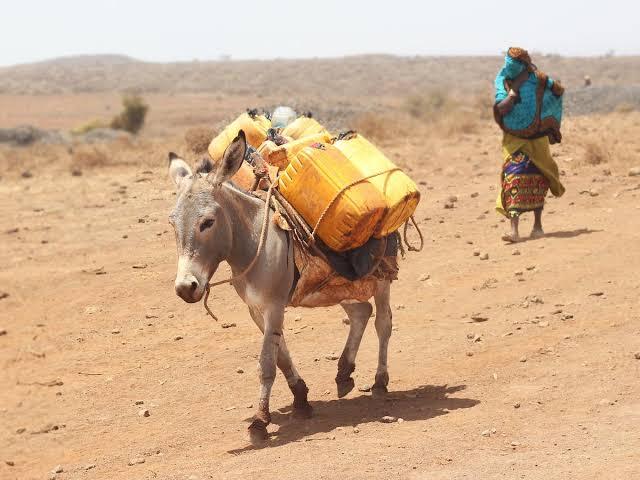
A donkey loaded in rural Kenya. Communities depend on them as they are very hardy creatures.
By: John Kariuki

When you majestically walk towards your favourite meat shop/butchery, you always have that craving of your choice cut. But are you aware that some Uninspected Meat could be ending in your plate?
This is according to a multisectoral survey and research undertaken by Brooke East Africa, the police and other authorities.
The shocking details is that donkeys are being slaughtered in the cover of darkness and being transported to Nairobi for sale. According to Brooke East Africa Country Director Mr Raphael Kinoti the risks associated with this are quite many.
Firstly, it’s illegal to deal with donkey slaughter in the country. Secondly, Uninspected Meat carries a host of health Risks because the equine is usually a host to several diseases such as equine flu, anthrax, rabies and the like. So you see, it’s highly advised against. You MUST NOT eat donkey meat.
Mr Kinoti’s sentiments emerged hot on the heels after data came to the fore that the beast of burden – the donkey is still very much under threat in the country. The numbers of this critical resource have plummeted to just slightly over a million countrywide.
According to Brooke East Africa, the beast greatest threat is the unscrupulous people who eye its meat albeit in the cover of darkness.
Since 2020, it’s illegal to slaughter and deal with donkey meat trade in the country.
Brooke East Africa country director Raphael Kinoti noted that communities are very critical in matters donkey conservation.
“We reiterate that the communities should own up the initiative and we as Brooke East Africa intervene to assist them in restocking. But the key thing is that the communities should work with the authorities to report cases of donkey theft and also weed out the crooks.”
Mr Kinoti also cautioned against abuse of the beast of burden after media reports emerged that some communities are intoxicating the animals with drugs to enhance performance.
“This is cruelty of the highest order to hear that some people feed the donkeys marijuana to stimulate productivity. This has no any scientific basis and it works to the detriment and danger of the humble beast of burden,” Mr Kinoti concluded.
Similar Posts by The Mt Kenya Times:
- Let’s not throw out the baby with the bathwater: Why responsible digital lending still matters
- Utumishi murder case shifts as accused children weigh plea bargains
- Students bear the brunt of Kenya’s public university crisis
- The strategic importance of social work in preventing harmful habits among young people
- How Mitei has steadied the ship at TSC
About the Author